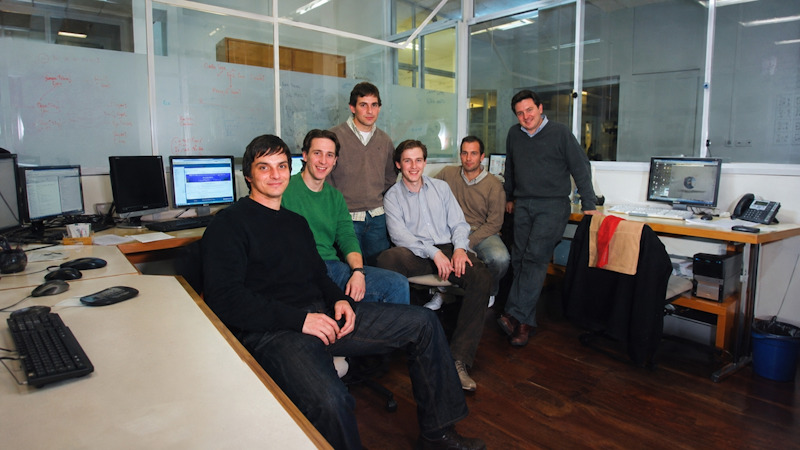
The Applied Mathematics for Telecommunications (MATE) group at the School of Engineering is dedicated to research on telecommunications networks from a quantitative perspective. It is led by Dr. Fernando Paganini, a professor of Telecommunications Theory at the school, and currently consists of engineers Enrique Mallada, Martín López, and Andrés Ferragut, as well as students Diego Feijer and Marcos Cardozo.
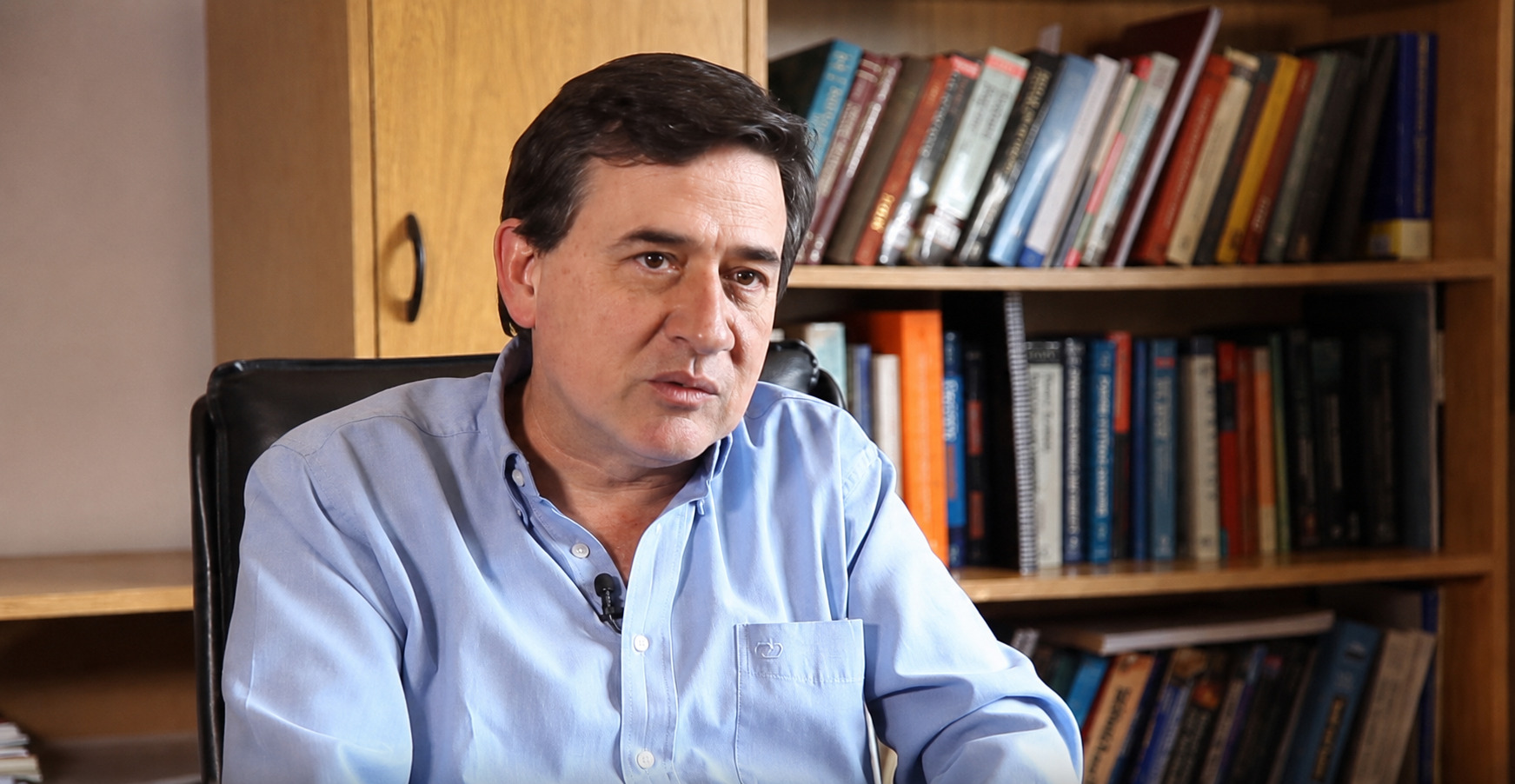
Interview with Dr. Fernando Paganini, Professor of Telecommunications Theory in the School of Engineering.
Origins and Objectives of the Research Group
- How did this group come about? Why was it formed?
"I began this line of research during my previous position as a professor at the University of California, Los Angeles (United States). In 2005, I returned to Uruguay and formed this group, which has gradually been joined by research assistants funded by ORT University and by externally funded projects."
- What are the group's main objectives?
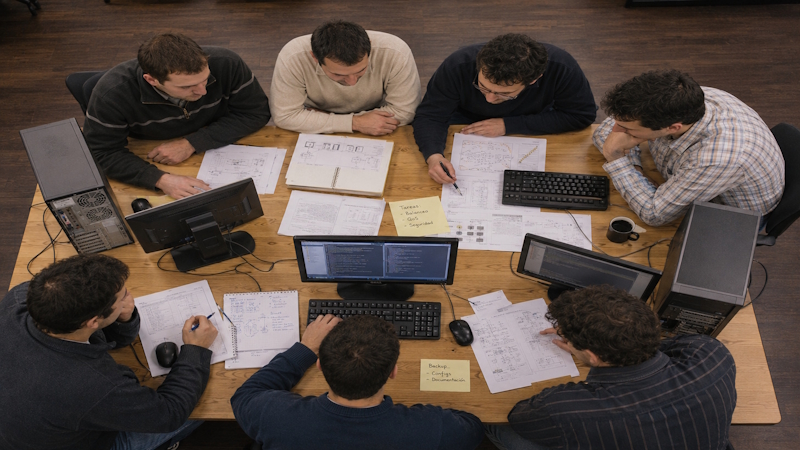
"The goal of mathematical modeling is to analyze and identify improvements to the mechanisms for controlling and allocating resources in networks. These mechanisms, which reside in the various devices distributed throughout the Internet—often in a hidden manner—have a crucial impact on the quality of communication experienced by each user and on the fairness of resource distribution among users."
Mathematics and Research Areas in Telecommunications
- What projects are you currently working on?
"We have several lines of research, covering both wired and wireless networks, as well as pricing issues. In wired networks , we have worked on congestion-adaptive routing and connection admission control to regulate aggressive applications. In wireless networks, we study Wi-Fi networks from the perspective of controlling non-cooperative nodes, and we are investigating multi-layer optimization. As for pricing aspects, we have proposed bandwidth auctions for overlay networks, as well as econometric studies on Uruguayan consumers."
- How is mathematics applied to telecommunications networks?
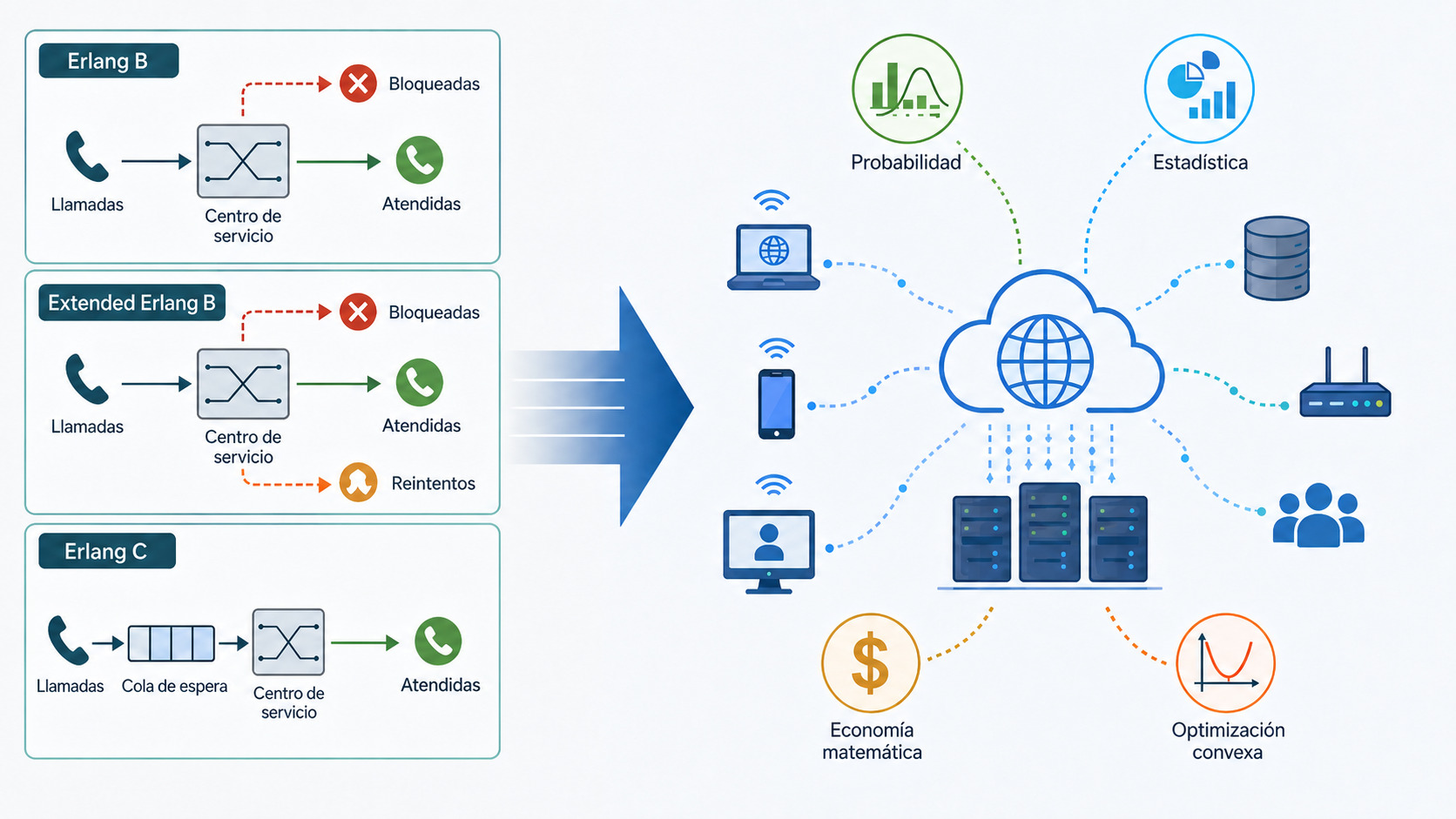
"Traditionally, 'telephony' theory studied the telephone network from a statistical perspective to determine the capacity needed to handle incoming calls. The methods used here were based on probability and statistics (known as 'queuing theory'). With the advent of the Internet, the relevant field of mathematics expanded enormously: automatic control theory to study the mechanisms that control transmission speed, mathematical economics models to study how capacity is distributed among users, convex optimization methods to improve the overall performance of different layers in a distributed manner, etc.; all while maintaining the relevance of probabilistic methods. It is currently a highly multidisciplinary field."
Academic Achievements and Prospects
- What impact has the project had?
"We actively participate in the Faculty of Engineering's Academic Conference (JAFI), where our presentations have generated interest. Furthermore, our contributions to these topics are disseminated through international scientific literature; we participate and compete with the global community in the pursuit of advances that may influence future network developments."
"We're targeting the major conferences in the United States and Europe."
"In 2008, we gave presentations at Princeton University and the Massachusetts Institute of Technology (MIT, United States) and at the École Normale (France). At the regional level, one of our projects recently won an award at a conference in Ecuador. We also participate in local events and seminars; we are in contact with groups at the School of Engineering at the University of the Republic and with ANTEL."
Interview published in September 2008