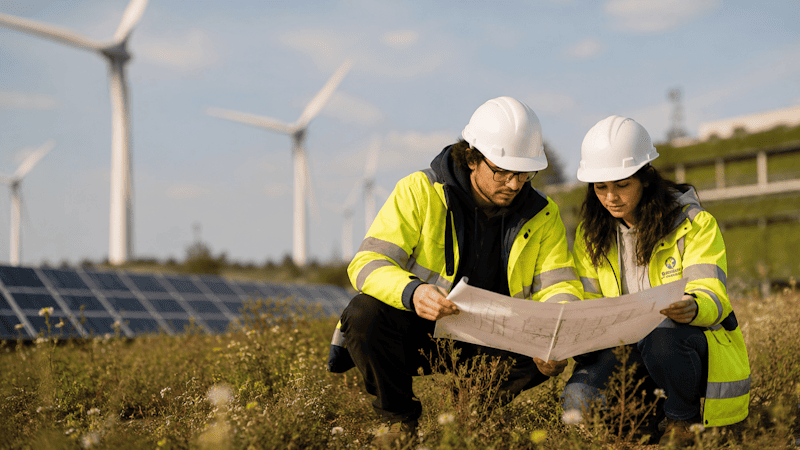
Sustainable developmenthas become one of thegreatest challengesof the 21st century. Issues such as climate change, the overuse of natural resources, and social inequality have highlighted theneed to find solutionsthat are both creative and effective.
Achieving this depends not only on the government, but also on professionals who drive change in various sectors.
Every profession can become atool for making a positive impact, and higher education has thecapacity to train those professionals.
Are you interested in sustainable development but haven't decided what to study yet?
Discover theundergraduate and graduate programs at Universidad ORT Uruguay
What Is Sustainable Development?
When people talk about sustainable development, manyassociateitsolely with caring for the environment.However, this concept ismuch broader.
According to theUnited Nations' definition, sustainable development meansmeeting the needs of the presentwithout compromising the ability of future generations to meet their own needs.
The decisions made today have long-term consequences.
https://youtu.be/MCKH5xk8X-g?si=FnOC_NQndbzyjnJ6
It is not enough toreduce our environmental impact or recycle more.We must also build more equitable societies,foster responsible economies, and ensure that everyone hasaccess to opportunities for personal development.
In practice, sustainability encompassesvarious areas that complementone another.
- Responsible economic growth: Promotesdevelopment models that create jobs, foster innovation, and strengthen the economy without depleting natural resources or affecting communities’ quality of life.
- Well-being and social impact:Sustainability also aims to reduce inequalities by providing access to quality education, health care, decent work, equal opportunities, and inclusion for all.
- Environmental protection:This includes actions aimed at reducing pollution, conserving biodiversity, and efficiently managing natural resources.
Sustainable development also drives thecreation of new technologies and business models capableof addressingenvironmental and social problemsfrom various disciplines.
This comprehensive vision is closely linked to theSustainable Development Goals (SDGs), a set ofglobal targets that serve as a roadmap forprogress toward a more just and sustainable world.
We muststrike a balancebetween economic progress, people's well-being, and protecting the planet.
Although they are often associated with public policy, the SDGs alsoguide the work of companies, organizations, and universities, which train the professionals responsible fordeveloping solutions to the major challengesof our time.
How College Majors Make an Impact
Thechallenges related to sustainabilityare becoming increasingly complex. Issues such asclimate change and urban growthcannot be solved by asingle measure or by a single profession alone.
We need people withspecialized knowledgeand the ability towork collaboratively to reach solutionsthat are truly sustainable over time.
A university education plays akey rolein the search for these creative solutions.
https://youtu.be/9X9l6bLGLXk?si=ymgUhitTLDwHt1cx
In addition to providing technical knowledge, theuniversity helps students develop the skills to conduct research, analyze situations from different perspectives, and make evidence-based decisions. These well-prepared professionals canadd valuein a variety of fields.
- Companies:Organizations often adopt sustainability strategies to optimize resource use and reduce their environmental impact, in response to new demands from consumers and investors.
- Governments and public institutions: Thedesign of policies related to mobility, energy, housing, education, health, and waste management requires professionals capable of balancing economic development with social well-being and environmental protection.
- Social organizations:Many initiatives work to improve the quality of life in communities or promote local development projects, creating opportunities for professionals from various fields.
- Universities and research centers:The generation of knowledge and the development of new technologies are essential for finding innovative solutions to the environmental and social challenges facing society.
This need for vocational trainingis alsoreflected in the labor market.
According to the International Labor Organization’s report*Skills for a Greener Future: A Global View*, thetransition toward lower-carbonandmoreresource-efficienteconomiesischanging occupationsand increasing the need for professional development.
Sustainability presents not only environmental challenges but alsoconcrete changes in the way we work.
Today, sustainabilityis no longer a topic limited toenvironmentalspecialists. It is astrategic priority for organizationsacross all sectors, which opens up opportunities for thoseseeking to build a meaningful career.
Are you interested in sustainable development but haven't decided what to study yet?
Discover theundergraduate and graduate programs at Universidad ORT Uruguay
College majors related to sustainable development
While there aredegree programs focused directly on environmental issues, the reality is that many disciplines canhelp make a positive impact.
Engineering, Technology, and Innovation
Through innovation, it is possibleto develop more efficient processes and optimize the use of resources,with the goal of reducing energy consumption and creating solutions thatimprove people’s quality of life.
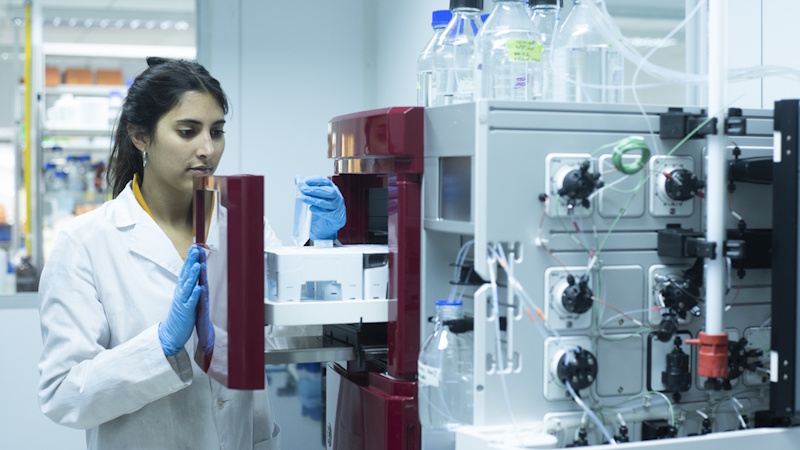
Among thetechnology-related career options,each one plays astrategic role in the transformationof industries and services.
- Engineering: It enables the design of more efficient processes, infrastructure, and technologies for sectors such as transportation, industry, construction, and environmental management.
- Systems Engineering: Contributes by developing platforms, applications, and digital systems that improve service management.
- Data Science: Helps analyze large volumes of information to identify problems, measure results, and anticipate scenarios.
These professionals work onprojects involving renewable energy, automation, smart cities,data analysis, and systemsthat measure the environmental and social impact of organizations.
Architecture, Design, and Urban Planning
Design also plays an important role indeveloping products, services, and experiencesthat use materials more responsibly andmeet the needs of an ever-changing society.
They aim to create spaces that reduce resource consumption, promote mobility, and improve accessibility.
- Architecture: Contributes to the design of buildings that are more efficient, comfortable, and environmentally responsible.
- Urban Planning: It enables the planning of more resilient, accessible, and sustainable cities. Its impact is evident in mobility, public spaces, and housing.
- Industrial design: It contributes to the development of products with a lower environmental impact throughout their life cycle. This includes considering materials, durability, repair, reuse, and production.
- Design: Across its various disciplines, design can contribute to accessibility, clear communication, the user experience, and the development of more inclusive services.
Cities are home to a large portion of the world's population, sodesigning them in a sustainable wayis one of the major challenges of the coming decades.
Economics, Business, and Management
Today,organizations are not only expected tobe profitable, but also to incorporateenvironmental and social criteriainto their decisions.
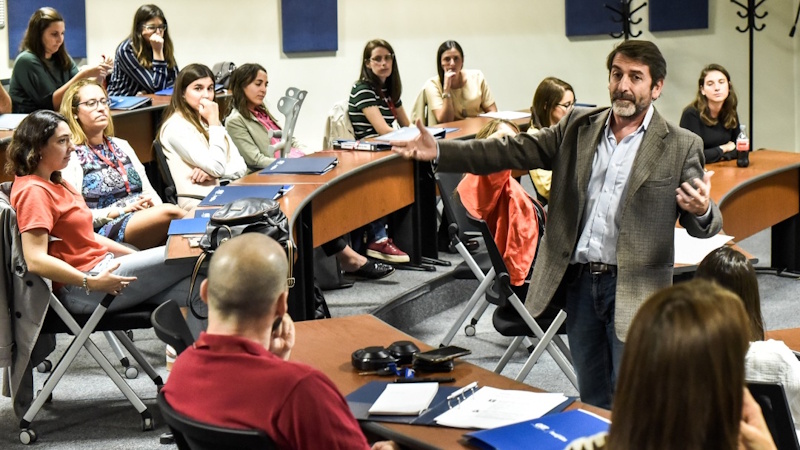
In this context,opportunitiesare emergingfor professionalscapable of driving sustainable businesses,developing social responsibility strategies, and promoting more conscious consumption models.
Some careers related to this field include:
- Management: Enables organizations to integrate sustainability into their strategy, operations, and culture.
- Economics:Helps analyze how resources are produced, distributed, and consumed. This field allows for the study of public policies, growth models, and decisions that promote more balanced development.
- Business: Contributesto the creation of startups, products, and services that combine profitability with a positive impact.
- International trade:It can help build more transparent, accountable, and sustainable supply chains.
These areas demonstrate thatcareers that make an impact are not limited to a single sector.
Sustainability requirescollaboration among professionals with diverse backgrounds who cancontribute expertisein technology, design, management, and communication todevelop solutions that benefitboth people and the environment.
What Skills Help Make an Impact
Regardless of the college major one chooses, the true impact on sustainable development depends on theskills that professionals develop throughouttheir education.
Today's challenges require abroad perspective— one that can understand howsocial, economic, and environmental factors are interconnected— and how to act responsibly.
- Critical thinking:It allows you to analyze information objectively, question assumptions, and make evidence-based decisions.
- Interdisciplinary work: Knowinghow to work as a team with people from diverse backgrounds makes it easier to create solutions that are more comprehensive, innovative, and tailored to real-world situations.
- Clear Communication: Explaining complex ideas in simple terms is essential for raising awareness and driving change. Good communication also makes it possible to coordinate teams, projects, and initiatives more effectively.
- Professional ethics: Actingwith responsibility and commitment is essential when working on issues that affect society and the environment.
On the other hand, creativity is a skill that should not be overlooked, sinceproposing new ideas, processes, or modelsis essential tofinding sustainable solutionsthat can be scaled over time.
https://youtu.be/7t0f3cMg_0I?si=y96_rCo7bAFuj603
Taken together, theseskills reinforce the ideathat impact does not depend solely on one's chosen profession, but onhow knowledge is applied in practice.
The combination ofa university education and professional skillsfocused on sustainability provides asolid foundation for addressing today's global challenges.
- Continue reading:What majors are available in Uruguay?
More and more students are looking forcollege majorsthat, in addition to offering good job opportunities, allow themto make a positive contribution to the environmentand the well-being of their communities.
Those who design sustainable cities, clean technologies, or social projects are addressing today's environmental challenges.
That is why, more than just salary or personal growth,choosing a college majorinvolves reflecting on the kind ofcontribution you want to make to society.
Are you interested in sustainable development but haven't decided what to study yet?
Discover theundergraduate and graduate programs at Universidad ORT Uruguay