
Preparing for an exam can make anyone nervous, regardless of age, level of dedication, or years of study. For a college student, this experience can be even more stressful, but there is some good news.
It is possible to learn how to study strategically and without panic. Before your mind goes blank and nerves set in, it’s a good idea to follow some tips—not only to achieve high grades, but also to look after your mental health and overcome your fear of tests.
Still not sure what to study?
Learn about all the degree programs at ORT
Preparing for an exam without stress
Going to college is an experience that can be incredibly enriching, but also challenging. Unlike elementary or high school, we are finally able to choose the path we want to take, but the academic standards are more demanding.
This academic anxiety, particularly as it relates to exams, affects not only one's mood but also one's performance.
When stress levels are high, the ability to concentrate and retain information decreases.
This means that even if a student has studied, nerves can get the better of them and cause them to forget the information at a crucial moment.
That is why exam preparation should not focus solely on memorization, but also on taking care of your mental health and managing your time.
Some benefits of studying without panicking include:
- Better retention of information: A relaxed state of mind promotes long-term memory.
- Greater confidence: Studying with a clear plan gives you peace of mind on exam day.
- Fewer mistakes: Less stress means fewer mental blocks.
- Time management: Effective strategies allow you to learn more in fewer hours.
The mistake of cramming at the last minute
Leaving exam preparation until the last minute is one of the most common scenarios for college students. Unfortunately, it’s also common to panic.
Academic procrastination leaves you with not enough time to review and understand the material. The end result is sleepless nights, too much caffeine, and a state of anxiety that prevents you from performing well.
While this situation is entirely preventable, to reduce stress and improve the quality of learning, it is essential to use effective study techniques and start preparing well in advance.
Study Strategies
Rather than just sitting around rereading notes for hours on end, effective academic preparation requires planning, organization, and the use of proven techniques.

Here are some exam preparation methods you can start using today.
Plan ahead
The first step to avoiding panic is to create a study schedule that includes all the important dates to keep in mind during the semester. These can include written exams, project deadlines, or class assignments.
We recommend dividing the syllabus into sections and setting aside a specific day for each section. This will allow you to proceed step by step and give you plenty of time to review.
Tips for effective planning:
- Use a physical planner or an app like Google Calendar.
- Set aside extra time for the more complex topics.
- Include breaks to prevent mental exhaustion.
Having a well-organized study schedule is a very useful visual tool for managing your time effectively, prioritizing material, and feeling confident going into the exam.
Using the Pomodoro Technique
The Pomodoro Technique involves studying for 25 minutes and taking a 5-minute break. Every four “Pomodoros,” you take a longer break of 15–30 minutes.
This method helps you stay focused and prevents your brain from becoming overloaded. For college students, this technique offers several benefits, such as:
- Improve productivity.
- Make time management easier.
- Reduce mental fatigue.
The Pomodoro Technique not only helps you prioritize your study time but also your break time. The idea is to do something different during your breaks so that getting back to studying doesn't feel like a chore.
- Want to know the best way to study? Get ready for college life: 5 tips for studying more productively in college
Practice with past exams
One way to build confidence is to practice with past exams under similar conditions. For example, by setting a time limit or without referring to outside materials.
This practice not only allows students to become familiar with the types of questions they might encounter on an exam, but also helps them understand the level of difficulty and how the material is typically assessed.
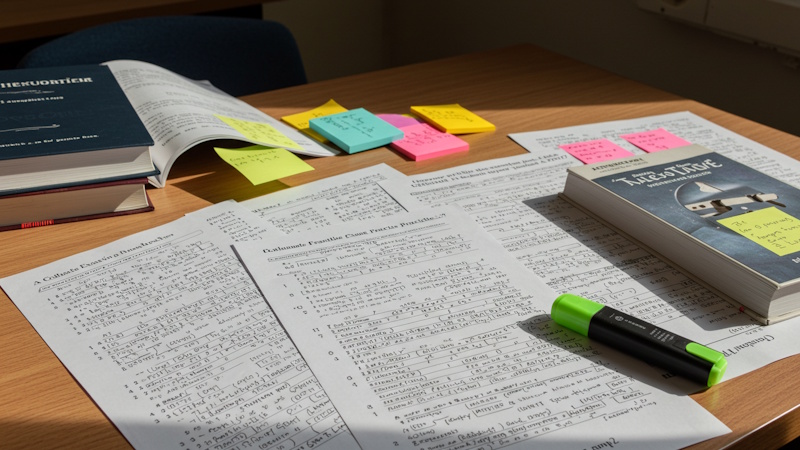
When you study this way, you reduce the risk of getting stuck on a question and learn to focus your attention more effectively.
If you don't have past exams, you can create your own questions based on your notes or form a study group where each member prepares a short quiz for the others.
Use active learning methods
Many students make the mistake of simply reading and underlining, thinking that will be enough.
Active learning is much more effective for retaining information and gaining a deep understanding of concepts.
Active learning is based on interacting with the material rather than just passively reviewing it.
For example:
- Teaching the topic: Explaining a concept aloud like a teacher forces you to organize the information and identify the areas where you are weakest.
- Mind maps and diagrams: Visually organizing key ideas helps you connect concepts and remember information more quickly.
- Flashcards: These are very useful for definitions, formulas, or important dates, as they promote spaced repetition, a proven method for improving long-term memory.
This approach not only deepens students' understanding of the subject but also makes studying more engaging, helping to avoid the monotony that leads to mental fatigue.
Maintain healthy habits
Good grades don't depend solely on how many hours you spend studying, but also on how well you take care of your body and mind. A tired brain won't be in the best condition to perform at its best during an exam.

Tips for staying in top shape:
- Get enough sleep: Sleeping between 7 and 9 hours helps consolidate memory. Studying all night may seem like a good idea, but it actually hurts your performance.
- A balanced diet: Including foods rich in omega-3, protein, and antioxidants improves concentration.
- Hydration: Even mild dehydration can affect your ability to concentrate, so it’s important to always have water on hand while studying.
- Light exercise: Activities such as walking, stretching, or practicing yoga release endorphins, reduce stress, and improve your mood.
Maintaining these habits not only helps during exam week, but also improves your overall well-being throughout the semester.
Still not sure what to study?
Check out all the degree programs at ORT
Emotional and Mental Preparation Before an Exam
No matter how many hours you study, if nerves get the better of you, your performance can suffer.
Test anxiety is a common reaction for all students, but learning to manage it is key to achieving your goals. Anxiety arises because the brain interprets the test as a threat, which causes the heart to race, tenses the muscles, and makes it difficult to concentrate.
The goal is to teach your mind that the exam isn't a threat, but an opportunity to demonstrate your knowledge.
Relaxation techniques before an exam
- Deep, controlled breathing: Before you start studying or right before an exam, it’s a good idea to take a minute to inhale deeply through your nose, hold your breath for a few seconds, and exhale slowly through your mouth. This reduces muscle tension and your heart rate.
- Positive visualization: Imagine yourself walking into the classroom with confidence, reading the questions calmly, and answering clearly. Visualization helps train your mind to act with confidence.
- Quick meditation: Even just 5 minutes of guided meditation can help you focus and reduce mental distraction.
Tips for Exam Day
First and foremost, it’s important to leave home early to avoid rushing or arriving late for the exam, as that increases your stress levels.
On the other hand, it’s best to avoid anxious conversations with others. Whatever you haven’t managed to memorize by that point shouldn’t be weighing on your mind during the exam. Worrying only makes you feel more insecure.

Read all the questions before answering. This way, you can tackle the ones you’re most confident about first and manage your time more effectively. Finally, take short mental breaks to close your eyes, take a deep breath, and return to the questions with greater confidence.
Positive impact on academic life
Studying with a plan and staying calm not only improves exam performance but also helps develop valuable skills for your future career: discipline, time management, resilience, and self-control.
By reducing anxiety, the college experience becomes more balanced and fulfilling.
Students who learn to plan ahead, use active study techniques, and take care of their physical and mental well-being have a clear advantage over those who wing it or rely solely on last-minute cramming.
For students who want to improve their academic performance without compromising their well-being, success is built day by day.
There’s no need to wait until you feel the pressure of exam week to take action; habits and strategies should be consistent.
At the end of the day, an exam is just an opportunity to demonstrate what you’ve learned—not an enemy to be defeated. With preparation, a systematic approach, and a calm mindset, you can achieve great results and enjoy the journey.
Still not sure what to study?
Check out all the degree programs at ORT