
In March 2025, a new phase began with the implementation—that is, the rollout—of the new curriculum in the 10th and 11th grades of high school.
Although the new curriculum will be fully implemented at all levels by early 2025, various changes in the Uruguayan education system had already taken place in previous years, shaping what is known as the Comprehensive Curriculum Transformation (CCT).
Are you wondering what to study?
Learn about all the degree programs at Universidad ORT Uruguay
The first steps of the new national curriculum
In 2020, ANEP presented the 2020-2024 Educational Development Plan, with the goal of prioritizing students, focusing its efforts on improving learning processes and reducing inequality.
Starting that year, work began on designing the National Curriculum Framework, a key document that served as the basis for the development of plans, regulations, and programmes to all compulsory education.
These changes are part of what is known as the Comprehensive Curriculum Transformation (CCT).
The2020–2024 Educational Development Plan identified six general pillars for educational policy.
- The right to education for all, ensuring quality, lifelong learning.
- Putting children and young people at the center through inclusive policies that take diversity into account.
- Reducing internal inequality in the education system through the equitable redistribution of resources and the development of targeted policies.
- Strengthening the teaching profession by empowering teachers and fostering their shared responsibility for ensuring high-quality learning outcomes.
- The transformation of the educational system with a focus on the development of local and regional stakeholders.
- Evaluation as a tool for continuous improvement, within the framework of information systems that inform decision-making and public debate.
The Beginning of Educational Transformation
The start of the school year in March 2023 marked the beginning of the curriculum transformation and the Uruguayan educational reform.
According to Robert Silva, former president of ANEP, in an interview published in January 2023 by the Office of the President of Uruguay, this reform encompasses “what and why we teach, along with how we do it; it is the plan and the programmes .”
The goal of this initiative is to integrate all levels of education in the country, which previously operated separately: elementary, secondary, and vocational education.
What is Integrated Basic Education?
The Comprehensive Curriculum Reform introduced direct changes to the structure and delivery of early childhood, elementary, secondary, and vocational education.
These changes are based on the Integrated Basic Education Plan, developed by the National Public Education Administration (ANEP).

In the plan, ANEP defines Integrated Basic Education (EBI) as “a pedagogical and curricular approach that spans from age 3 through adolescence and precedes upper secondary education.”
The plan includes a number of changes, which ANEP states are focused on student learning.
Among the various changes, this plan introduced new educational workshops and replaced the terms “1st, 2nd, and 3rd year of secondary school” with “7th, 8th, and 9th grade of lower secondary school,” the stage preceding upper secondaryUpper Secondary Education, formerly known as high school.
Are you wondering what to study?
Learn about all the degree programs at Universidad ORT Uruguay
Structure of Integrated Basic Education
Integrated Basic Education (EBI) is divided into three cycles:
- Early childhood education through the second grade of elementary school.
- Second cycle: covers grades 3 through 6 of elementary school.
- Third cycle: This cycle spans the seventh through ninth grades, corresponding to the first, second, and third years of lower secondary education.
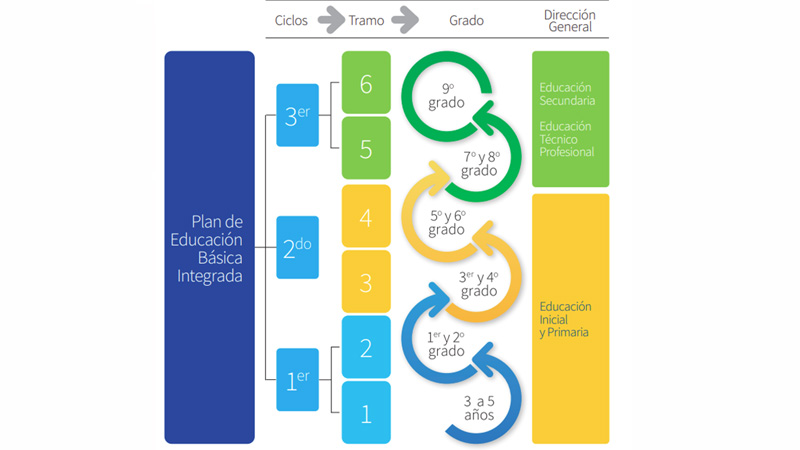
This first measure of the educational reform in Uruguay involved changes in various aspects of education, teachers’ work, classroom arrangements, new subjects, and methods of student assessment.
Furthermore, this plan served as the precursor to a second plan, the Plan for Upper Secondary Education, approved by a CODICEN resolution on October 26, 2023.
What is Upper Secondary Education?
“The Upper Secondary Education comprises the three years following the completion of lower secondary education and constitutes the final stage of compulsory education,” states General Education Law No. 18437.
The Upper Secondary Education Plan,approved in 2023 and implemented in 2024, reinforces various aspects of the education reform and introduces a number of changes toupper secondary education(EMS).
This plan introduced significant changes to the structure and approach of high school, building on the reforms already underway in secondary education.

In what was formerly known as high school , changes were made to classes, schedules, and subjects, significantly altering the curriculum and teaching methods.
The plan introduces direct changes to Upper Secondary Education (EMS), a mandatory stage of secondary and vocational education that, upon completion, qualifies graduates to pursue higher education and university studies.
Structure of Upper Secondary Education
Under the educational reform of Upper Secondary Education (EMS), the concept of Diversified .
What was previously known as the 4th, 5th, and 6th grades of Diversified High School is now called the 1st, 2nd, and 3rd grades of Upper Secondary Education.
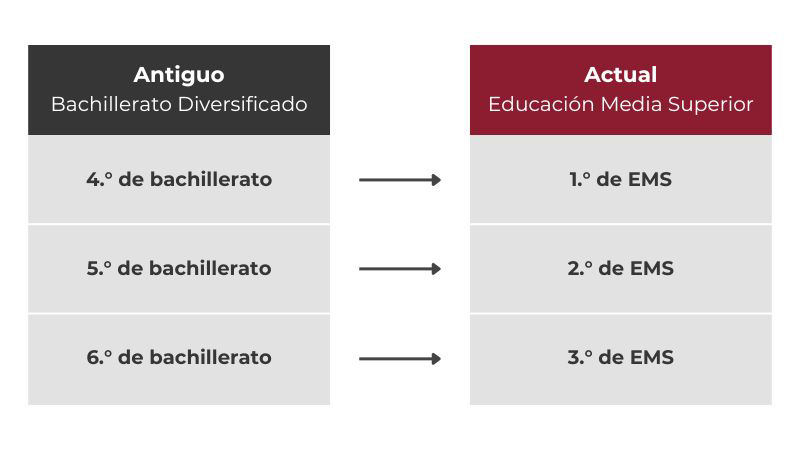
With the education reform, students in EEducation Msecondary Uleave behind the mandatory choice of Diversified and can now explore different academic paths through a new curriculum proposed by the Uruguayan education reform.
The New Curriculum for Upper Secondary Education
Following the education reform, the EMS curriculum underwent a transformation with the implementation of new guidelines, the replacement of the high school diploma program, and the addition of new subjects across various fields of study.
The new structure allows students to “explore fields of knowledge and develop specific skills” (ANEP).
The education reform grants students curricular autonomy, establishing an exploratory track in the 1st and 2nd grades of high school, while in the 3rd grade of high school, it transforms that exploration into a specific vocational specialization.
Consequently, the previously known Diversified High School Program is being phased out, and a new curriculum structure is being established under the term Upper Secondary Education.
New Subjects in Upper Secondary Education
As part of the education reform, the General Directorate of Secondary Education is introducingnew subjects such as:
- Entrepreneurship: focuses on developing skills related to the creation of innovative initiatives, project management, and their practical application.
- Heritage Education: the study of identity formation and the appreciation of the tangible and intangible aspects of Uruguayan culture.
- Audiovisual Communication: In this course, students explore the field of audiovisual production, analyzing visual narratives and experimenting with audiovisual experiences.
- Argumentation and Debate: Students develop their ability to analyze and defend their positions by constructing well-reasoned arguments.
In short, educational reform in Uruguay has brought about various changes and spurred a process of transformation in the previous education system.
The various changes, initiatives, and adjustments involved in this transformation were developed through roundtable discussions with social stakeholders, as well as surveys of students and teachers, leading to a restructuring of the country’s education system.
Are you wondering what to study?
Learn about all the degree programs at Universidad ORT Uruguay