
Those whoare just getting started on LinkedInlearn different ways tocreate a professional profile that can catch the attention of recruiters and help them build connections. This includes the type of photo to use, the content to post, and the best way to showcase their experience and skills.
In today's job market,finding a jobinvolves much more than just acquiring knowledge and experience in a specific field to fill a position. It's also necessaryto be visible in strategic places.
Asa networking and job search platform, LinkedIn is a very useful tool for any graduate or student looking for theirfirst job opportunity.
Maintaining a well-written and up-to-date profile helps you getnoticed by recruitersand build valuable connections with other professionals.
What Is LinkedIn and What Is It Used For?
LinkedIn is asocial network fortheacademic and professionalcommunities where workers from all backgrounds, college graduates, and even students cansearch for new job opportunities.
Unlike other platforms that focus on sharing entertainment content,its main purpose is to help individualsshowcase their knowledge, skills, and career interests so that recruiters can find them or so they can apply for jobs
A lack of experience is no obstacle to creating a LinkedIn profile.
The platform allows usersto build a professional identity fromthe earliest stages of their education and update it as theygain new knowledge and take on new projects.
Having awell-structured and well-defined LinkedIn profile offersmany advantages:
- allows you to showcase your academic background, professional interests, skills, and knowledge—even before you have any work experience;
- In addition to job openings, the platform brings together programmes for students, scholarships, and internships posted by companies in various sectors;
- increases visibility among recruiters and expands your professional network, including faculty members, other graduates, and industry professionals;
- Stay informed about labor market trends to keep up to date on the most in-demand skills, new opportunities, and changes in the industry.
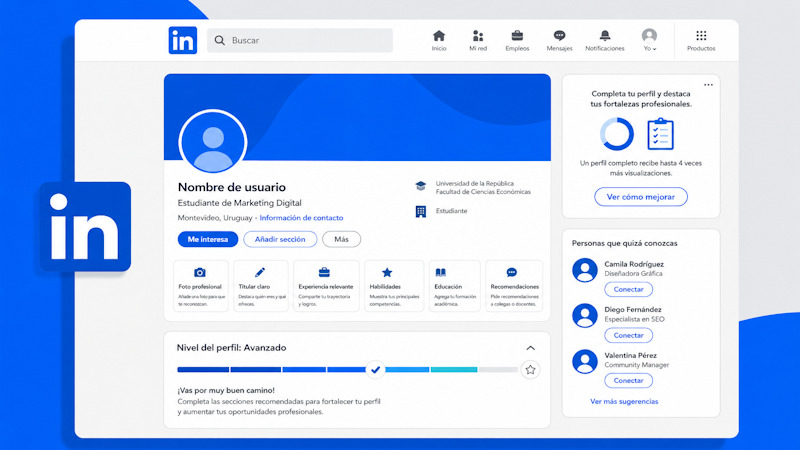
Regularly publishing content helps build a personal brand andstrengthen your professional online presence,which can be essential for freelancers who rely on constantly seeking out opportunities.
Finally, LinkedIn providesaccess to educational content and events.The platform also offers access to courses, events, communities, and specialized publications that promote continuous learning and professional development.
LinkedIn complements your resume; it doesn't replace it.
While aresume is typically tailored to each job application, a profile allows you to present a broader career history thatis easy to update.
What to Decide Before Completing Your Profile
Before you begin filling out each section, it’s a good idea to gather information that can add value to your profile and decide what professional image you want to convey.
For those with work experience, creating a LinkedIn profile is a simpler and more straightforward process, whereas a student looking for their first job must find other ways to demonstrate their skills and potential.
According toLinkedIn, thetop of a profileis the first thing other users see, and it shouldprovide a quick overview of theperson'seducationaland professionalbackground.
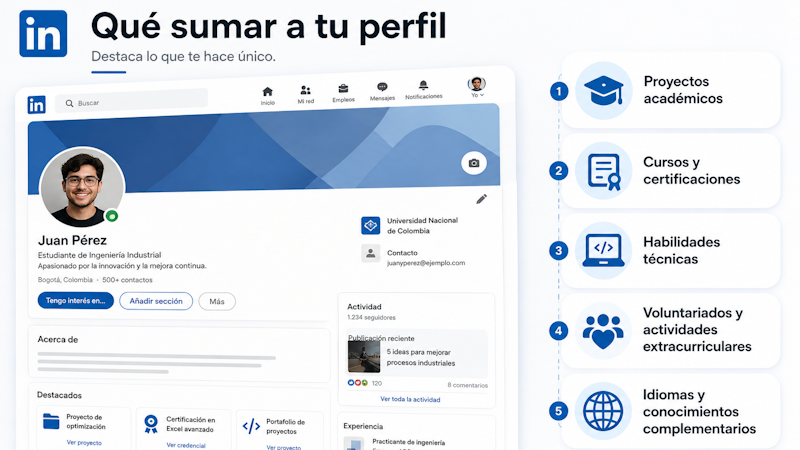
Therefore, before drafting it, it is helpful to define some basic elements:
- academic projects:It is advisable to explain the project’s objective, the tasks that were carried out, the tools that were used, and the results obtained;
- Courses and certifications:Supplementary training helps reinforce specific knowledge, such as the use of programmes, methodologies, languages, or technical tools;
- Technical skills:The profile may include skills related to the field of study, such as programming, data analysis, design, or writing;
- Volunteer work and extracurricular activities:Participating in social organizations, competitions, events, or university initiatives can demonstrate responsibility, initiative, and the ability to collaborate with others;
- Languages and additional skills:Including your proficiency in other languages or additional skills can broaden your career opportunities.
In addition, students in fields such as design, communication, technology, or audiovisual production caninclude links to portfolios or prototypes that showcase their technical and artistic skills in real-world projects. This evidence provides a direct glimpse into thequality of their work.
Above all, theinformation in each section must be accurateand avoid making exaggerated claims that cannot be substantiated later in an interview.
Do you already know which field you want to pursue a career in?
Explore the college majors offered by the Universidad ORT Uruguay
How to Fill Out the Main Profile Information
The main information on a LinkedIn profile is thefirst thing recruiters, companies, and other professionalssee when they visit an account.
In just a few seconds, it shows who you are, what you're studying, and the direction of your professional development.
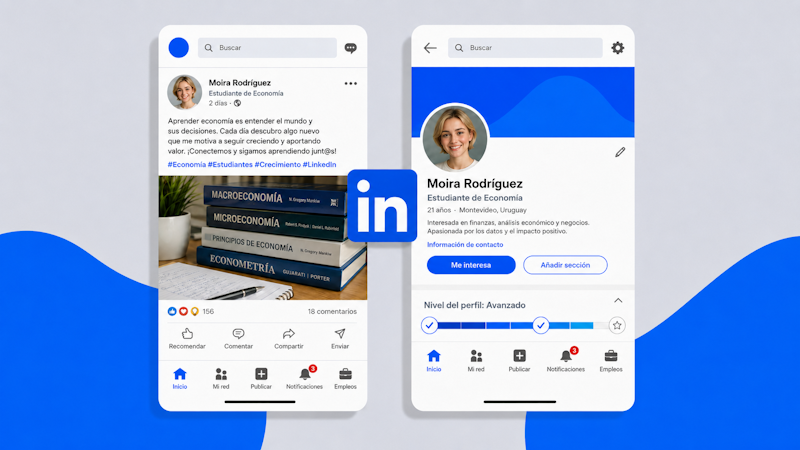
Currently, thetop section of the profilemay include the name, photo, background image, professional headline, current position, education, location, and contact information.
Each of these elements helps convey a professional image and makes the profilemore appealing and easier to recognize.
Photography and Background Image
Your LinkedIn profile photo is one of thefirst things that makes an impression. You don't need to use a photo that's too formal, but you shouldavoid using filtersor poses that wouldn't be appropriate for a professional setting.
- Use a recent, high-quality photo.
- Choose a photo with good lighting and where the face is easily recognizable.
- Select a background image related to your field of study or a neutral design.
- Avoid pixelated images, images with too much text, or images with too many visual elements.
Unlike social media platformssuch as Instagram, where aesthetics take center stage, on LinkedIn the most important thing isto convey professionalism.
Professional Headline
The LinkedIn headline for students is abrief description that appears next to their name.In addition to helping other users understand their academic and professional background, it also influences the searches conducted by recruiters and companies on the platform.
Simply writing “Student” does not convey your profile or professional interests.
You don't need to list everything you've learned or use overly long sentences, but you shouldmention your degree program, your area of interest, and some relevant skills.
Location and Contact Information
Location andcontact informationhelp companies and recruiterscommunicate easily.Some things to keep in mind include:
- indicate the candidate's current location, or where they plan to move to work or study;
- include a professionally formatted email address;
- check that the contact information is up to date;
- Avoid including unnecessary personal information that does not add value to the profile.
The importance of a well-structured LinkedIn profile goes beyond mere aesthetics. According to the report "The State of the Job Search 2025"by Jobscan,75% of the recruiters surveyed use LinkedIn profiles to search for candidates, and 73.3% always or frequently evaluate them during thehiring process.
For this reason, having a clear, comprehensive, and up-to-date introduction can influence the first impressiona profile makes.
How to Write the “About” Section Without Work Experience
The “About”sectionon LinkedIn allows you to briefly describe who you are, what skills you have, and where you wantto take your career.Just becauseyou lackwork experience doesn’t mean this section has to be left blank.
A student canstructure their presentationbased on their education, completed projects, acquired skills, and theareas in which they hope to begin developing their skills or where they envision specializing in the future.
According toIndeed, a good LinkedIn summary shouldinclude keywords related to your professionalfield to help your profile appear in searchesby potential employers.
It doesn't just repeat information that already appears elsewhere in the profile.
The description can be organized into three parts:
- A brief introduction to who the person is.
- Development of their experiences, skills, and interests.
- Conclude by discussing your future goals.

The description of your current academic status should indicate which degree program you are enrolled in, withoutneeding to list all the courses. Knowledge and skills may be included when they are relevant to the profile.
This information should be specific and, whenever possible, related to projects, such as data analysisorcommunication. , rather than using general phrases like “I’m looking for new challenges.”
This section alsoprovides an opportunity to showcase the candidate's personality, allowing them to stand out from other similar profiles.
The description can be written in the first person and in straightforward language.
Ideally, you shouldavoid lists of qualities without context andgeneric phrases that could be used in any profile.
- You may also be interested in:“How to Write Your First Resume If You Don’t Have Any Work Experience Yet”
To create a LinkedIn profilethat will catch the attentionof recruiters and other useful contacts, it's not enough to just fill in the fields automatically.
It is important to build a professional presence that can evolve alongside your education and level of experience.
Keeping your information up to date,actively participating on the platform by sharing content or commenting on posts, and clearly showcasing your professional knowledge and interests can help you gain access to new opportunities, even before you finish your studies.
More than just a place to look for a job,LinkedIn is a crucial toolfor building a professional career from the very beginning.
Do you already know which field you want to pursue a career in?
Explore the college majors offered by the Universidad ORT Uruguay