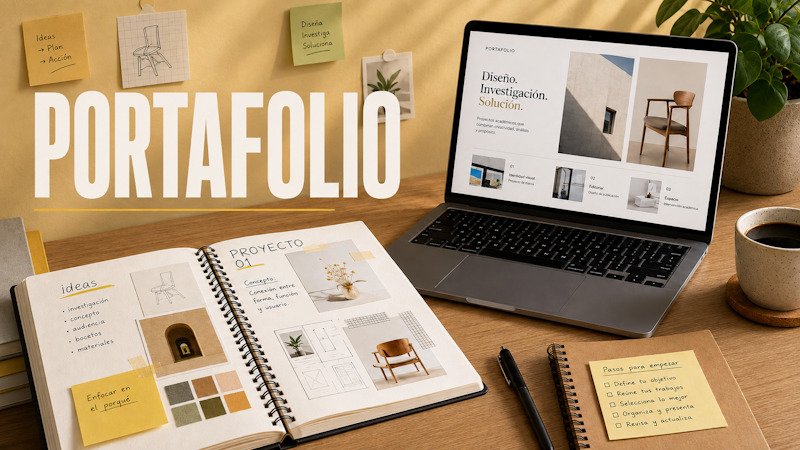
A portfolio allows youto bring together in one place the projectsand experiences that demonstrate yourknowledge and skills. Evenwithout work experience, it can be atool to help you stand outwhen looking for an internship or your first job.
In artistic or technical fields, relying solely on a resume or a LinkedIn profile is often not enough to demonstrate therange of skills needed tocarry out projects.
This is where portfolios come into play. A portfolio can be a document in .pdf format or a functional website where a professional or student detailsthe projects they have worked on, their role in those projects, and the results achieved.
Whenapplying for jobs, graduate programs, or internships, a portfolio can be the difference betweenbeing considered for an opportunityand going unnoticed.
What Is a Portfolio?
A portfolio is anorganized collection of work and projectsthat showcases a person'sknowledge and skills.
Unlike a resume, which summarizes a person’s education and experience, a portfoliopresents concrete evidence ofwhat someone can do andhow they apply their skillsin different situations.
It is especially useful in the creative industries or in fields where the work is more practical than theoretical.
There is no single "right" way to put together a portfolio. While some professionals prefer to compile their projects into apresentation or a PDF fileto send directly to recruiters, others choose touse online portfolio platforms orcreate their own website.
The candidate simplyshares the URLwith anyone interested in seeing their work orpastes the link into their resumeor LinkedIn profile.
Regardless of the format, a good portfolio should be:
- Selective: It is not necessary to include all the work you have done. It is best to choose the pieces that best represent your skills, knowledge, and level of proficiency.
- Context: Each project must be accompanied by a brief explanation that describes the objective, the tasks performed, the tools used, and the result.
- Clear and organized: Submissions should follow a simple structure, with titles, descriptions, and images or files that make them easier to understand.
- Adaptable: The content can be modified depending on the type of internship, job, scholarship, or project you wish to pursue.

According to the article“What Makes a Good Portfolio or Showreel in the Creative Industries?”, a portfolio should includea person’s most outstanding workand allow viewers toquickly graspthe most important information—both about the projects completed and about thecandidate who worked on them.
Portfolios can bevisually appealing and original, especially for professionals or students indesign fields.
Learn about our undergraduate and graduate programs in Design
What Are Student Portfolios Used For?
A portfolio allows youto clearly and directly showcasethe knowledge and skills youhave developed during yourprofessionaltraining.
For a student, having a well-structured and visually appealingportfolio is especially useful because it provides a way to demonstrate their potential when they don't yet have a work history.
The portfolio is not limited to showcasing results.
In many hiring processes, recruiters evaluate not only a candidate's academic background but also their ability to apply that knowledgeto specific projects.
Its main functions include:
- Applying for opportunities:This can be used when applying for an internship, a first job, a scholarship, an exchange program, or a collaborative project.
- Showcase skills:Academic work, personal projects, and extracurricular activities can demonstrate skills relevant to a specific professional field.
- Document the learning process:Keeping an up-to-date portfolio allows you to track the progress of your work and recognize the skills you have developed.
- Identify professional interests:Selecting and organizing projects also helps you identify which areas, tools, or types of tasks spark the most interest.
A portfolio allows youto convey your interests and approachin a more personal and specific way, which helps a candidatestand out from other similar candidates.

According to Adobe's guide on how to create a good portfolio, the selection of projects shouldprioritize quality and relevanceover quantity, and shouldbe tailored to the type of opportunityand the audience that will view it.
Rather than simply showcasing results, the portfoliotransforms thestudent’slearning andexperiences into demonstrable evidenceof their professional potential.
What a Student Portfolio Should Include
A student’s portfolio does not needto includeevery projectever completed during their studies. On the contrary, it is bestto prioritize those that are relevant to the professionalfield in which the student hopes to pursue a career.
Through photographs, videos, texts, case studies, and working prototypes, the goal is to show those reviewing the portfolio how the candidateapproached a problem, used specific tools, and applied their knowledge in practical situations.
Although the content mayvary depending on the discipline, there are some basic elements that help create aclear and comprehensive portfolio.
- A personal introduction: This should include your name, contact information, and main areas of interest. This introduction should allow visitors to your portfolio to quickly understand who you are and what types of opportunities you are seeking.
- Context and Participation: Explain what problem the work sought to solve, under what circumstances it was carried out, and, in the case of group projects, what tasks the individual was responsible for.
- The Process and Tools: It is helpful to briefly describe the stages of the work, the key decisions, and the programmes, methods, or technologies used.
- Results and Lessons Learned: In addition to showcasing the final product, it is recommended to include some supplementary information, such as what challenges arose and how they were resolved.
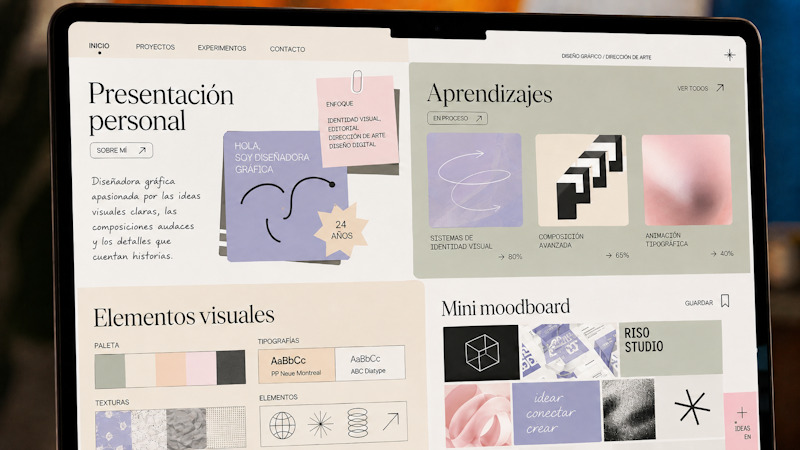
Awell-presented projecthelps the audience understand the reasoning behind each decision and lendsgreater credibility thana collection of images or files without context.
Documentation is often just as important as the final result.
It is also recommendedto include only completed projectsor those that are sufficiently developed todemonstrate the student’s abilities.If the portfolio includes work from different subjects, it is best to organize it by category or subject area to make it easier to navigate and find information.
As you gain new knowledge and experience, your portfolio should also be updated with additional projects.
Learn about our undergraduate and graduate programs in Design
Websites for Creating a Digital Portfolio
There arenumerous platformsfor creating adigital portfolio withouthaving to build a website from scratch.
Some allow youto create a custom page, while others function asprofessional communitieswhere companies and clients can discover projects.
There is no single platform that works for everyone. The important thing is that it allows you to showcase your work clearly.
The choice of which platform to useis a personal one and depends largely on theprofessional’sor student’s goals, the industry they are trying to break into, and thedegree of customizationeach person decides to apply.
Wix: Editable Digital Portfolios
TheWixplatform lets you create a website usingcustomizable templatestailored to a variety of creative industries and a visual editor thatrequires no programming knowledge.
High level of customization: Allows you to modify the structure, colors, fonts, and content layout.
Custom domain: Allows youto connect a custom web address on certain plans.
Longer setup time: Thenumber of available options may require more work than other, simpler platforms.
Wix is a good choice for students lookingto build theirownprofessional online presenceand havefullcontrol over thestructureof their portfolio.
Behance: Design Portfolios
Behanceis a platform primarily aimed atstudents and professionals in the creative industries.It serves as aprofessional networkwhere work can receive feedback and gain visibility within aspecialized community.
- Easy publishing: It does notrequire designing or maintaining a full-fledged website.
- Project-based format: Allowsyou to present each project individually and explain its different stages.
- Limited customization: Theoverall structure of the profile depends on the design established by the platform.
This platform is recommended forstudents of design and artin fields such as graphic design, photography, illustration, animation, architecture, fashion, and audiovisual production.
Google Sites: Websites for Showcasing Portfolios
Google Sitesletsyou create and publish a website, organize content into different pages, andinclude text, images, videos, and files stored in Google Drive.
- Integration with Google Drive:Allows you to embed documents, presentations, spreadsheets, and forms.
- Simple and collaborative editing:Multiple people can work on the same site.
- Free publication: Nohosting service is required.
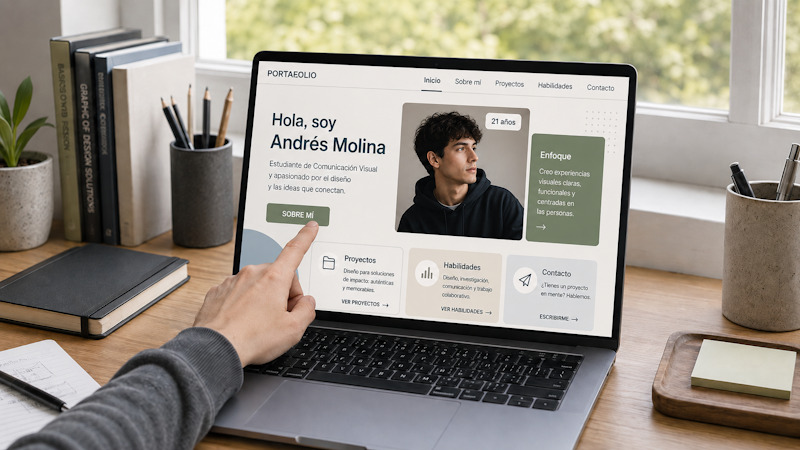
What projects can be included if you have no work experience?
Throughout the program, students completeassignments and exercisesthat allow them to demonstratetechnical knowledge, analytical skills, creativity, organizational skills, and problem-solving abilities.
The key isto select projects related toyour area of professional interest and clearly explain what you did, what tools you used, andwhat you learned from the process.
- academic work, such as reports, research papers, or presentations;
- personal projects and group assignments, such as an app, a photo series, or a business proposal that reflect your interests;
- participation in competitions, hackathons, workshops, student clubs, or academic events;
- volunteer projects for social organizations, communities, or nonprofit initiatives;
- It is also possible to develop a proposal based on a hypothetical scenario, such as redesigning a brand or creating a campaign.
A well-explained academic or personal project can provide more insight into a person's abilities than a list of tasks without specific examples.
A lack of formal experience does not mean there are no relevant projects.
There’s no need to wait until graduation tostart building a portfolio. While you’re still a student, a portfolio allows you to document your professional developmentfrom the start of your career and be prepared when that dream opportunity comes along.
Every project, internship, volunteer experience, or academic assignment can serve asevidence of learning.
Learn about our undergraduate and graduate programs in Design