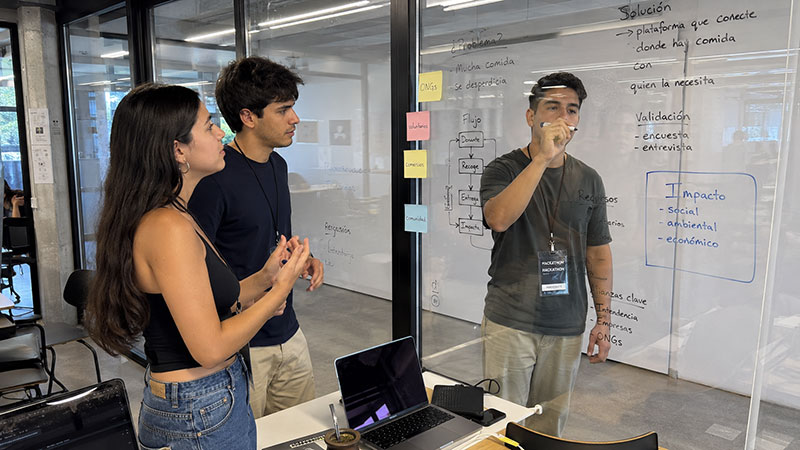
Generally speaking, a hackathon is an event where individuals or teams work together over a short period of time to tackle a specific challenge. The result can be a prototype, a functional proposal, a creative piece, an app, an algorithm, a presentation, or a demonstration.
The term is a portmanteau of “hacker” and “marathon.” In this context, “hacker” does not refer to someone who breaks into computer systems, but rather to someone who explores, experiments, builds, and solves problems creatively. The “marathon” part refers to the concentration of work within a limited time frame.
From a linguistic standpoint, the recommended form in Spanish is “hackatón,”with an accent and no final “h.” The recommendation“Hackathon y hackatón,”published by FundéuRAE in 2015, explains that “hackathon” is an English loanword and that “hackatón” is a common adaptation in Spanish; it also notes that its plural is “hackatones.”
How a hackathon works
Work at a hackathon is usually organized around a theme. From there, participants analyze the problem, come up with a potential solution, assign tasks, and prepare a final product that can be evaluated or presented.
The idea may come from a variety of fields: technology, communication, design, science, education, health, tourism, the environment, artificial intelligence, robotics, or open data.
In some cases, the challenge involves building a digital tool. In others, it involves creating an audiovisual piece, designing an experience, analyzing information, proposing a service, or resolving a specific situation.
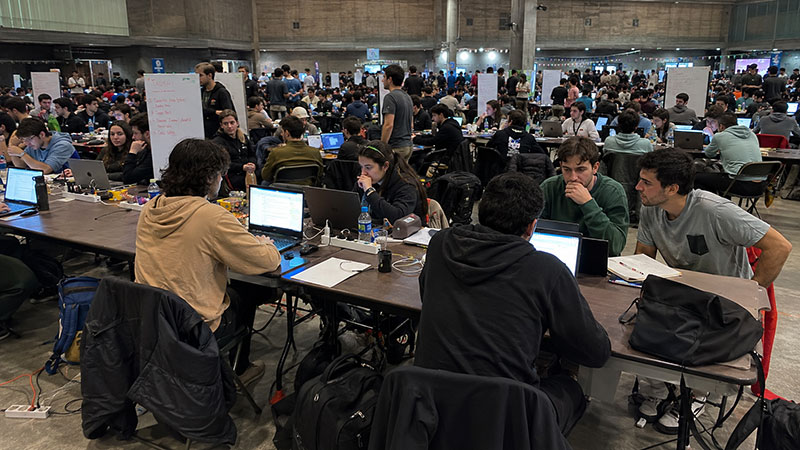
The process isn't just about "having a good idea." An idea needs to be transformed into something understandable, communicable, and evaluable. That's why a hackathon requires quickly moving from an initial idea to a minimum viable version of the solution.
That minimal version isn't necessarily a finished product. It could be a prototype, a mockup, a script, a data visualization, a simulation, or a structured presentation. The important thing is that it demonstrates how the solution would work and what problem it aims to solve.
Why a hackathon isn't just for programmers
Hackathons first gained popularity in technology and software development communities. However, the format has since expanded and is now used in educational, business, scientific, creative, and social settings.
A team may need people who can code, but it also needs people who can conduct research, organize information, design a user experience, present a proposal, produce content, analyze data, assess the feasibility of an idea, or present the results to a panel.
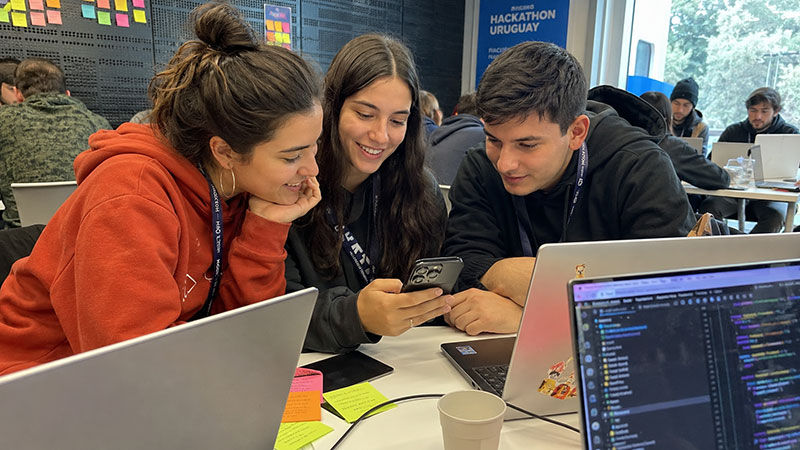
This diversity is especially important for high school and college students. Participating in a hackathon doesn’t require mastering every technical aspect of the challenge. It requires understanding the problem, contributing based on your own skills, and working with others under real-world time constraints.
A well-designed hackathon doesn't just reward prior knowledge. It also values the ability to learn along the way, simplify complex problems, listen to other perspectives, and make decisions with incomplete information.
What you learn by participating
The key takeaway from a hackathon lies in the relationship between action and reflection. Participants don’t just receive information—they apply it, discuss it, turn it into a solution, and explain it.
The article“How do we learn in and from Hackathons? A systematic literature review,”published in 2024 in *Education and Information Technologies*, reviews 39 studies on hackathons and similar events as learning spaces. The study notes that these events are frequently used in educational contexts, though it cautions that systematic research is still needed to measure their learning effects more accurately.
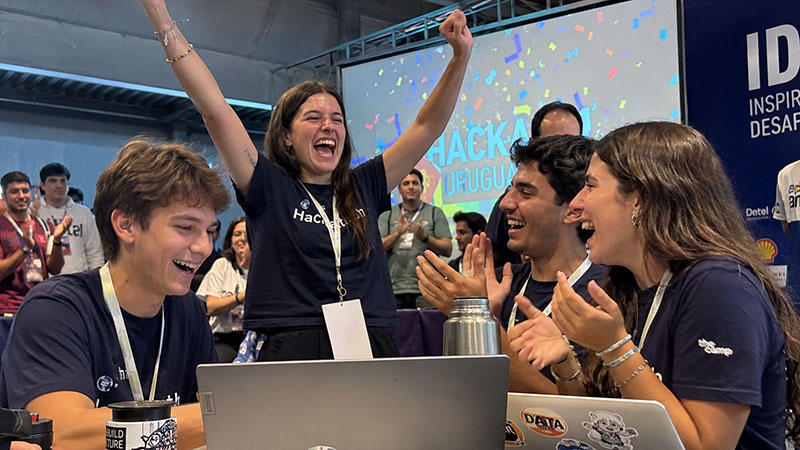
That warning is important. It’s not enough to simply gather students together for several hours and expect learning to happen automatically.
For a hackathon to have educational value, it needs clear objectives, guidance, evaluation criteria, and a theme appropriate for the audience.
When these conditions are in place, this format allows students to develop practical skills that are difficult to cultivate in a traditional classroom setting. These include collaboration, communicating ideas, planning under pressure, critical thinking, problem-solving, and the ability to present a proposal concisely.
From a conceptual perspective, a hackathon can be understood as a situated learning environment. This means that knowledge is constructed within a specific context, with a clear purpose, and through interaction with others.
Hackathons, Innovation, and Entrepreneurship
Hackathons are also linked to innovation because they force participants to turn an opportunity or problem into an initial solution. They do not replace the sustained development of a project, but they can serve as an initial exploratory phase.
The article“Hack Your Organizational Innovation: Literature Review and Integrative Model for Running Hackathons,”published in 2023 in the *Journal of Innovation and Entrepreneurship*, reviews the literature on the phenomenon and proposes guidelines for planning and executing hackathons, including the importance of carefully designing their phases and fostering the continuity of projects.
https://www.youtube.com/watch?v=u_Cs_ZeT71I
In the field of entrepreneurship, the report“The Effects of Hackathons on the Entrepreneurial Skillset and Perceived Self-Efficacy as Factors Shaping Entrepreneurial Intentions,”published in 2020 in Administrative Sciences, found evidence that an intensive hackathon experience can strengthen students’ perceived entrepreneurial self-efficacy.
This doesn't mean that every hackathon produces viable startups. It means that the format can help participants practice skillsassociated with entrepreneurship: identifying problems, formulating hypotheses, developing an initial proposal, and presenting it to others.
What to check before participating
Before signing up for a hackathon, there are three things to keep in mind:
- the type of challenge,
- the profile of participants and
- the form of assessment.
The type of challenge determines what is expected to be produced. Participating in a robotics hackathon is not the same as participating in an audiovisual communications hackathon or a tourism hackathon. Each one requires different tools, timelines, and presentation formats.
The participant profile indicates who the activity is intended for: high school students, college students, entrepreneurs, professionals, or mixed teams. This information helps set expectations and determine whether prior experience is required.
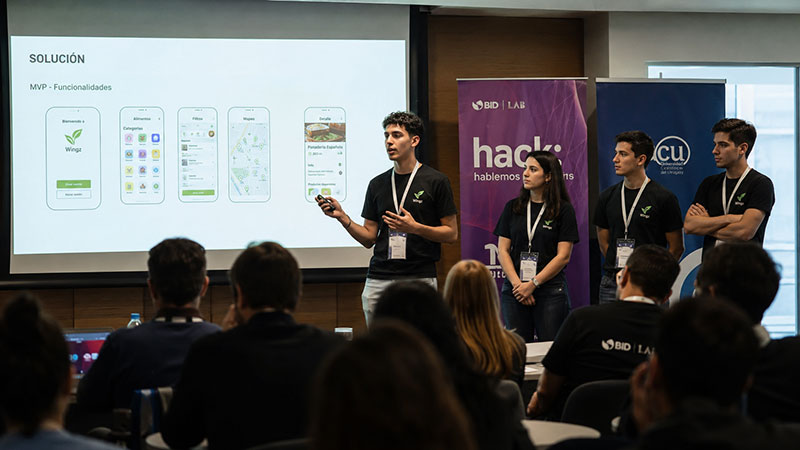
The judging criteria help clarify what will be evaluated. Some hackathons prioritize creativity; others focus on technical feasibility, social impact, narrative quality, algorithm efficiency, data usage, or presentation clarity.
It’s also helpful to check whether the event offers workshops, mentoring, or introductory materials. For first-time participants, these resources can be just as important as the development time.
What are the limitations of a hackathon?
A hackathon can generate insights and initial solutions, but it does not, on its own, guarantee a fully developed project. The time constraint fosters focus and creativity, but it also limits research, user validation, technical testing, and impact analysis.
The article“Do Hackathon Projects Change the World? An Empirical Assessment of GitHub Repositories,”published by ACM in 2021, analyzed projects hosted on GitHub and found that only 7% showed any activity six months after the hackathon ended.
That information does not invalidate the format. Rather, it helps to place it correctly.
A hackathon is a starting point: it’s a chance to explore, experiment, learn, and connect with others.
When a solution shows promise, it requires follow-through, resources, evaluation, and further development.
A local experience with a global reach
The hackathon format also has an international presence. The“2025 NASA Space Apps Challenge”describes a global initiative based on the creative use of NASA data to better understand Earth and the universe; according to that source, events have been held in more than 185 countries and territories since 2012.
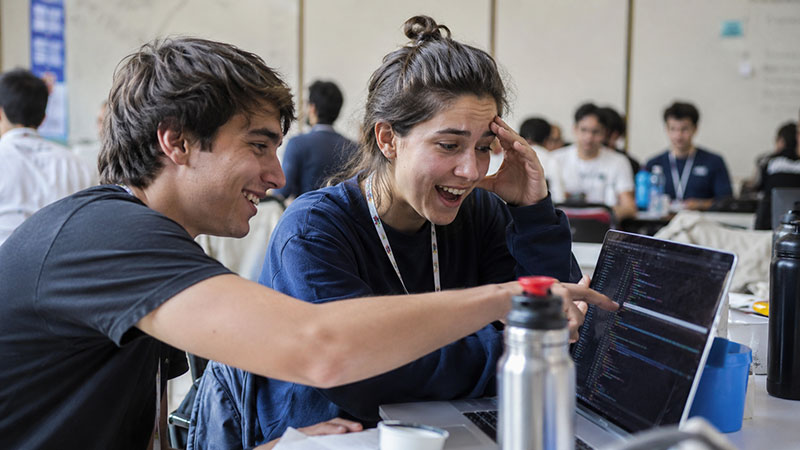
This global context matters because it shows that a hackathon is not just a technology competition. It is a working methodology that can bring together science, communication, programming, design, data analysis, and creativity applied to real-world problems.
For students in Uruguay, participating in a hackathon can be a way to get a feel for a field before gaining professional experience.
It also helps identify interests, practice teamwork, and understand how an idea is turned into a presentable proposal.
A hackathon is, above all, an intensive hands-on learning experience. Its value lies not only in winning a prize or completing a prototype, but in going through the entire process: understanding a problem, devising a possible solution, collaborating with others, and presenting the results.
Through this program, many young people can gain their first hands-on experience with innovation, technology, communication, design, and entrepreneurship.