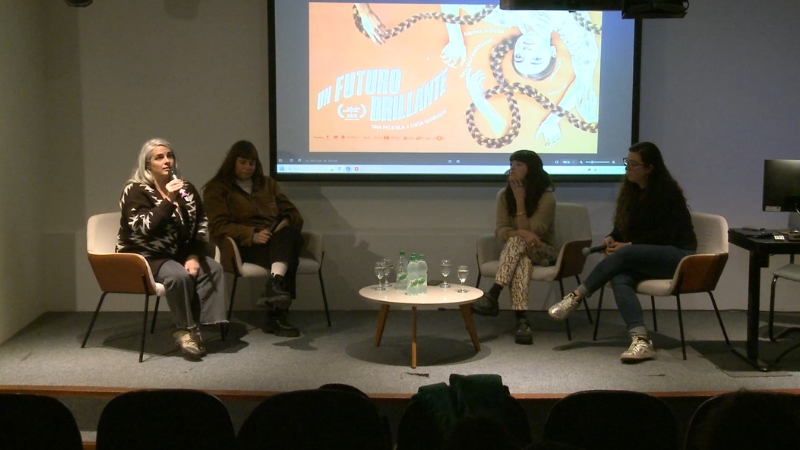
The Uruguayan film *A Bright Future* was the focus of a discussion on creative processes, audiovisual production, and aesthetic construction in dystopian cinema. The event brought together key members of the film’s technical crew, who reflected on the challenge of imagining and bringing to life a unique cinematic universe from Uruguay.
Drawing on the fields of production, art direction, and costume design, the conversation explored how the film’s visual identity was developed, from the initial conceptual work to the practical decisions related to filming and post-production.
A dystopian universe set in Uruguay
The event featured Isabel García, an executive producer and graduate of the Communication and Audiovisual Production program; Cecilia Guerreiro, an art director with experience in film and advertising; and Dominique Souberbielle, a designer and costume director specializing in audiovisual productions.
During the event, the speakers discussed their experience working with director Lucía Garibaldi to develop the visual style of a film that blends science fiction, dystopia, and a strong social dimension.
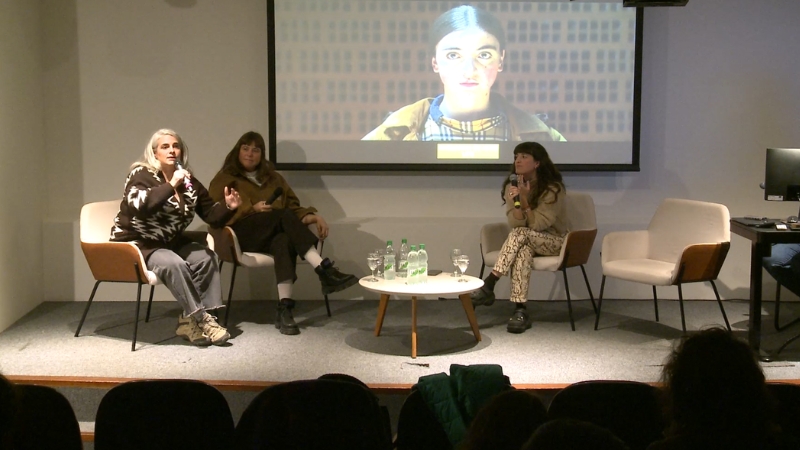
“The reality is that it didn’t cost any more than a typical fiction film, simply because we didn’t have any more money,” García explained when referring to the budgetary challenges of producing genre films in Uruguay. In that regard, he emphasized that much of the visual world was brought to life“through a great deal of Uruguayan talent,”creativity, and collaboration among the various technical departments.
The work behind art direction
One of the highlights of the conversation was the discussion of the art direction and how each aesthetic decision helped shape the film’s identity.
Guerreiro explained that from the very first reading of the script, he sensed the story’s enormous visual potential: “I couldn’t believe the open book that was right there,” he said of the text written by Garibaldi, adding that the director “describes absolutely everything in great detail.”
The art director also delved into the conceptual design of the various spaces and characters. The film uses color and material contrasts to distinguish between different worlds: while the“north”features a warm, restrained color palette, the“south”is built around cooler, worn, and layered textures.
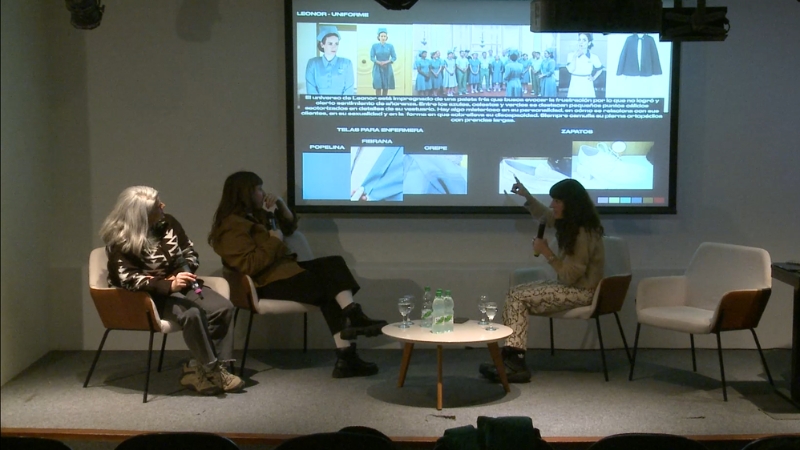
“It was all about hoarding. That’s why Elisa’s house is always full of stuff,” Souberbielle explained when discussing the logic of reuse and survival that permeates the protagonist’s world.
In addition, the speakers highlighted the importance of real-life locations and the adaptation of everyday spaces to transform them into dystopian settings. Part of the filming took place in housing complexes in Montevideo, where the crew altered interiors, objects, and settings to create a sense of indefinite temporality.
Costumes, Identity, and Character Development
Costume design was also a central focus of the discussion. Souberbielle explained that the work drew on a mix of styles, eras, and materials, with the aim of creating characters that conveyed emotion and context without the need for explicit explanations.
All the clothing styles—which weren't found up north—had to do with that: there are no clothing stores to shop at, so everyone recycles their clothes.
The designer also highlighted the characterization work and how the costumes interacted with the characters’ physicality, especially in the case of Elisa, played by Martina Passeggi. “It all has to do with what’s going on inside her as a character; it’s reflected in the costumes,” she explained.
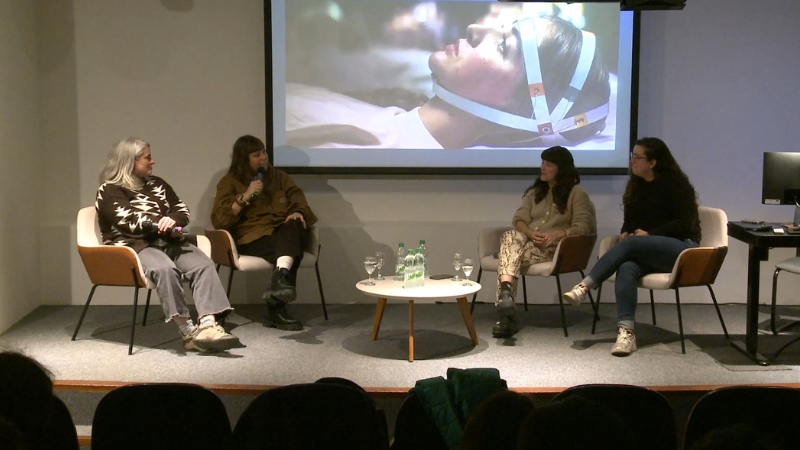
The conversation also touched on the visual design of supporting characters and specific elements of the narrative universe, such as insignias, props, ambient sound effects, and uniforms designed specifically for the film.
Uruguayan cinema, film festivals, and regional production
In addition to the creative process, the speakers reflected on the conditions of audiovisual production in Uruguay and Latin America. García explained that the film was a co-production between Uruguay, Argentina, and Germany, and that securing funding required years of work and applications for international grants.
The production company noted that development on the project began in 2019 and that it had its international premiere in 2025, following its run at international film festivals and markets.
Regarding the film's reception, he noted that the science fiction in *A Bright Future* offers a perspective that differs from the traditional one:
If I imagine a dystopia in Uruguay 100 years from now, I picture a Uruguay that looks more like this than like futuristic science fiction.
The event concluded with a call to continue supporting national cinema and to visit theaters to discover a film that showcases the creative and technical possibilities of contemporary Uruguayan audiovisual production.
https://www.youtube.com/watch?v=UV6mhA9x3Vo