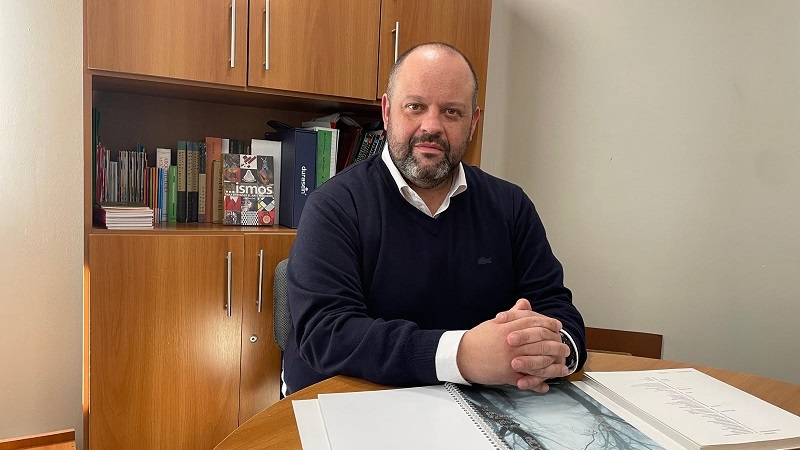
The conference was held at the Faculty of Philosophy and Letters of the University of Buenos Aires (UBA) on August 7 and 8.
About the ALIE 2025 Pre-Conference
The event brought together experts from across the region, from Mexico to Argentina, to discuss the main challenges facing education in Latin America.
The conference addressed topics related to formal and non-formal education, literacy, higher education, and vocational training. In this context, the ORT representative played a dual role.
On the one hand, he moderated the panel on "Society, Education, and Work: Contemporary Challenges for Education." At the same time, it provided an opportunity to present his paper “Why Educate in the World of Work? Lifelong Learning from the Perspective of Building and Developing Employability Skills,” which reflects on how to build and develop skills in the world of work through training.
Employability involves not only adapting to new realities in the workplace, but also developing initiatives that, through training, help build a better world.
The experience provided an opportunity to compare the Uruguayan research with decades of accumulated studies in countries such as Argentina and Brazil. It also paved the way for future institutional partnerships with universities in the region, including the University of Buenos Aires and the Federal University of Rio Grande do Sul.
One of the key themes of the pre-conference was the need to update university education in the context of rapid changes in the world of work, driven by the rise of artificial intelligence.
“Generative artificial intelligence is already being used by millions of professionals around the world. It carries ethical, authorship, and academic integrity risks, but at the same time it represents an opportunity to open up new horizons for creativity and work,” he said.
The researcher particularly valued the exchange with his Latin American colleagues:
"We found that, despite the context, there are similar questions that ultimately boil down to fundamental issues: why educate, and, for example, what should we teach in this landscape shaped by artificial intelligence and the realities of Latin America," the researcher concluded.
Participation in the conference is part of the commitment of the Universidad ORT Uruguay and the School of Design to align education with changes in the workforce and to strengthen educational research at the regional level.