For years, talking about money was practically taboo. Income, debt, savings, and investment decisions were often kept private. However, learning to manage your personal finances is an essential tool for achieving your goals and dealing with unexpected events.
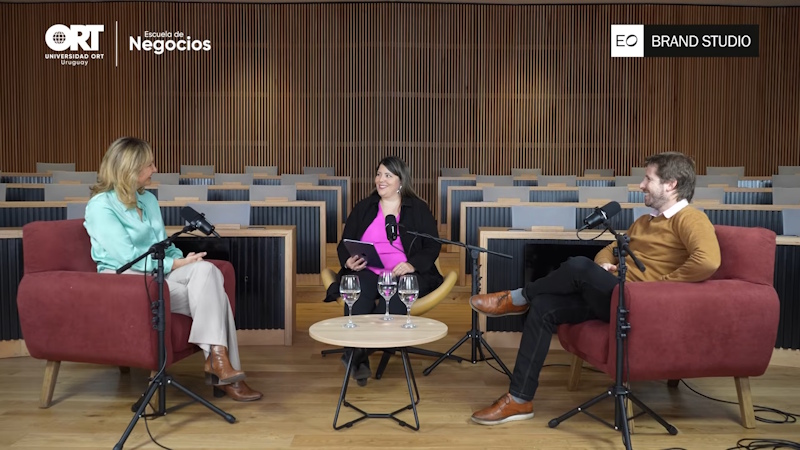
This was the view expressed by Laura Raffo, an economist with an MBA and a specialist in business and investments, and Mauro Aliskevich, academic coordinator of the graduate programs in finance at the Business School, during a new episode of *Liderando Transformaciones*, the video podcast series produced by ORT in partnership with *El Observador*.
The experts agreed that Uruguay still has a long way to go in terms of financial literacy. Understanding how to create a budget, save money, invest, apply for a loan, or interpret an interest rate should be part of education from an early age.
“It’s great that we Uruguayans are starting to become more financial literacy literacy, and that the topic is discussed more—not only in our own homes but also in our education,” Raffo said.
“It’s something that should come naturally—seeing what others have experienced and learning from it,” Aliskevich added.
Our relationship with money is also emotional
Money isn't just a number in a bank account. The way each person manages it is shaped by family experiences, beliefs, fears, and lessons learned throughout life.
For some people, it represents security. For others, it represents status, freedom, or even a source of guilt and worry. Identifying that personal connection allows for a better understanding of why certain decisions are made.
“There are many different ways of relating to money, and that changes how you manage your finances,” said Raffo. “The nice thing is being able to learn as you go so you can plan better over time,” added Aliskevich.
Gaining knowledge and planning help you build a more mindful relationship with money and feel more confident when making decisions.
When is the best time to start saving?
The sooner, the better.“If you ask me when the best time is… my answer is: 10 years ago,” said Aliskevich.
“It’s good for kids to understand how household finances work. I did that with my kids,” Raffo said.
The experts emphasized that, when investing, the time can be even more important than the initial amount. Starting with a small amount and sticking with it for several years can yield better results than waiting until you have a large sum available.
Financial literacy is also linked to SDG 4: Quality Education, one of the Sustainable Development Goals adopted by the United Nations in 2015 as part of its 2030 Agenda. This goal promotes learning opportunities that enable people to acquire the knowledge and skills needed to thrive throughout their lives.
https://www.youtube.com/watch?v=Wep3wLoUmd4