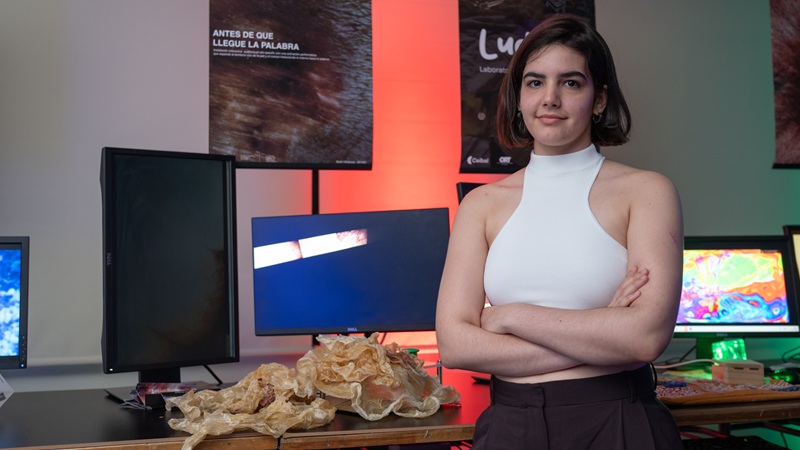
The project combines conceptual research, audiovisual resources, interaction, and technological experimentation to explore the phenomenon of somatization, understood as the physical manifestation of emotional or psychological experiences.
From the Body to the Image
The project arose from a personal experience the author had related to an episode of anxiety and its physical effects. Based on that experience, Arhancet began to explore how the body finds ways to express what cannot yet be put into words.
Before the word arrives refers precisely to that process: the bodily reaction that precedes the understanding or verbalization of an emotional experience. The project seeks to reflect on the mechanisms through which the body registers, processes, and communicates that which remains beyond language.
An interactive installation
The work takes the form of an interactive installation consisting of a soft, latex-covered sculpture, hidden sensors, and digital visuals projected onto a screen.
The audience's interaction with the latex surface triggers changes in the projected images, creating an experience that links physical contact with various visual representations of the body.
The visualizations incorporate textures, scars, blemishes, and patterns inspired by human skin, exploring different scales of observation—from a close-up, microscopic view to a broader, more abstract perspective.
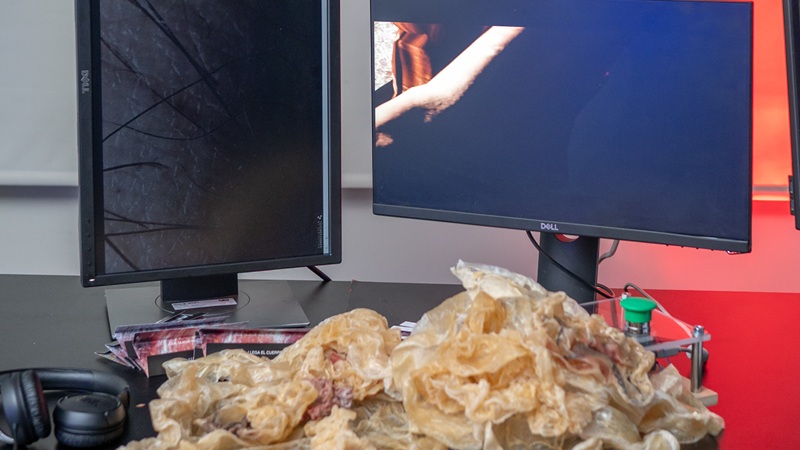
The proposal does not seek to literally replicate an emotional experience, but rather to translate it into other sensory and visual languages that enable the creation of new forms of perception and interpretation.
Research and experimentation
The project’s development involved a process of conceptual research, technological exploration, and fieldwork. The student conducted tests with sensors, interactive systems, and audiovisual resources, in addition to compiling visual records of skin, scars, and other bodily marks that served as input for the creation of the visualizations.
The initiative also partnered with the Contemporary Art Space (EAC), an institution selected as a key partner for the development of the project within the academic framework of Re|creación 26.