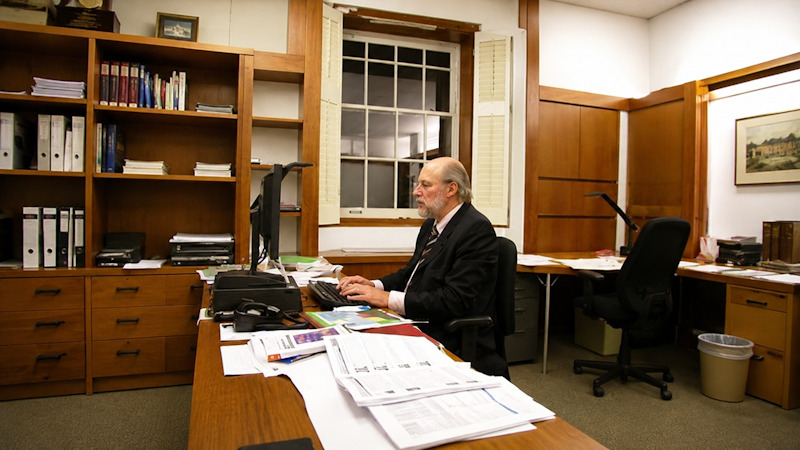
Enrique Kramer, Academic Coordinator of Management and Professor of Strategic Management at the School of Administration and Social Sciences (FACS), co-authored a case study and co-wrote an article on microfinance—both set in the context of Uruguay—with his sponsor, Senior Lecturer Michael Chu, during his tenure as an International Visiting Scholar (IVS) at Harvard Business School (HBS), which took place from March 12 to May 7, 2008.
Interview with Enrique Kramer, Academic Coordinator of the Bachelor's Degree in Management and Administration
- What academic role do you hold at the School of Business and Social Sciences?
- I am the Professor of Strategic Management. I have developed and taught courses in this discipline as part of the Bachelor’s Degree in Management, the MBA program, and the Executive Education program. I also serve as a Business Plan advisor and teach General Management.
- What does it mean to be an IVS?
- The International Visiting Scholar Programme IVSP) aims to bring together faculty members from around the world so they can gain a better understanding of HBS, the case method, how to write and teach cases, and how to develop courses.
It also seeks to foster connections with the school’s faculty for future activities. This is a new initiative at HBS. In fact, I was part of the first cohort of the IVSP, along with a professor from Germany and a professor from China.
This first edition of the IVSP was aimed at those who had participated in other HBS programmes , such as the Colloquium on Participant-Centered Learning (CPCL), in which I participated in 2002. Interested faculty members must find a sponsor among the HBS faculty with whom they must agree on a work plan. The proposal is reviewed by a committee, which selects the candidates to whom an invitation will be extended.
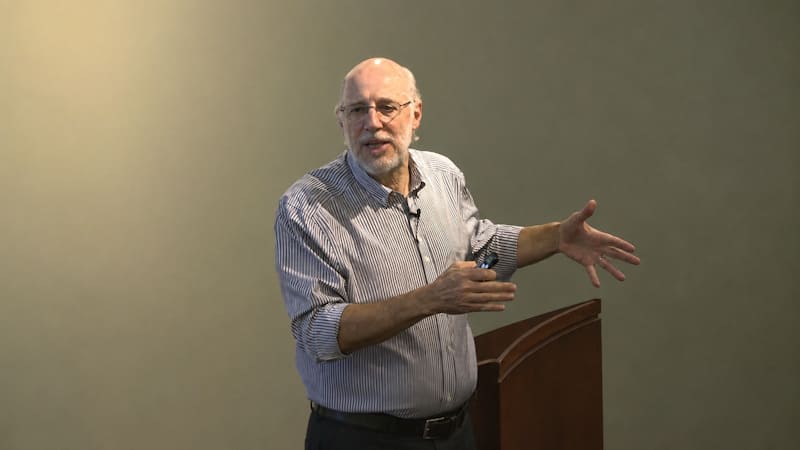
- What was the journey that led to your trip to the United States like?
- On the one hand, it was simple; on the other, it was complicated. The simple part—strange as it may seem—was identifying and finding a sponsor. I didn’t think any of my professors at CPCL would accept me. So I called a professor friend of mine at the Central American Institute of Business Administration (INCAE), John Ickis, and he suggested I contact Michael Chu, who has close ties to Uruguay since he spent much of his childhood and adolescence in Montevideo.
Michael was extremely kind, and we quickly agreed on a plan of action. The challenge was balancing my work at FACS with my trip to the United States. The program lasts a full semester—that is, four months. Ultimately, I was able to negotiate a two-month stay with both FACS and HBS.
-What did your experience at Harvard bring you academically?
- Essentially, I saw how HBS operates—in terms of course design, instruction, and faculty management. I also learned about the rigor with which they handle and prepare the material they provide to their students. They have a motto: “We give our students only the best.” I saw how they put that into practice.
I also saw the importance they place on topics that one might think aren’t that significant in the business world. For example, they are devoting a great deal of research effort to social enterprise —that is, new or existing companies that conduct their activities with the community’s well-being in mind . One of the talks I attended featured Rosabeth Moss Kanter, a legendary figure at HBS who focuses on strategy, innovation, and leadership. They also offer courses on these topics in their Master of Business Administration (MBA) programs—which, by the way, are becoming increasingly popular.
- What does it mean for a Uruguayan scholar to be at Harvard?
- It’s like being in academic nirvana—seeing, feeling, learning, and sharing with other faculty members and students the wonder of the teaching-learning process and the creation of knowledge in the field that fascinates me: business and organizations.
- What stood out most to you about Harvard from an academic standpoint?
- What caught my attention the most is the professors’ workload. They’re “running at full speed”—and not just the young professors, but also those with tenure (more experienced ones). And there’s a tremendous amount of cross-seeding (academic exchange) among them, even with other schools within the university itself.
For example, I took part in activities organized by Michael Chu with a group of faculty and students from the School of Public Health. I was also fortunate that this year marked the school’s 100th anniversary, and they celebrated it in a big way. At HBS, they celebrate with more academic activities, more case discussions, and many presentations by the faculty themselves.
https://youtu.be/7V98d8SpYJM?si=U_UWA2lYqFC_ISLE
Interview published in July 2008