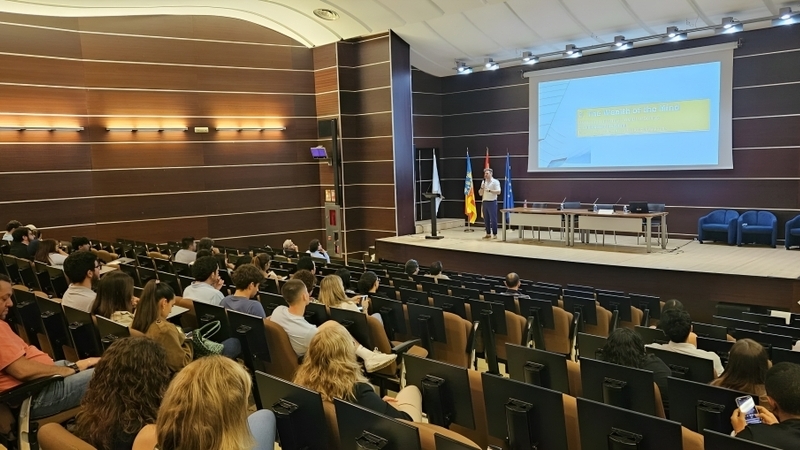
Architect Guillermo Loblowitz participated as a speaker at EXCO’26, the 40th edition of the Construction Technology Fair, organized by the Higher Technical School of Building Engineering at the Polytechnic University of Valencia (ETSIE-UPV), Spain. The event took place from September 28 to 30, 2026, at Feria Valencia, as part of Feria Hábitat València.
Invited to represent Uruguay and the National Association of Construction Companies ( Universidad ORT Uruguay ), Loblowitz participated in an international program that brought together professionals from more than 10 countries, including Spain, Italy, China, Poland, and Chile. In that context, on September 30, he presented "Lean Construction: Generating Wealth Through Time, Relationships, and Well-Being". Rather than focusing on the technical aspects of Lean Construction, he explained from the outset that he would approach the methodology “from the human perspective”, focusing on the people who carry out the processes.
Graduate of the Architecture program and the Specialization Diploma in Real Estate Business from the Universidad ORT Uruguay, Loblowitz is currently a member of the faculty team responsible for the course "Lean Construction: Methodologies for Improving Productivity" at the School of Architecture.
Time, Relationships, and Well-Being in Construction Management
As a starting point, Loblowitz turned to The 5 Types of Wealth (Sahil Bloom, 2025). The book distinguishes five types of wealth—time, social, mental, physical, and financial—and Loblowitz used the first three as a framework for reflecting on Lean Construction.
From there, he proposed broadening our perspective on productivity and efficiency to also consider how the way processes are managed affects those who work on them.
The Value of Time: Productivity and Personal Time
The first section was devoted to time.
In this regard, Loblowitz suggested that when a schedule falls behind, one possible solution is to bring in more staff or rely on overtime. His reflection highlighted the other side of that decision: spending more hours at work means having less time to rest, spending time with family and friends, or pursuing personal interests.
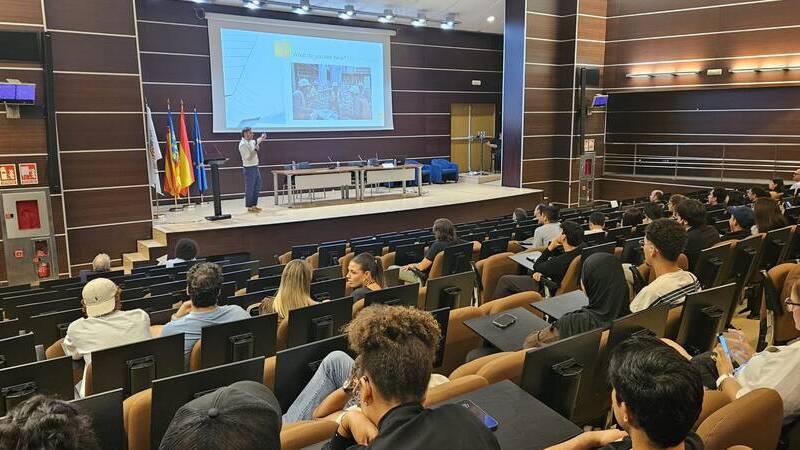
From that perspective, the architect proposed not to view productivity solely as a way to meet the schedule. Improving processes and reducing waste can also help prevent inefficiencies from spilling over into the personal time of those working on the construction site.
- You might also be interested in reading: “Lean Construction and BIM at the UPV: Architect Guillermo Loblowitz presented the UPM2 case study”
Social Wealth: Collaboration and Workplace Relationships
The second section focused on interpersonal relationships.
When discussing challenging projects, Loblowitz pointed out that the experience is not defined solely by technical problems. Conflicts, misunderstandings, and the relationships among those working on a project can also influence day-to-day work.
In that context, he emphasized the importance of creating opportunities to talk, ask for help, listen to others, and make commitments within the team.
“It’s not just about changing the way we manage processes, but also the way we interact with one another.”
In this context, construction requires constant interaction among stakeholders, sectors, and teams whose work is interrelated. Management, therefore, involves more than just tasks and processes; it also requires coordinating people, interests, and objectives.
- You might also be interested in reading: “How to Increase Efficiency in Construction with Lean Construction: A Hands-On Workshop”
Mental Wealth: Working with Less Uncertainty
The third dimension was related to the concerns and uncertainty associated with work.
In this regard, Loblowitz described the “firefighting” dynamic that can take hold on a construction site: resolving delays, coordination issues, and unforeseen problems as they arise. From this perspective, these situations also take a toll on those who end their workday exhausted and continue to think—even after hours—about pending problems or what they’ll need to resolve the next day.
At the same time, he cautioned that the methodology does not rule out unforeseen circumstances:
“Lean Construction doesn’t come with any magic tools.”
As he explained, better planning, collaboration, and trust within the team can help reduce uncertainty and enable a timely response when deviations arise. But the tools, he emphasized, do not work in isolation: they also require a supportive culture, a positive attitude, and training for the teams.
- You might also be interested in reading: “In The Column, Professor Loblowitz, an architect, gave an interview about Lean Construction”
Google's Data Center in Canelones: Collaborative Planning on Site
The conference then applied these ideas to an experiment conducted as part of the Google data center in Canelones. In August 2024, Google announced the start of construction on its second data center in Latin America, located in Uruguay.
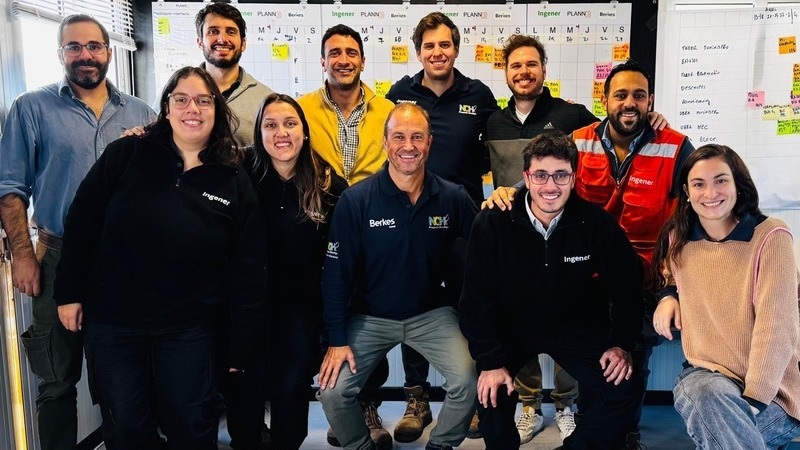
Loblowitz described experiences with various construction companies and teams involved in the project. Among them, he highlighted one team in particular for the way it incorporated collaborative work into the planning process.
As he recalled, at the end of one of the implementation phases, members of that team noted that the tools they had used had helped them work as a true team, rather than maintaining a confrontational dynamic between the different parties.
The example demonstrated, based on a specific situation, how a change in the way we plan can also affect communication and coordination among those involved in the project.
- You might also find it helpful to read: “Artificial Intelligence Tools for Architects and Designers”
What happens when a team resists change?
A question from the audience steered the conversation toward another challenge in implementing Lean Construction: What happens when team members have been working a certain way for decades and are unwilling to adopt a new methodology.
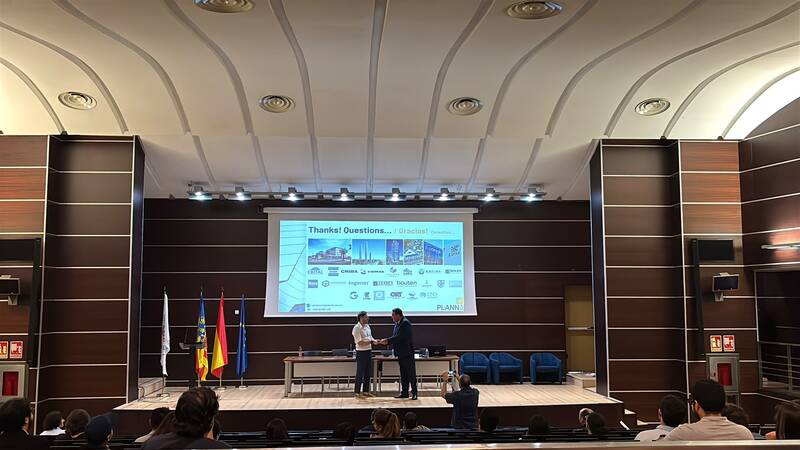
In this regard, Loblowitz distinguished between two levels. On the one hand, he explained that adoption can begin as a requirement from the company or the construction management team. On the other hand, he pointed out what happens later in day-to-day practice, when those involved in the project begin to experiment with these tools and see how useful they are.
Based on his experience, he explained that there may be initial resistance to new meetings or procedures. In that process, he attributed a central role to the person leading the implementation: the new working groups need to demonstrate in practice that they enable identify dependencies, coordinate tasks, and improve communication.
He also noted that these meetings should be brief, efficient, and constructive so that participants find value in them and are willing to continue holding them.
The implementation of Lean Construction thus appears, in his view, as a process that does not depend solely on knowledge of tools. It also involves leadership, communication, training, and a cultural shift in the way we work.
- You might also be interested in reading: “Summit IA Human Future 2026: Artificial Intelligence and New Questions for Space-Related Disciplines”
“Behind every plan, there are people”
Toward the end, Loblowitz argued that innovation does not necessarily lie in the tools, but also in how we understand processes, plan, and work with others on a daily basis.
His reflection also broadened his perspective on what is being built. Professional practice, he noted, does not merely produce buildings, infrastructure, or cities: during these processes, work experiences, work cultures, and relationships of trust. “Behind every planning project there are people,” the architect stated.
From this perspective, Loblowitz proposed looking at the success of a project beyond just meeting deadlines and the quality of the result. His approach also incorporated the experiences of those who participated in the project and the way they navigated the work process.
The topics covered at EXCO’26 are carried forward in the teaching activities at ORT’s School of Architecture. The course program Lean Construction: Methodologies for Improving Productivity covers, among other topics, the management of workflows and people versus task management, the human factor in Lean Construction and the relationship between communication, commitment, and collaboration.
Learn about the Lean Construction course: Methodologies for Improving Productivity