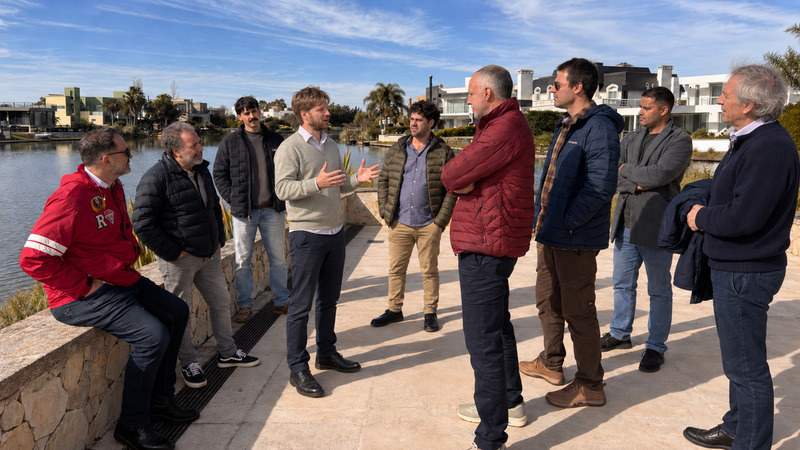
On Saturday, July 25, students from the Specialization Diploma in Real Estate Business at the School of Architecture of the Universidad ORT Uruguay participated in an academic field trip to the southern part of Greater Buenos Aires.
The trip brought together mixed-use projects, residential developments, condominiums, and a large-scale development currently in the planning stages. At each stop, the group discussed different aspects of the real estate business based on specific case studies and direct dialogue with developers and designers.
The event was organized by the Architect Klaus Mill, academic coordinator of the diploma program, with the support of faculty member Javier Giangarelli, B.A..
““The main objective of the academic trip was to learn about and analyze different types of real estate development in the southern part of Greater Buenos Aires,” explained Mill.
According to the academic coordinator, the proposal sought to connect the multidisciplinary perspective of the Specialization Diploma in Real Estate Business—which integrates various fields related to real estate development and management— with real-world projects, business decisions, and the challenges that arise during their implementation.
New Quilmes: Mixed-Use Development, Urbanization, and Infrastructure
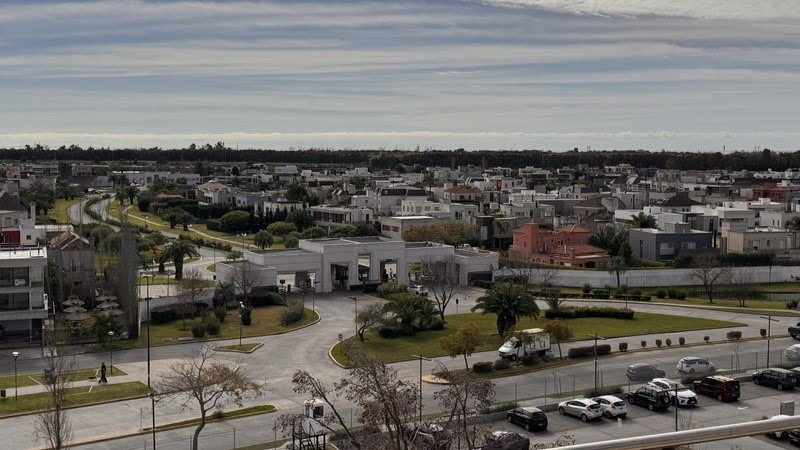
The first part of the tour focused on two geographically linked developments: Nuevo Quilmes Plaza and Nuevo Quilmes. There, the students analyzed the relationship between mixed-use development, residential development, infrastructure, and the landscape.
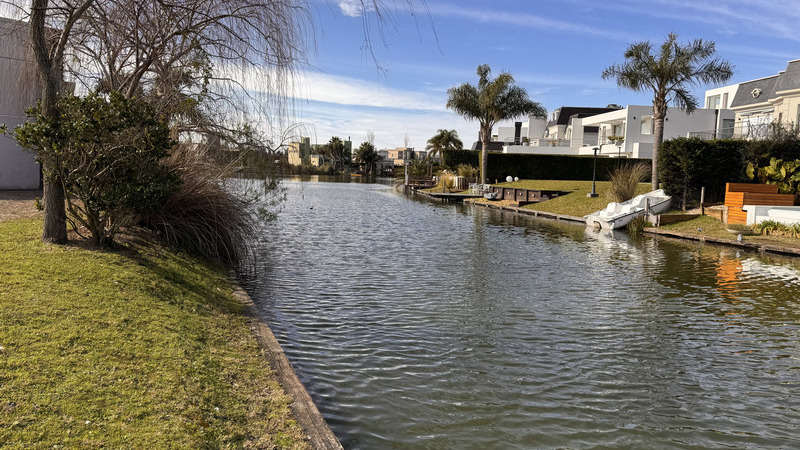
The event began around 10:00 a.m. at Nuevo Quilmes Plaza, an open-air mixed-use shopping center located in Don Bosco, across from the Nuevo Quilmes neighborhood. The complex brings together retail stores and services, along with a supermarket, a gym, and dining options.
In addition to the shopping center, the master plan calls for a 5,000-square-meter office building spread over five floors, 144 residential units, and a future medical center.
During this first visit, the group examined how commercial, business, residential, and service uses can complement a residential environment and incorporate new activities within the same urban area.
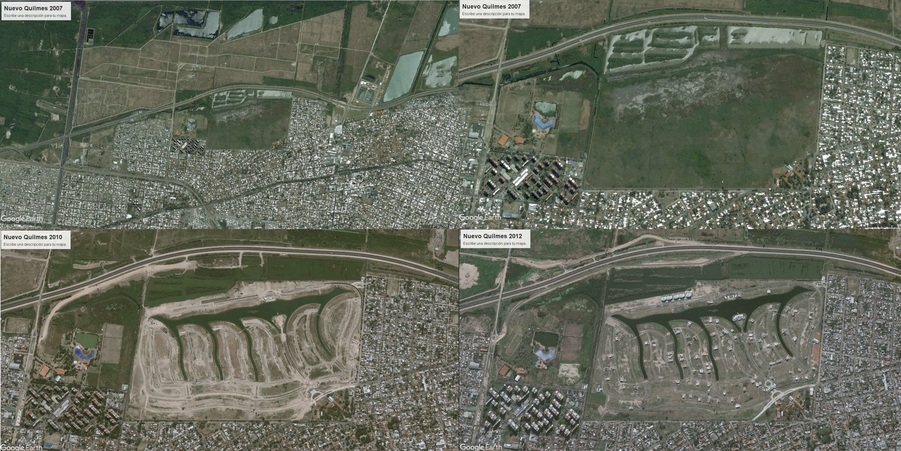
The tour then continued to Nuevo Quilmes, a residential development consisting of 678 lots organized into six communities, featuring common areas, infrastructure, homes, medium-density developments, and a system of lagoons and canals.
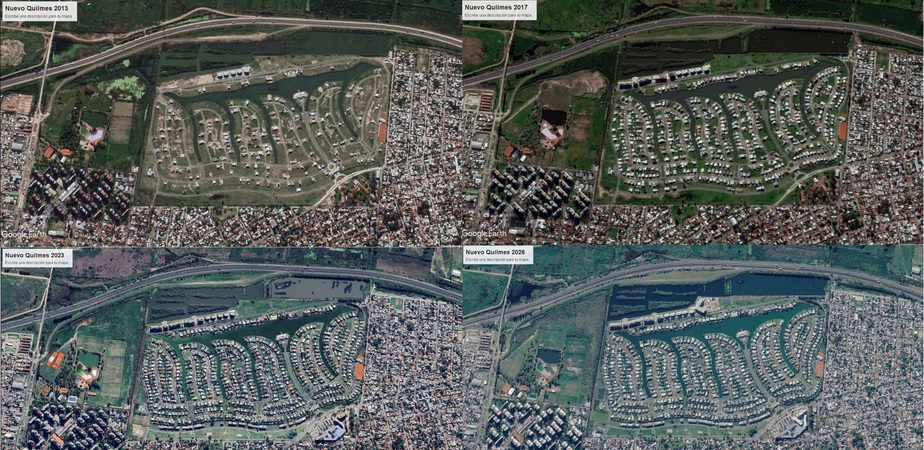
There, the students examined the subdivision and development land use, the organization of the master plan, infrastructure and services, as well as the role of water within the landscape and the real estate proposal.
In this regard, the Architect Giancarlo Serrentino, a diploma student, noted that he was particularly struck by the scale of the projects and the opportunity to observe a real estate development landscape different from what he was familiar with in Uruguay.
- You might also be interested in reading: “How Pilay Pioneered Real Estate Investment and Won the ANII’s NOVA Award”
From Excel to Reality: What the Academic Journey Brought
The testimonials collected after the trip all centered on the same theme: the value of comparing one’s training and initial models with the decisions and situations that arise in practice.
The Specialization Diploma in Real Estate Business offers a multidisciplinary education aimed at understanding and applying knowledge from different fields to specific cases. Throughout the course, students applied this perspective to specific projects and spoke with professionals directly involved in their development.
This integration of academic training and practical experience was also highlighted by Enrique Molina, a student in the diploma program. As he explained, interacting with experienced professionals allowed him to clarify ideas and address questions related to various aspects of the real estate business. In this regard, Molina stated:
“It was a very good experience, especially the way it combined academic and theoretical learning with practical experience.”
In this regard, Serrentino made special mention of an idea that came up during the conference:
“The idea that every great project starts on a napkin—basically, crunching numbers on a little piece of paper.”
As he explained, that simple spreadsheet is the starting point for analyzing whether the project can work. His interactions with the developers also gave him insight into their way of thinking and the decisions they must make—from the earliest stages to the problems that arise during development.
Mill, for his part, emphasized what happens next:
“That famous Excel spreadsheet that can hold everything, but reality always surpasses it.”
The academic coordinator of the diploma program noted that the execution of a startup can be disrupted by economic and political fluctuations, external influences, and changes over time. He also commended the developers’ willingness to openly share that process and emphasized the importance of maintaining a long-term vision and conviction in the project in the face of the process’s contingencies.
Overall, the tour covered various aspects, uses, and stages of the real estate business: from the interplay between retail, services, and housing to land development, landscape integration, the transformation of large parcels, market analysis, and approval processes.
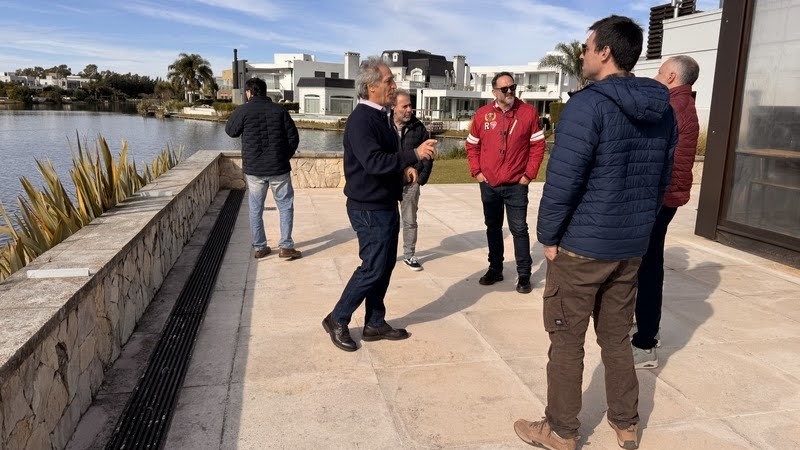
The tour, moreover, was not limited to exploring projects at different stages. It also gave students insight into the decisions, adjustments, and challenges that lie between an initial idea and its realization.
Are you interested in learning about the real estate business through real-world case studies?
Learn about the Specialization Diploma in Real Estate Business