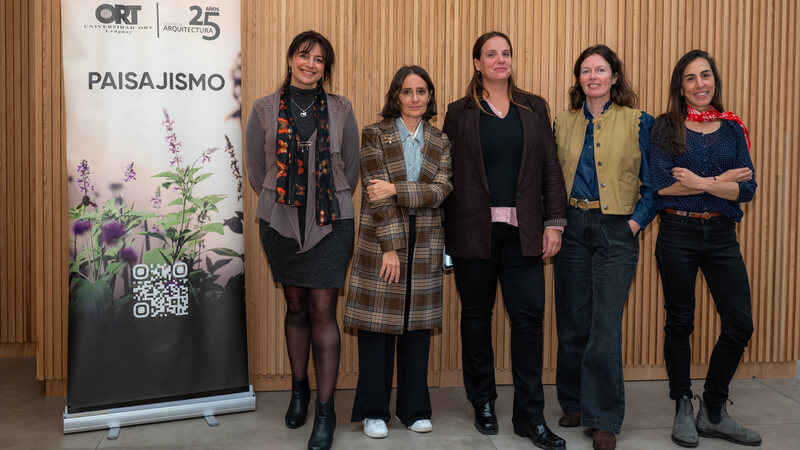
The event, organized by the School of Architecture at the Universidad ORT Uruguay, took place on August 11, from 9:00 a.m. to 4:30 p.m., in the Business School Auditorium—Luis de la Torre 919—with both in-person and Zoom participation.
This fifth edition of the seminar aimed to highlight trends, approaches, and challenges in the contemporary practice of landscape architecture in Latin America.
The event featured experiences ranging from gardens, balconies, and productive landscapes to public parks and urban developments, where the speakers shared how to assess a site’s conditions, recognize its living relationships, design an intervention, and evaluate its effects.
Rethinking Perspectives to Shape the Landscape
The Argentine architect Jimena Martignoni opened the event with Landscape Architects of the Americas, Generation R: Regenerating Perspectives / Regenerating Landscapes (2025). Conceived, curated, and edited by Martignoni for IFLA Americas, the publication brings together 100 projects by 42 landscape architecture firms in 11 countries and documents recent responses to the continent’s environmental, social, and cultural challenges.
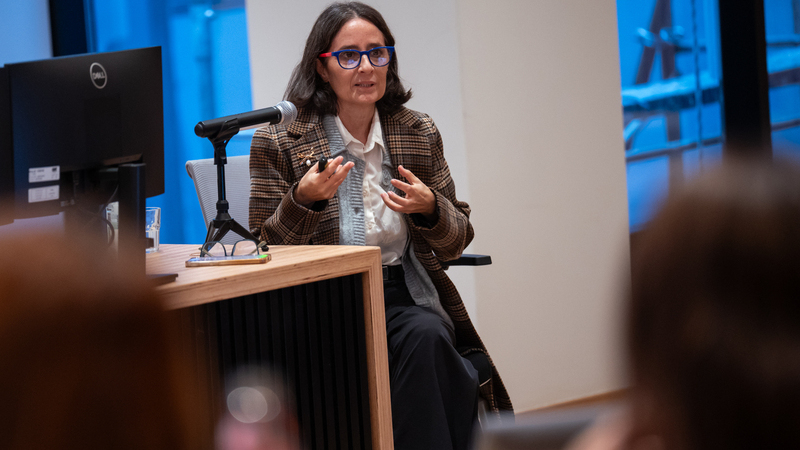
The “R” in the title does not refer to a single operation. The book brings together actions such as regeneration, rehabilitation, reconstitution, reconstruction, revitalization, reeducation, reparation, and revolution. Each one invites us to consider which ecological, cultural, or social relationships have been damaged, weakened, or disrupted—and what the project can do to restore their vitality.
Sustainability, Regeneration, and Living Systems
Martignoni proposed regeneration as a complement to sustainability. While the latter seeks to reduce consumption, emissions, and environmental impacts, the regenerative perspective asks how to foster abundance and diversity in living systems. It is not about returning to a static state, but rather about working with processes capable of restore connections between water, soil, vegetation, wildlife, culture, memory, and ways of living.
The publication organizes the projects into four categories: resilience—the art of enduring—; equity—the art of respect—; conservation—the art of safeguarding—; and educational initiatives—the art of replication—.
Furthermore, the boundaries between them are permeable. The water management can create public space; an ecological restoration can incorporate community learning; and the conservation of a landscape can also preserve local memories and practices.
The approaches discussed at the seminar are linked to Sustainable Development Goal (SDG) 15: Life on Land, one of the 17 goals adopted by the United Nations in 2015 to address global challenges by 2030. This SDG encompasses, among other aspects, the protection and restoration of terrestrial ecosystems and the conservation of biodiversity—topics that are central to initiatives focused on landscape regeneration, native vegetation, plant communities, and habitats for various species.
Another central image was that of the Americas as a beehive: a network in which responses are generated collectively and can be shared, without erasing regional differences. In this way, a project developed in the north is not literally transferred to the south, but its principles can be compared, adapted, and tested in a different climate, culture, or on a different scale.
As he concluded his presentation, Martignoni shifted that responsibility to those who shape the landscape:
“It is up to us to rebuild the parts, connections, and relationships within the system that sustain life—those that have been lost or damaged.”
The same collective logic guided the book’s publication. Although the names of the studios are listed together at the end, each project, photograph, and idea retains its own credits. For Martignoni, working collectively does not negate authorship: it requires accurately acknowledging the people who contribute to that shared work.
- You might also be interested in reading: “María Gomensoro, a graduate of the Landscape Design Technician program, was interviewed by El País”
Designing the Common Based on the Conditions of Each Place
The Chilean architect Paula Livingstone, a founding partner of JL Arquitectura Paisaje, presented the work of a firm dedicated to public space, green infrastructure, environmental restoration, and territorial projects.
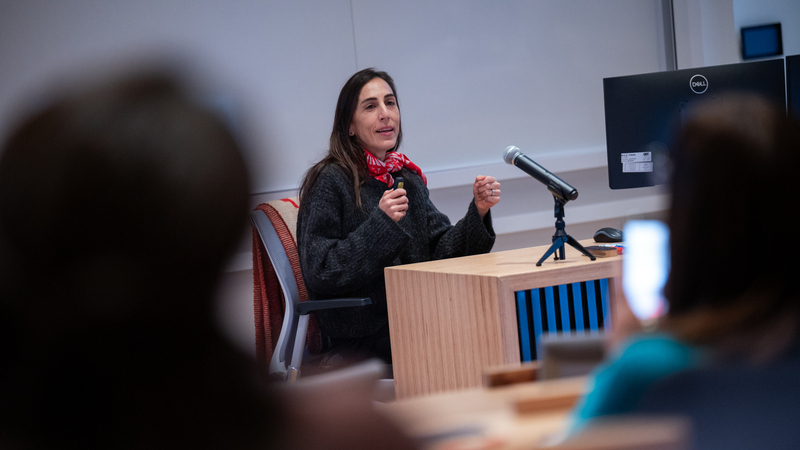
Its starting point was in the interstices of the city: edges, connections between buildings, vacant lots, and other areas capable of becoming shared spaces. In this regard, he stated:
“We love the idea of designing and exploring the ordinary.”
Livingstone explained that Chile's size and geographic diversity make it necessary to study each region before planning. A solution designed for Santiago cannot be applied without modification to the desert, the temperate forest, or Patagonia. Climate, watersheds, vegetation, topography, and land use patterns are not factors considered after the design is complete; they constitute the starting point.
- You might also be interested in reading: “What exactly does a landscape architect do?”
Three steps for observing, testing, and adjusting
In the Cerro Calán Natural Parkin Santiago, the project restored trails, incorporated biodiversity hotspots with native vegetation, and added overlooks and astronomical observation facilities. The involvement of local residents and user groups made it possible to collect seeds, identify insects and geological features, and discuss the uses of the hill. The planting and irrigation prototypes helped refine solutions before scaling them up to the entire area.
The Tobalaba Urban Market posed another challenge: creating public space and greenery between four towers and atop successive concrete slabs. The firm designed plazas, walkways, gardens, and terraces that accommodate circulation, socializing, work, and relaxation in a part of Santiago with few green spaces. The project required incorporating soil and vegetation within a structure dominated by concrete and coordinating landscape decisions with those of architecture and engineering.
At the Cousiño Macul Vineyard, the tours were integrated into the vineyard landscape. Flower strips for pollinators, native vegetation, trails among the vines, restored historic irrigation ditches, reused materials, and educational spaces helped connect production, biodiversity, and the visitor experience.
All three cases followed a common approach: observing, engaging with the people who use the space, testing on-site, and supporting the project’s evolution. For Livingstone, participation, monitoring, and maintenance are part of the design; they are not tasks that begin only after construction is complete.
- You might also find this article useful: “Urban Landscaping and Gardening: The Art of Restoring Nature’s Beauty”
Plant Communities: Planning for Propagation, Planting, and Maintenance
The Argentine landscape architect Ernestina Anchorena focused her presentation on the Pampas plains and the River Plate landscape. In a territory of subtle topographical variations, interpreting the site requires paying attention to seasonal changes, grasslands, edges, soils, and plant communities. What at first glance appears uniform contains differences that are crucial to the project.
View this post on Instagram
The first case reported was that of the Campo Cañuelas Museum, featured in Generación R. The site was a former enclosed country estate, with trees and accumulated elements that had no clear connection to the surrounding pampas. Removing the wall opened up the sculpture museum toward the countryside. A ferrite-colored concrete ribbon—reminiscent of rural buildings in Buenos Aires province—linked the works and organized the visitor route, while the meadows bridged the transition between the low-lying lawn and the height of the trees.
To establish these plantations, Anchorena developed a nursery and his own protocols for collection, propagation, planting, and management. Instead of designing isolated specimens, he planned communities, densities, and relationships. During implementation, the growing medium, irrigation, competition among plants, and maintenance tasks altered the results. Mistakes were not left out of the narrative: they served to refine the protocol and try again.
The coastal projects he presented introduced a distinction between restoring a landscape and designing a garden. In a restoration, Anchorena prioritizes native seeds and works with existing dynamics. In a garden, he may incorporate adapted species, provided he studies their behavior within the system. In both cases, the available maintenance resources and the future transformation of the vegetation must be considered from the outset.
Near residential areas, he proposed preserving areas recognizable by their scents and by the memory of “Grandma’s garden”; further away, he suggested allowing for less controlled vegetation. Referring specifically to Uruguay, he summarized this focus on edge landscapes:
“Start looking at the river, start looking at the mar [...] everything that grows along that bank and how to replicate and preserve it.”
Her presentation showed that selecting plants also involves planning how to obtain, propagate, plant, and care for them. The planning, execution, and maintenance of the project thus form a continuous sequence of decisions.
- You might also be interested in reading: “Why Study Landscape Architecture”
Wild Butterflies: Small Stations for an Urban Network
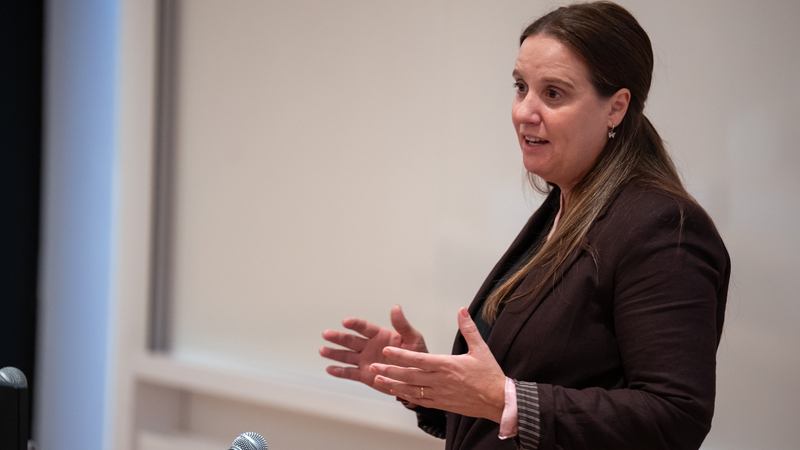
Architect and landscape architect Paula Rial, academic coordinator of the ORT’s Landscape Design Technician program, explained the origin of Wild Butterflies. The project, developed in collaboration with entomologist Gabriela Bentancur Viglione and included in Generación R, grew out of Rial’s research related to art, botanical illustration, and butterflies.
- You might also be interested in reading: “*Mariposas Salvajes* (Wild Butterflies), by Architect and Psychologist Paula Rial, featured in an IFLA Americas publication”
After observing a migration in his garden, Rial consulted Bentancur and began to study what conditions might facilitate the arrival, feeding, and reproduction of these insects in the city. This question shifted the focus of the project from the isolated figure of a butterfly to the network of relationships that makes its life cycle possible.
Presented at Ghierra Intendente 2020, the proposal envisioned Montevideo connected by small green spaces. Some would provide host plants for the larvae; others, food and shelter for the adults. Distributed throughout plazas, parks, gardens, and balconies, they could form a biological corridor. During the pandemic, an installation at the Espacio de Arte Contemporáneo served as the first built prototype.
The process changed the way Rial selected plants. Color and shape were no longer sufficient criteria: it was also necessary to evaluate the ecological function of each species and its subsequent management.
“First, it has to be good, and then we figure out how to make it look nice.”
Bentancur contributed his entomological expertise, and the nurseries helped identify species. Using that information, Rial reviewed the composition, layout, and maintenance of the stations. He also advocated for the creation of accessible materials and citizen reporting as tools to help a small-scale initiative become part of a larger network.
- You might also be interested in reading: “‘Mariposas Salvajes,’ a project by Architect and Psychologist Paula Rial, featured in an IFLA Americas publication.
Designing for the Entire Life Cycle of Butterflies
The entomologist Gabriela Bentancur Viglione developed the biological aspect of the project and addressed citizen science, the geographic distribution of species, and the complete life cycles of lepidoptera.
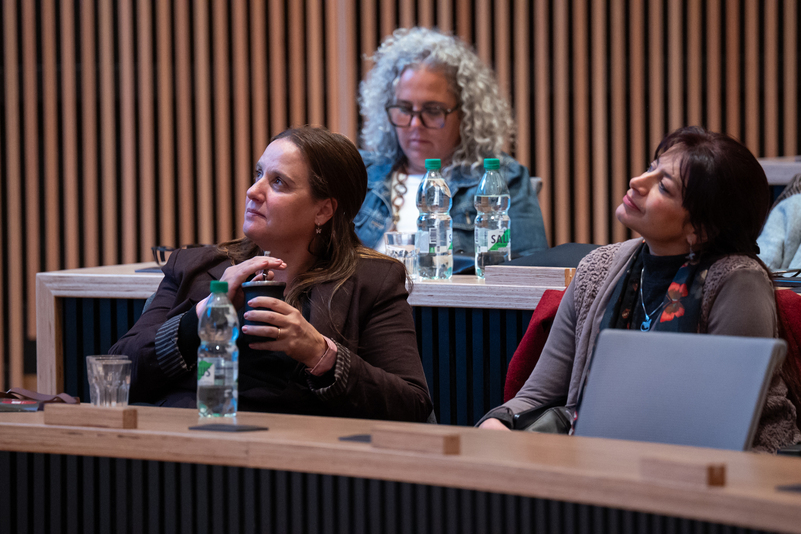
In explaining his methodology—photographic documentation, the breeding and release of specimens, and observations gathered from various parts of the country—he emphasized that research does not necessarily require sacrificing the subjects being studied. In this regard, he stated:
“I am proof that it is possible to do science without killing the subject of study.”
- You might also find it helpful to read the article: “Landscape Project Roundtable: How Landscape Architects Are Trained and How Landscaping Is Done at ORT”
Learning to See All the Stages
Bentancur pointed out that planting flowers alone is not enough to attract and retain butterflies. Depending on the species, host plants for the larvae, sources of nectar or other food for the adults, and suitable places to form pupae are needed. Bare soil, leaf litter, shelter, sunlight, and protection from the wind can also be critical factors.
Pruning, removing dry leaves, or completely covering the ground can eliminate a generation before the adults appear. That is why “learning to see” means recognizing that eggs, caterpillars, pupae, and adult butterflies are all part of the same life cycle and that each stage may require different conditions.
The existing flora also provides information about the populations that may live in a given area. Bentancur explained that butterflies are not evenly distributed throughout Uruguay: a garden on the coast, in the mountains, or along the shoreline should not be designed based on a single list of plants. First, it is advisable to observe which plant communities are present in the surrounding area and, based on them, enrich the site.
Faced with closed butterfly conservatories, the specialist preferred open gardens. These allow populations to arrive on their own and can simultaneously benefit other insects and birds, without removing or confining specimens. The result is not immediate: the more isolated a garden is from other habitats, the longer it may take for it to be colonized.
The exhibition also highlighted precautions regarding exotic species, chemicals, and broad-spectrum biological controls. A solution targeting a single organism can affect ecological relationships that are not yet fully understood. Hence the need to manage, monitor, and adjust each intervention rather than considering it complete once it has been implemented.
- You might also find this article useful: “Landscaping in Uruguay Is Booming: An Interview with Paula Rial in Forbes”
Landscape Architecture: Observation, Method, and Professional Training
The five exhibitions differed in scale and context, but they shared key operational questions:
- What's on the site?
- What should you keep?
- How will the proposal be developed?
- Which relationships need to be mended?
- What kind of maintenance will actually be possible?
The cases showed that the landscape, far from being captured in a single final image, requires surveys, testing, interdisciplinary work, and follow-up.
They also highlighted tasks specific to the professional practice of landscape architecture: surveying a site, selecting and growing vegetation, presenting a design proposal, budgeting for its implementation, coordinating specialists, managing a project, and evaluating its progress. For those already enrolled in the program, the seminar expanded their repertoire of projects and methods. For those considering studying landscape architecture, it offered a concrete introduction to the field.
The degree program in Landscape Design Technician program at the Universidad ORT Uruguay lasts two years and is organized into four semesters. The curriculum integrates five areas—humanities, technology and administration, ornamental horticulture, art, and design—to teach students how to plan, draw, budget, manage, and construct landscaping projects.
The course is designed for people interested in gardening, green spaces, and design, as well as professionals looking to incorporate landscaping tools into their work. The next session is scheduled to begin on March 15, 2027.