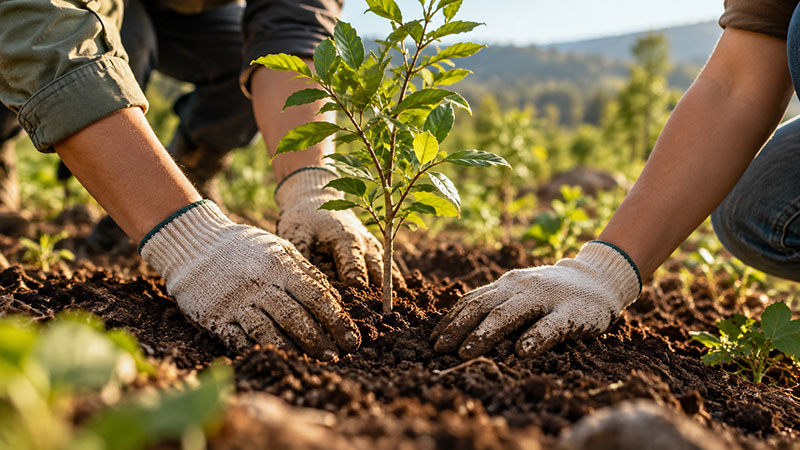
Every college graduation marks the end of an academic chapter and the beginning of new professional challenges. At the Universidad ORT Uruguay, it is also linked to a concrete act of environmental commitment: planting a tree for every student who graduates with a college degree.
The initiative began in late 2004, in collaboration with the environmental organization Keren Kayemet LeIsrael (KKL), and involves planting trees in Israel's forests. Each graduate receives a diploma symbolizing this contribution to environmental conservation.
Since then, the project has continued for more than two decades and has helped connect successive generations of graduates to a long-term reforestation effort.
A sustained contribution
Since its launch in 2004, this reforestation project has supported successive generations of graduates. By 2024, nearly 10,000 trees had been planted.
To put this number into perspective, if 1,000 trees were planted per hectare, the 10,000 trees would cover an area equivalent to about 14 soccer fields. This is just an illustrative comparison, since the actual area depends on the characteristics of each plantation.
Beyond the numbers, the value of this project also lies in its continuity. For more than two decades, each new generation of graduates has helped sustain an environmental commitment that extends beyond their time at the university.
Keren Kayemet LeIsrael and Its Work
Also known as the Jewish National Fund, Keren Kayemet LeIsrael is a nongovernmental organization founded in 1901 that carries out projects related to reforestation, natural resource management, and environmental development.
Its main areas of work include forest planting and maintenance, soil restoration, water management, research, and environmental education.
has It has had a presence in Uruguay since 1958 and carries out cooperation initiatives with various institutions.
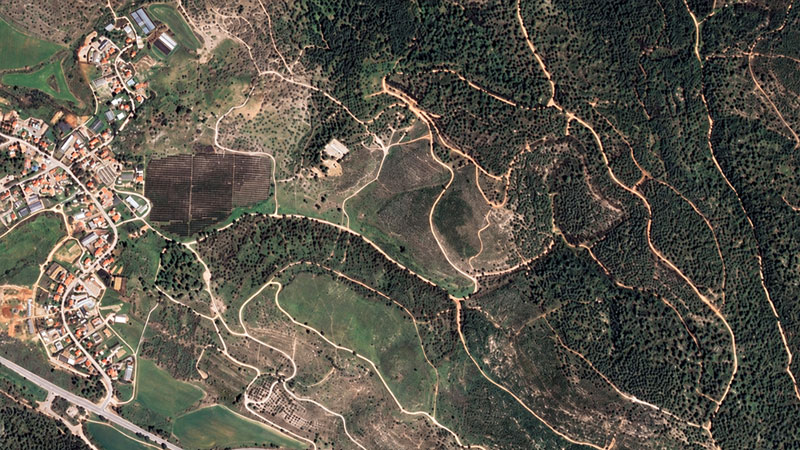
The partnership with ORT makes it possible to link each college graduation to a reforestation effort. The trees dedicated to the graduates are planted in the Uruguay-Israel Friendship Forest, located in the hills of Jerusalem, in a region where KKL also manages other forested areas, such as the Eshtaol Forest.
Trees and Climate Change
Tree planting is linked to Sustainable Development Goal (SDG) 13: Climate Action, which promotes measures to combat climate change and its effects.
Trees play an important role in climate regulation. Through photosynthesis, they absorb carbon dioxide (CO₂) from the atmosphere and store carbon in their tissues as they grow.
A study conducted in the Yatir Forest by researchers from the Weizmann Institute of Science—the results of which were released by KKL—estimated an average carbon uptake of approximately 7.7 kilograms per tree per year, equivalent to about 28 kilograms of CO₂.
This figure reflects the specific conditions of the forest under study. The amount of carbon a tree can absorb varies depending on its species, age, growth, and environmental conditions; therefore, it cannot be directly extrapolated to other plantations.
The importance of trees is not limited to carbon sequestration either. According to the Food and Agriculture Organization of the United Nations (FAO), forests help conserve biodiversity, protect soils, and improve water and air quality.
These functions are also linked to SDG 15: Life on Land, which focuses on the conservation, restoration, and sustainable management of terrestrial ecosystems.
Institutional Cooperation
Climate change is a global challenge that requires coordinated and sustained action over time. Afforestation initiatives can be part of the solution when they are carried out in accordance with appropriate conservation and environmental management standards.
In this regard, the collaboration between ORT and KKL is also related to SDG 17: Partnerships for the Goals, which recognizes the importance of cooperation among institutions in advancing sustainable development.
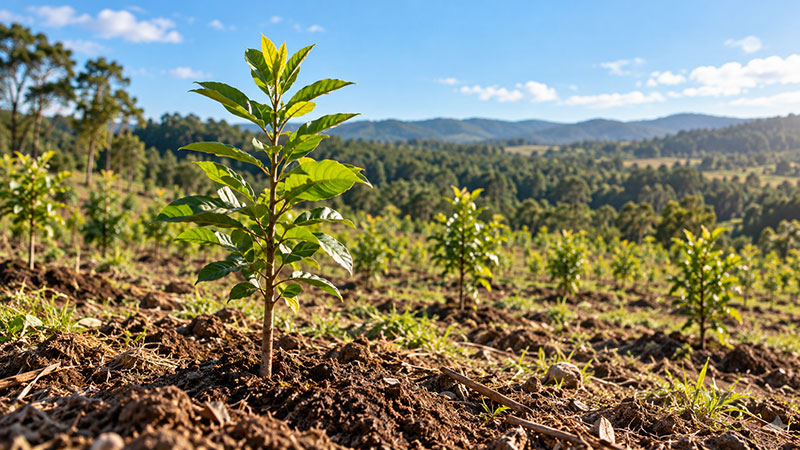
Through this initiative, the university incorporates an environmental dimension into the completion of undergraduate studies and raises awareness among its graduates about the challenges facing the planet.
On the International Day Against Climate Change, observed every October 24, more than 20 years of sustained effort and nearly 10,000 trees planted reflect the value of transforming an institutional commitment into concrete actions that endure over time.