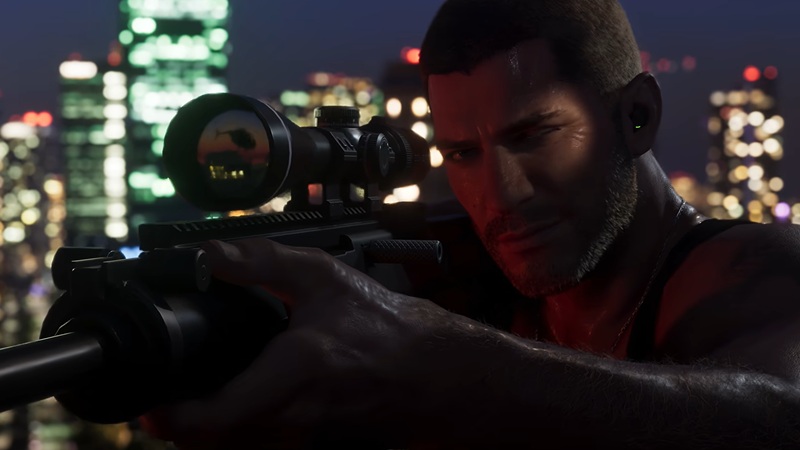
The sixth installment of the action series was released after a 13-year wait, following the release of its predecessor, GTA V.
The release of Grand Theft Auto VI took place via a staggered rollout at 12:00 a.m. local time in each region. The launch began in New Zealand and Australia, then expanded to Europe and the Americas.
The central and western regions of the United States were able to access the video game on the night of November 18, since the release was based on Eastern Time. Thus, while the game became available in Miami at 12:00 a.m. on November 19, it was available simultaneously in cities such as Los Angeles at 9:00 p.m. the previous day.
The highly anticipated launch generated a great deal of excitement among players, fans, and the media, both nationally and internationally.
Anticipation for the video game reached such a fever pitch that pre-sales exceeded $1.5 billion, while the estimated development cost is said to have ranged between $1 billion and $1.5 billion.
In turn, the franchise’s generational appeal led many who played GTA V during their teenage years or early adulthood to eagerly await the new installment, now that they are adults. The anticipation was so great that some decided to take the day off from work to enjoy the launch.
This was the case in countries such as the United States, Spain, and Russia, which were swept up in what is known as “GTA fever.” According to El Confidencial, requests for days off in Spain increased by 44% ahead of the GTA VI launch, while in the United States, more than 1.5 million employees planned to take the day off to play it.
At the School of Design at the Universidad ORT Uruguay, students, faculty, and staff downloaded the latest installment of Grand Theft Auto. Among them was Bruno Arce, B.A., associate academic coordinator for Interface Design and Video Game Design and Production.
Bruno's Experience
For Bruno Arce, his first impression of GTA VI was very positive. After a 13-year wait, he felt that the video game lived up to the expectations it had generated.
Among the aspects he highlighted most was the level of detail in the virtual world's design, which allows players to explore Vice City and discover different experiences even without progressing through the main missions.
You can go out and explore Vice City without doing a single mission and just have fun watching what's going on around you. For me, that's always been part of the appeal of GTA, and it's done really well here.
The academic coordinator also noted the technological advancements compared to previous installments. While GTA V was released in 2013 for the PlayStation 3 and Xbox 360, the new version came out after two generations of consoles, which expanded the possibilities for development.
This is reflected, as he explained, in the number of people walking the streets, their behavior, and the variety of situations unfolding simultaneously.
From a design perspective, Arce highlighted how Vice City represents Miami’s culture. The identity of the different neighborhoods is shaped by their architecture, the way their residents dress, and even the commercials heard on the radio. For him, beyond the graphic quality, one of the greatest visual achievements is that each location has its own distinct identity.
In terms of the narrative, he highlighted the story of the main characters, Lucía and Jason, a couple who must rely on each other after a heist goes wrong. He expressed interest in seeing how the relationship between the two characters evolves as the story progresses.
According to Arce, the significance of this release for the industry is also linked to the franchise's history and its ability to resonate with different generations of players. While some grew up with *Vice City* or *San Andreas*, others were introduced to the *GTA* universe through the fifth installment and *GTA Online*.
Added to this is the anticipation generated by Rockstar Games, especially following the release of Red Dead Redemption 2.
In his role as academic coordinator, Arce believes that the interest generated by GTA VI represents an opportunity to give the public insight into the video game development process.
Behind an everyday scene—such as turning a corner and finding a street full of people—lies work that involves designing spaces, animating characters, and programming their behaviors.
I think it's a good idea to take advantage of all that attention to showcase the work that goes into it.
Finally, he noted that the impact of the launch extended beyond the world of video games. As an example, he cited surveys conducted in the United States to find out how many people planned to take the day off to play. For Arce, this demonstrates the franchise’s cultural reach and its ability to spark conversation even among those who don’t usually play video games.
All About GTA
The Grand Theft Auto (GTA) franchise is a series of open-world action video games that combines storylines tied to organized crime with driving and free exploration of large fictional cities. Its stories portray the criminal underworld through dark humor and satire of American culture.

Each installment in the franchise focuses on a criminal who starts at the bottom and, as the game progresses, gains power, money, and territory by completing missions for gangs, mafias, or corrupt figures.
Among the activities a player can do are driving cars, stealing, hitting other people, engaging in car chases, doing business, and meeting characters. Players can also explore the city and engage in activities unrelated to the main story, without having to follow the game's missions.
Learn more about the technical degree program at
: Video Game Design and Production