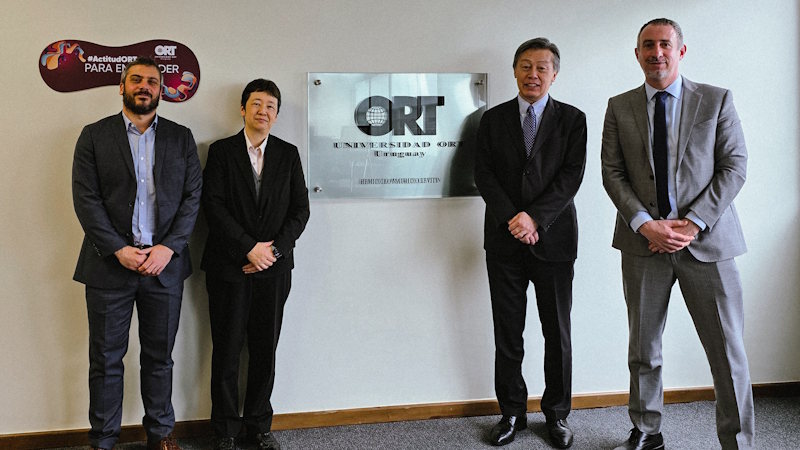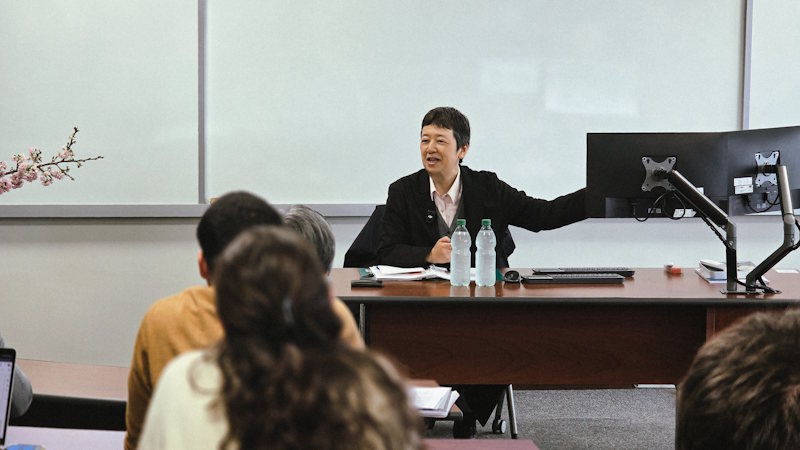
During the conference “Japan, China, and South Korea in the World Order,” held on July 28 and organized by the Department of International Studies and the East Asia Research Group, Watanabe discussed the relations among these three countries and the political, economic, and strategic changes that are transforming the region.
East Asia in a Time of Change
Watanabe began his presentation by outlining some of the major challenges facing Japan in its regional environment. Among them, he mentioned relations with China, the situation on the Korean Peninsula, and the changes taking place on the international stage.
The expert explained that these factors compel Japan to maintain a foreign policy that is attentive to both security issues and its economic and diplomatic ties with neighboring countries.
China and Its Growing International Influence
A significant portion of the conference was devoted to China's foreign policy and the role of the economy in its international relations.
Watanabe explained the concept of economic statecraft, which refers to the use of economic tools such as investments, trade, loans, and agreements to achieve foreign policy objectives. He also mentioned the Belt and Road Initiative, of which Uruguay is a member.
The speaker emphasized the importance of diversification trade ties. As she explained, having different partners allows countries to reduce the risks associated with excessive economic dependence.
Japan, China, and South Korea: Dialogue and Cooperation
The conference also reviewed the evolution of relations among the three countries. Despite their differences, Japan, China, and South Korea maintain significant economic and diplomatic ties.
Regarding Japan and China, Watanabe emphasized that successive Japanese governments have sought to keep channels of communication open and build a stable relationship. He also noted the current rapprochement between Japan and South Korea and the potential for greater regional cooperation.
Diversification and International Cooperation
Toward the end of the presentation, Watanabe argued that the international order is undergoing a process of transformation and that countries will have to adapt to an increasingly complex landscape.
In this context, he emphasized economic diversification, dialogue, and international cooperation as tools for addressing new challenges. He also noted that middle powers and countries of the Global South can play a more significant role on the world stage.