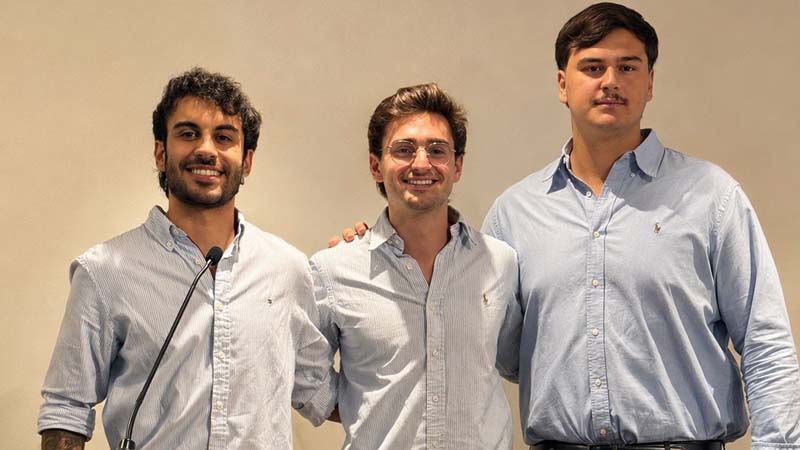
Through an analysis of nine startups, they found that factors such as uncertainty, communication, and well-being have just as significant an impact on the success of projects as technological decisions.
When people think about software development, they often associate it with programming languages, technology architectures, or new tools. However, behind every digital product lies a less visible—but equally important—component: the experience of the people who build it.
His research focused on the Developer Experience (DX), a concept that seeks to understand how tools, processes, organizational culture, and well-being influence developers' day-to-day work.
The objective was to analyze how the developer's experience is shaped in early-stage software startups, which are characterized by uncertainty, limited resources, and the need to constantly adapt to new challenges.
A topic that has received little attention in the entrepreneurial ecosystem
The motivation arose from observing a common reality in the tech industry. While large companies invest significant resources in improving the experience of their development teams, startups typically operate with lean structures, multiple responsibilities, and intense pressure to move quickly.
“We wanted to understand what the developer’s experience is really like when there aren’t yet any major structures in place and when every decision has a huge impact on the project,” Santiago explained.
For the authors, the developer experience cannot be reduced solely to tools or code quality. It also involves aspects related to motivation, communication, well-being, and a sense of belonging.
“DX isn’t just a technical issue. It also has to do with how people feel, how they communicate, and how they experience their work within the team,” Teo said.
Nine projects under review
To conduct the research, the students used a predominantly qualitative methodology based on semistructured interviews and structured questionnaires.
They analyzed nine software startups, five of which were incubated at ORT’s Center for Innovation and Entrepreneurship (CIE) and four of which were external. The teams studied had between three and nineteen members. In total, they interviewed seven founders and five developers, seeking to compare the vision of those leading the startups with the day-to-day experience of those building the technology products.
The research was organized into four main areas: technical challenges, human and relational aspects, personal well-being, and the developer's overall experience.
Uncertainty as a Central Factor
One of the study's main findings was that uncertainty permeates much of the experience of developers working on software startups.
The need to make technology decisions with limited information, the difficulty in anticipating product or market trends, and the constant tension between moving quickly and building scalable solutions were recurring themes during the interviews.
“Uncertainty emerged as a cross-cutting issue. It influences technology decisions, planning, and also how developers experience their work,” Teo said.
The students also identified problems related to planning, the need to respond to constant emergencies, and the multiple roles that members of small teams often take on.
Beyond technology
Although the research began by analyzing technical aspects, the results showed that human factors play an even greater role than expected.
Internal communication, organizational culture, the relationship with the founders, and a sense of belonging emerged as key factors in team motivation and commitment.
“We were surprised by how significant the human factors were. Communication, the relationship with the founders, and well-being came up constantly in the interviews,” Felipe noted.
The students also noted that work overload is often a structural issue in many early-stage startups. Small teams, limited planning, and constant changes can lead to mental fatigue, difficulty disconnecting from work, and a negative impact on performance.
A Multidimensional Phenomenon
The results also revealed differences from some of the existing literature, which has traditionally placed greater emphasis on technical tools and processes.
The study concludes that the developer experience is a multidimensional phenomenon involving technical, organizational, emotional, and personal factors.
“DX cannot be understood solely through code or solely through management. It lies at the intersection of people, the organization, and technology,” Santiago said.
A model of best practices
As a result of the study, the students proposed a best-practices model aimed at improving the developer experience in software startups.
The proposal is based on four interdependent areas: the technical environment, work organization, internal communication, and developer well-being.
As they explain, these aspects must be addressed collectively, since they all influence the work experience and team performance.
Improving the developer experience can translate into tangible benefits for organizations, such as increased productivity, lower employee turnover, reduced technical debt, and a greater ability to adapt to the changes inherent in technology startups.
Lessons Learned Beyond the Project
For the authors, one of the key lessons learned from the research was understanding the importance of approaching systems from a holistic perspective that takes into account both technology and the people who make it possible.
The education they received in the Bachelor's program in Systems allowed them to combine knowledge of software engineering, management, research methodologies, and organizational analysis to study a complex problem from different perspectives.
In addition, they highlight the value of a qualitative approach to understanding phenomena that cannot be explained solely through metrics or technical indicators.
The main conclusion of this study is that developers' experience has a direct impact on the sustainability of startups, and that understanding this can help build healthier organizations, more engaged teams, and higher-quality products.
Learn more about the Bachelor's Degree in Information Systems