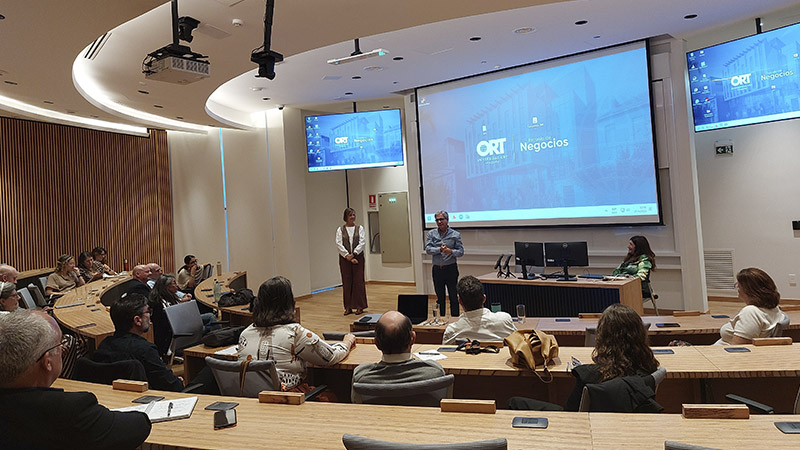
What practices can be strengthened when professors and academic coordinators collaborate? How can we improve university teaching in a more coordinated, sustainable, and collaborative way? What common challenges does higher education face today, and how can we address them at the institutional level?
Using some of these questions as a starting point, the Network of Professors and Academic Coordinators was launched: a forum designed to promote faculty development policies and foster an academic culture focused on continuous improvement.
Launched by the Center for Continuing Education in Higher Education (CAES)—with support from the People Project—the network aims to establish a cross-disciplinary space for collaboration, exchange, and learning among professors and academic coordinators at Universidad ORT Uruguay.
“We are one university”
“The university is creating spaces for collaboration, exchange, and learning because we face many challenges that have always been there, but which are now taking on particular significance, ”said Dr. Pablo Landoni, academic vice president of Universidad ORT Uruguay.
Speaking before professors and academic coordinators from ORT’s five schools, Landoni proposed, on the one hand, viewing the university as “a series of conversations” to generate responses to new challenges. On the other hand, he urged them to understand that the sum of the parts yields a positive result. “We are one university, ”he declared.
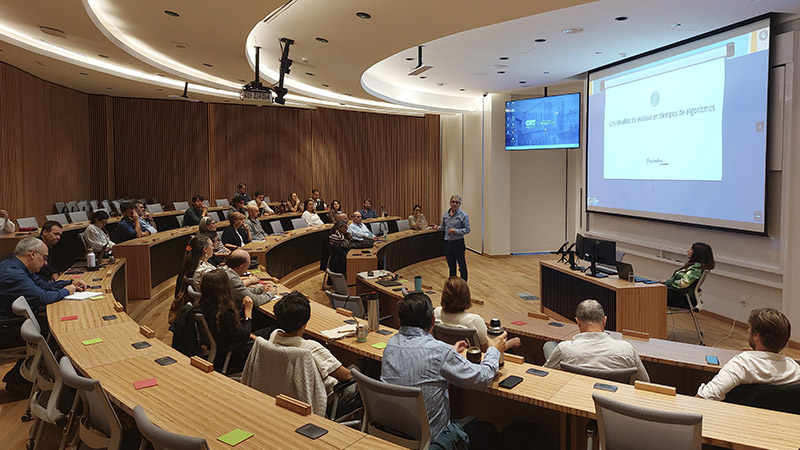
During the network’s inaugural event—which took place on Friday, April 17, in the Business School’s Hemicycle—he specifically emphasized that it is an initiative designed to “facilitate and guide meaningful conversations.”
“This is an ongoing process,” said the vice president for academic affairs, who emphasized the importance of turning discussions into concrete actions that permeate the schools, departments, and degree programs. “We talk, but at ORT, we take action, ”he added.
“The call is to engage in dialogue, to learn as an institution, and to translate that learning into concrete, visible actions that improve the quality of education and the student experience at the university,” Landoni concluded.
A space for us all to build together
“We all have to build this network together, based on trust and knowledge,” said Dr. Andrea Tejera Techera. The academic coordinator of CAES explained that the initiative marks the beginning of a collective effort aimed at complementing the work already being done in the faculties.
“With this network , we don’t want to standardize; we want to empower, ”he explained. In his words, it is a space for “thinking about things differently, ”as well as for engaging in open and constructive dialogue about the challenges currently facing university education.
In this regard, Tejera Techera noted that assessment was chosen as the network’s first area of focus because it is a cross-cutting challenge in teaching and learning processes. “We need to connect with generations of students who learn differently. And assessment allows us—and requires us—to delve deeper into these key aspects of learning,” he said.
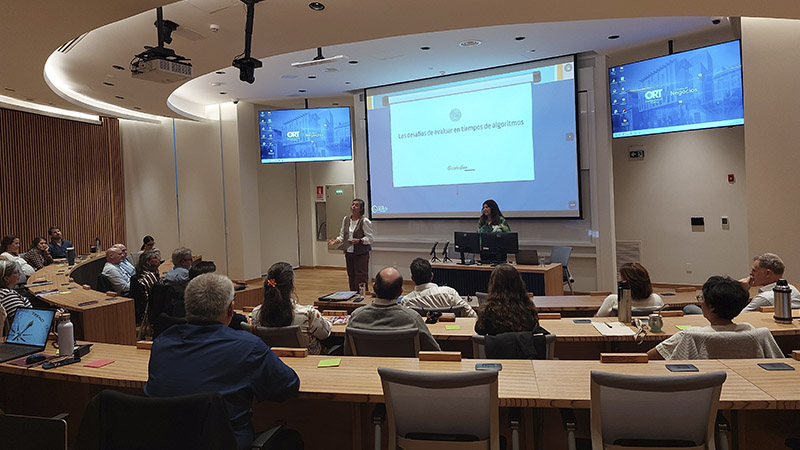
According to the academic coordinator of CAES, the network brings together the “heart of the university, ” referring to those who support teaching and the students’ educational experience.
Following this initial meeting, she believes it is essential to “see the ripples it creates”: to analyze which ideas emerged and what might be rethought, in order to identify challenges and new practices among the teams of professors and academic coordinators in each faculty and across the entire university.
Assessment in the Age of Algorithms
At the network’s inaugural event, Dr. Carina Lion—a professor at the University of Buenos Aires (Argentina)—suggested rethinking assessment in a context marked by profound changes in the ways we learn, teach, and work.
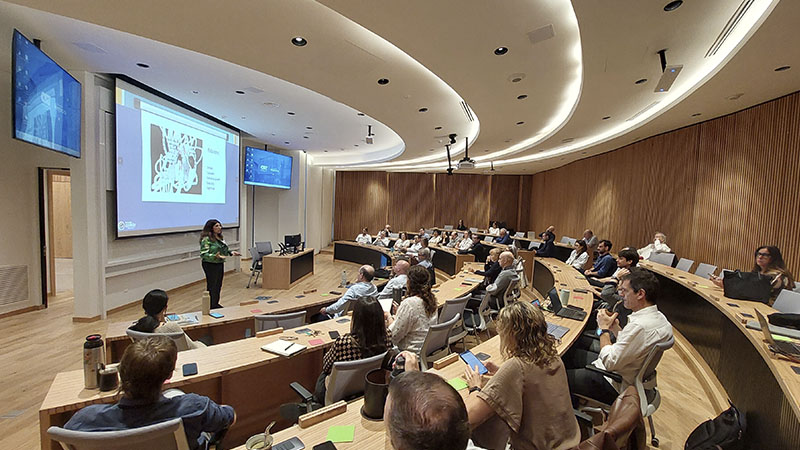
“Generativeartificial intelligence has raised questions across all areas of society, so we need to start thinking about who we are educating and for what kind of world, ”he said.
In his view, assessment is “the thread that ties this whole issue together.” In addition to serving as a space that “links teaching and learning,” the topic becomes “almost an excuse” to discuss other challenges facing the teaching profession.
What are the best strategies for learning? Should all students be assessed in the same way?How can we tell if someone has truly learned? Through guiding questions, Lion encouraged participants to critically examine their own practices and reflect on the challenges of education. Throughout the day, he also led participatory activities and small-group work to review assessment guidelines and criteria.
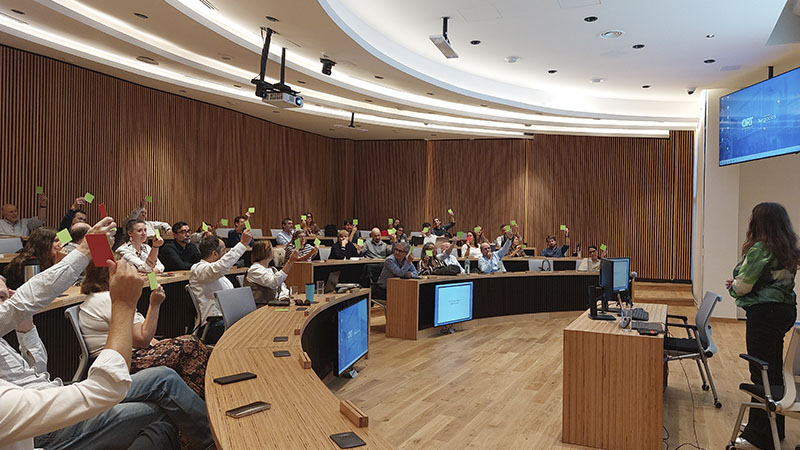
According to Lion, the classic questions of assessment remain relevant, but they need to be rethought in light of new contexts. The reason is that, before deciding how to assess, it is necessary to clarify what we are trying to assess and why.
In many cases, he noted, there is an attempt to assess various skills, knowledge, and processes all at once, without clearly defining the focus of the assessment.“The ‘what’ determines the ‘how’ of the assessment. Often, it’s done the other way around:‘How am I going to assess something?’ However, that depends on the ‘what, ’”he explained.
In addition, the teacher warned against some common oversimplifications, such as confusing learning with performance. “Does a student’s good performance mean that they are learning?” she asked.“What matters is learning, not performance,” she asserted.
Along those lines, he argued that, although “there is no single approach,” a good assessment must be based on criteria of validity and reliability. In other words, it should assess what one actually intends to measure, using appropriate methodologies and in relation to what was actually taught.
From conversation to action
The Network of Professors and Academic Coordinators proposes a set of complementary actions for 2026. Following the inaugural event, as indicated by Tejera Techera, it is proposed that faculty teams identify areas, disciplines, programmes degree programs in which to prototype improvements.
CAES will provide remote monitoring and support to ensure that the network’s work does not become an additional burden, but rather a tool for driving the necessary changes.
In the coming months, the People Project plans to launch a new initiative that will include separate meetings with academic coordinators and their deputies, on the one hand, and with full professors and associate professors, on the other, to foster dialogue and strengthen collaboration among the teams.
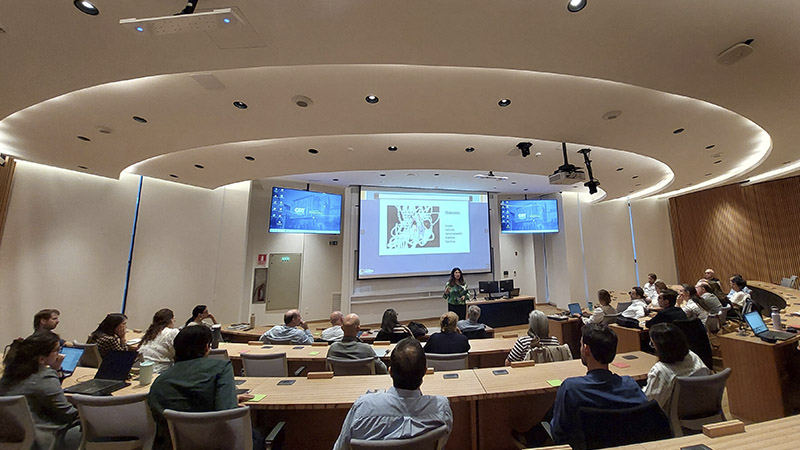
Finally, around November, a new session led by Dr. Carina Lion is planned to assess the progress made and analyze the scalability of the initiatives proposed by the schools.