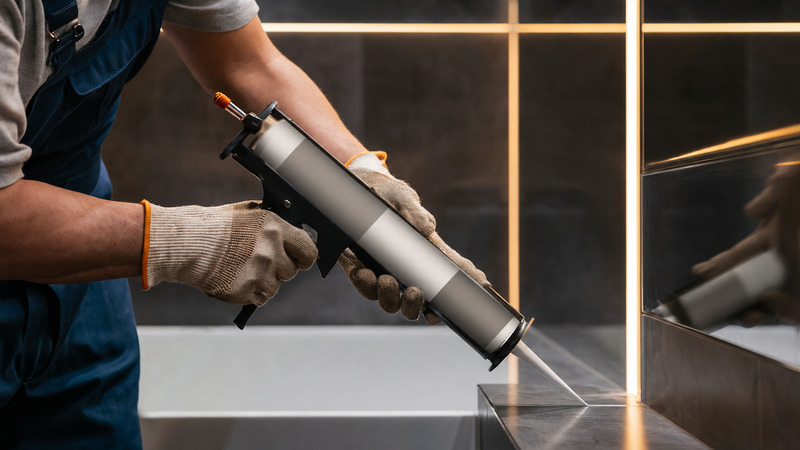
As part of the conference Leak-Free Construction: HARD and TDA Construction Solutions, organized by the School of Architecture at Universidad ORT Uruguay, specialists from the HARD and TDA brands visited the school to present construction solutions tailored to the Uruguayan market.
The event featured presentations by Mechanical Engineer Diego Camera and Architect Emilia Sanz, and was led by Architect Víctor Cáceres. The workshop encouraged participants to consider the applications of different construction systems in relation to the environment, the local climate, and the specific requirements of the project.
The conference addressed waterproofing as a technical decision involving surface diagnosis, system selection, exposure conditions, intended use, and subsequent maintenance. From that starting point, it allowed us to examine how certain decisions can affect the durability, performance, and preservation of a building.
Waterproofing should be considered from the design phase
At the start of the event, architect Emilia Sanz explained that the talk would focus on waterproofing in different areas of the construction site, but also on “the aftermath”, a phase that often brings problems after the project is handed over.
From this perspective, the exhibition highlighted the importance of technical advice, on-site support during construction, and the search for solutions tailored to each specific challenge, both in the design phase and during execution.
Waterproofing thus emerged as a process involving several stages, as part of a continuum that encompasses design, support, application, use, and maintenance.
- You might also be interested in reading: “Buildner’s Unbuilt Award 2026: an international architecture competition for unbuilt projects”
What problems can water ingress cause?
In his presentation, mechanical engineer Diego Camera described waterproofing as a process aimed at preventing water from penetrating the building. As he explained, it is not merely a matter of preventing a visible stain or an isolated leak, but rather of protecting the structure from the ingress of external water—such as rain—and internal water, for example in bathrooms or showers.
The speaker noted that water infiltration can lead to various problems: efflorescence, peeling paint or coatings, moisture, cracks, and, in the most severe cases, corrosion of structural reinforcements.
From that perspective, one of the central themes of the conference was the need to understand the source of the problem before taking action. It is not enough to treat the affected surface: it is necessary to identify where the water is entering, what conditions contribute to the problem, and what type of solution should be applied.
- You might also be interested in reading: “Building from the Site III: Architect Beccar Varela, Glenn Murcutt, and the Logic of the Landscape”
How to Choose a Waterproofing System
One of the exhibition’s central themes was the idea that “there is no single solution” for waterproofing.
Camera explained that the choice of a system depends on multiple variables: the area to be treated, the type of surface, weather exposure, the presence or absence of mechanical protection, the subsequent coating, expected traffic, the potential for water pooling, and the expected durability.
This criterion is particularly important in construction because the same material can behave differently depending on where and how it is applied. A solution designed for a damp interior area does not necessarily perform the same on a facade, an exposed slab, or a roof subject to maintenance traffic.
The conference thus proposed a technical analysis based on the following questions: what problem needs to be solved, what needs to be avoided, what limitations does the platform have, and what conditions will the chosen system have to contend with?
- You might also be interested in reading: “Wooden architectural structures: who designs them and why they matter”
Why Foundation Preparation Determines Performance
Another topic discussed was surface preparation. Before applying a waterproofing layer, Camera explained, it is necessary to assess the condition of the substrate: cleanliness, removal of loose material, presence of oils or contaminants, adhesion, absorption, and strength of the substrate.
The talk also addressed the role of primers and vapor barriers. In some cases, the chosen system must allow vapor to pass through; in others, it needs to block it to prevent subsequent problems, such as blistering or adhesion failures.
In that regard, the preparatory work proved to be a critical step. Waterproofing depends on a thorough assessment of the substrate and the conditions necessary for the system to function properly.
- You might also be interested in reading: “Architecture and Mental Health: How the Design of Spaces Impacts Our Psychology”
What's changing for facades, wet areas, slabs, and roofs
Toward the end of the day, the seminar covered various common situations encountered on construction sites, including bathrooms, balconies, facades, slabs, retaining walls, and foundations.
In the case of wet areas, Camera pointed out the importance of evaluating the size of the area, potential structural deflections, the occurrence of cracks, and the type of subsequent finish. These factors determine whether rigid, flexible, or elastic systems should be used.
On facades, the exhibitor highlighted a specific problem: waterproofing without necessarily blocking the wall’s ability to breathe. As he explained, in certain situations it is necessary to prevent water from entering without impeding vapor transmission, since an inappropriate decision can lead to new problems.
The slabs and roofs were identified as one of the most critical issues. Factors such as weather exposure, traffic, surface treatments, water accumulation, available clearance, and maintenance requirements all come into play. Each of these variables affects the possible technical solution.
- You might also be interested in reading: “AI Tools for Architects and Designers”
A technical perspective for better design, construction, and maintenance
Rather than a product review, the conference served as a technical update on common construction issues. Waterproofing was addressed as part of a construction culture that requires diagnosis, specification, application control, and maintenance planning.
For students, educators, and professionals in the field of architecture, the event provided an opportunity to explore specific criteria for making more precise construction decisions. Considering waterproofing from the design phase through construction and beyond requires an understanding that every surface, every use, and every environmental condition demands a specific solution.
Watch the full conference:
https://www.youtube.com/watch?v=cqP3LfOWqR4