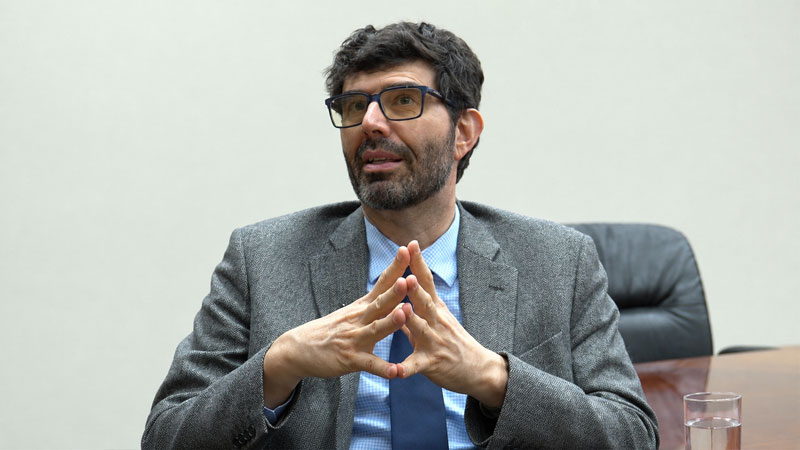
For Dr. Lucas Grosman, preparing students for a professional future that is increasingly difficult to predict is one of the main challenges facing universities. The rector , from the University of San Andrés in Argentina, argued that the rapid advancement of technology —with artificial intelligence as one of its leading examples—requires a reevaluation of educational models and a focus on skills that enable students to navigate uncertainty.
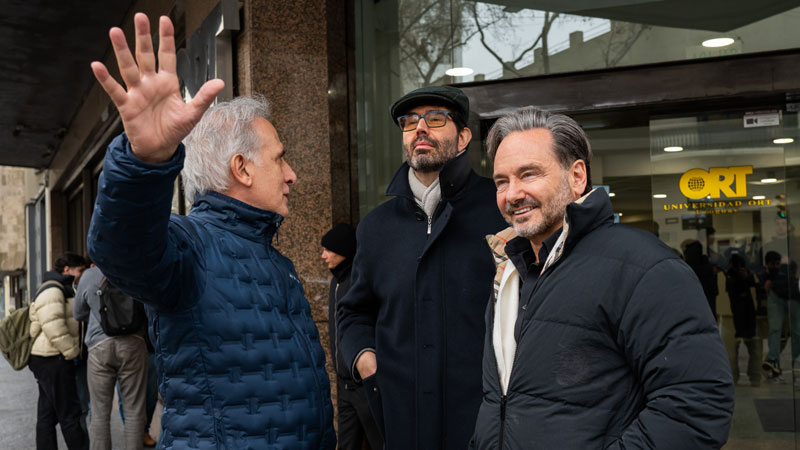
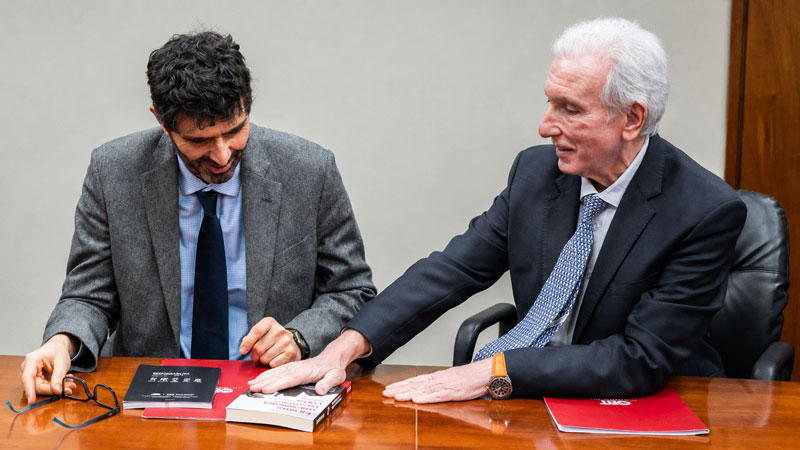
Grosman visited the University of the South ( Universidad ORT Uruguay ) on Tuesday, August 18, as part of the signing of an academic cooperation agreement between the two institutions. During his visit to Montevideo, he reflected on the transformations taking place in higher education and the role universities should play in the face of technological changes that are already reshaping the professions.
“Today, the great challenge is how to prepare our students for jobs that don’t exist yet or that will be very different from the ones that do,” he said. For Grosman, the difficulty lies not only in the speed of technological development, but also in the uncertainty surrounding its consequences.
Beyond the Content
According to Grosman, this scenario makes it necessary to reevaluate a teaching model focused primarily on the assimilation and repetition of content.
“There is a certain model that is more focused on content and rote memorization—a model that was probably obsolete many years ago, but which is frankly ridiculous today,” he said.
In light of this, he raised the need to seek new educational paradigms.

Among the skills he considers essential, he mentioned critical thinking and metacognition, which he defined as the ability to be aware “of what I know and what I don’t know.” To these, he added interdisciplinary thinking, which is necessary for understanding reality from different perspectives.
The transformation he describes does not mean downplaying the importance of knowledge. On the contrary, Grosman believes that having a solid foundation is particularly important in a context where artificial intelligence tools can generate answers immediately.
Critical Thinking and AI
The relationship between knowledge and artificial intelligence is central to his argument. For Grosman, the educational challenge is not to reject these tools, but to develop the skills needed to use them critically and harness their potential.
“When you have a solid foundation, if I build AI on top of that foundation, I can achieve fantastic results,” he said.
At the same time, this use requires recognizing the limitations of the technology. Grosman highlighted the problem of “hallucinations” in artificial intelligence systems—that is, the generation of incorrect information presented as if it were valid. For this reason, he believes that training should enable users to critically evaluate the responses they receive and distinguish when they can be relied upon and when they should be questioned.
“Striking that balance—not letting myself be fooled by delusions, on the one hand, but allowing or encouraging AI to enhance my work— if you can strike that balance, that’s the key, ”he explained.
From this perspective, critical thinking and disciplinary knowledge do not lose their relevance in the face of automation. On the contrary, they become prerequisites for interacting productively with it.
Be part of the change
Grosman took the argument a step further by pointing out that a college education should not be limited to preparing people to adapt to changes conceived by others.
In addition to critical thinking, metacognition, and interdisciplinarity, he emphasized the need to foster an “innovative mindset” that encourages people to anticipate changes and actively participate in them.
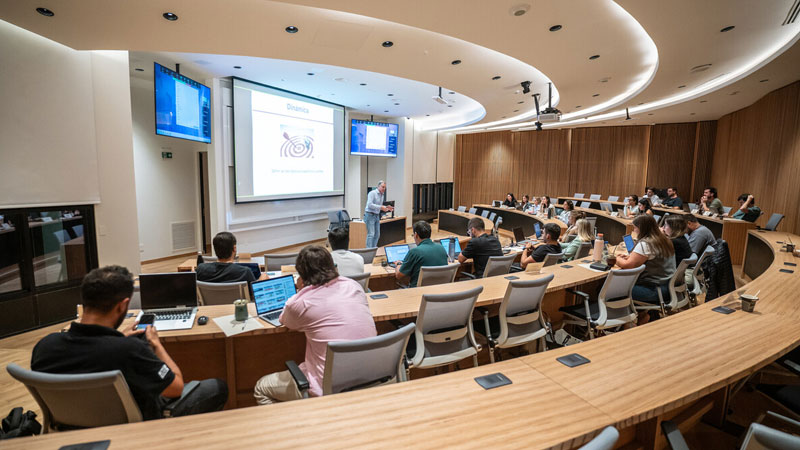
“Obviously, I can’t predict the future, but I can predict it more accurately if I’m in the right place and if I’m committed to being an architect of that change—rather than just a passive recipient of changes that will take place somewhere else,” he said.
According to rector , of the University of San Andrés, this attitude also determines how universities can position themselves with regard to technological development.
The goal should not be to observe its effects from the outside, but to understand them and use technology to expand people's capabilities.
“If we know how to harness technology to empower us—rather than simply being passive recipients of it—we’ll be in a much better position and will be able to fully reap the benefits of that development, ”he said.
An Education with a Regional Perspective
According to Grosman, the transformation of the professions also raises the need to broaden the perspectives from which university education is developed.
rector argued that education has an increasingly global dimension and that experiences capable of transcending one’s country of residence enrich one’s education. It was within this framework that he highlighted the potential for cooperation among universities in different countries.
“Education is becoming increasingly globalized, and therefore, having a perspective that extends beyond the country where one lives always enriches the educational experience,” he said.
For Grosman, the complementarity among institutions allows for the combination of different perspectives and capabilities while maintaining their academic standards. In the case of the Universidad ORT Uruguay, he highlighted its technological profile, its entrepreneurial spirit, and its track record in developing innovative proposals.
His argument thus addresses two challenges facing contemporary higher education: preparing students for a rapidly changing technological landscape and doing so from a perspective that allows for an understanding of realities that are no longer confined within national borders.
In this context, the ability to learn, question, integrate knowledge, and critically apply new technologies appears, according to Grosman, to be a central part of a university education in the face of a future that cannot be fully anticipated.