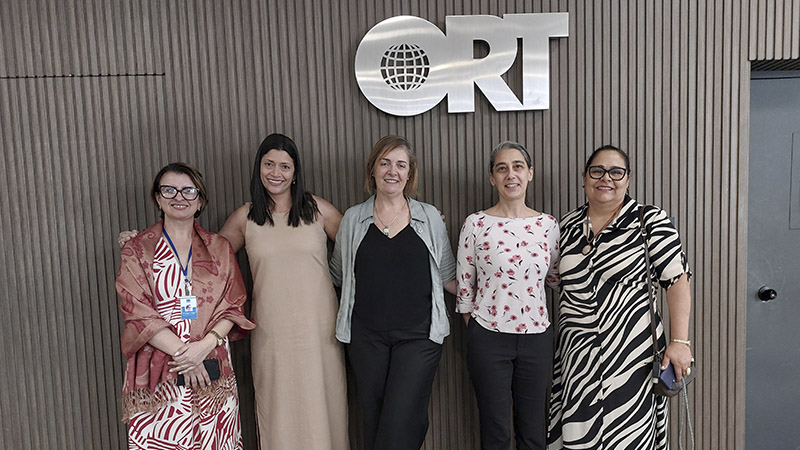
Convinced that understanding education requires looking beyond national borders, three Brazilian researchers arrived in Uruguay in November 2025.
The visit was part of a multilateral research network project, as well as an academic cooperation agreement between the Universidad ORT Uruguay and the Federal University of Grande Dourados.
The delegation consisted of Dr. Andreia Vicência Vitor Alves and Dr. Marta Coelho Castro Troquez —associate professors at the Federal University of Grande Dourados—and Dr. Elis Regina dos Santos Viegas, a tenured professor at the State University of Mato Grosso do Sul.
The research project
“A Comparative Analysis of National Education Policies in Mercosur Countries: Contexts, Management, Teacher Training, and the Right to Education” is a multilateral research project funded by Brazil’s National Council for Scientific and Technological Development.
From a comparative and collaborative perspective, the initiative aims to understand national education policies in Mercosur countries regarding education, management, and the right to education.
Currently, researchers from the following universities has :
- Federal University of Grande Dourados (Brazil)
- Federal University of Mato Grosso do Sul (Brazil)
- Federal University of Rio Grande (Brazil)
- State University of Mato Grosso do Sul (Brazil)
- Dom Bosco Catholic University (Brazil)
- University of Talca (Chile)
- National University of Asunción (Paraguay)
- National University of Concepción (Paraguay)
- University of Buenos Aires (Argentina)
- National University of Comahue (Argentina)
- Universidad ORT Uruguay Uruguay)
In 2025, as part of that project, the researchers visited research-oriented educational institutions in various Mercosur countries with the aim of collecting data for their fieldwork.
The visit to Uruguay
During their stay in Uruguay, the researchers visited the Regional Office for Early Childhood and Primary Education in Canelones to gain a deeper understanding of the characteristics and organization of the Uruguayan education system.
They also served as external members on the panels for the Master’s Program in Trainer Education, which gave them insight into Uruguayan academic research in the field of education.
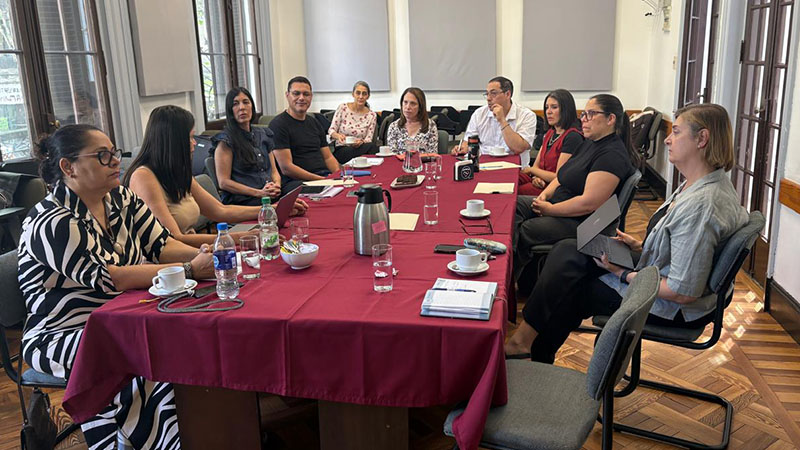
In addition, they held an exchange meeting with students and researchers from Universidad ORT Uruguay. During the event, master’s and doctoral research projects from the Federal University of Grande Dourados and the State University of Mato Grosso do Sul—which are currently underway and linked to the project—were presented, with the aim of discussing and sharing preliminary findings.
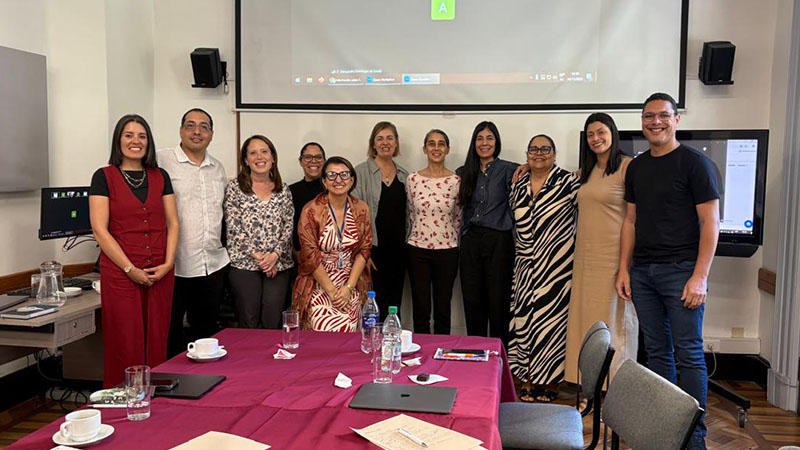
Finally, they held a working meeting with Dr. Andrea Tejera Techera and Dr. Mariela Questa-Torterolo, Uruguayan researchers who are part of the multilateral project and who have contributed both to data collection and to the comparative analysis of educational policies on teacher management and training in Mercosur countries.
The Value of Regional Cooperation
“We are very pleased with the visit, ”said Dr. Andreia Vicência Vitor Alves, highlighting the institutional ties between the Federal University of Grande Dourados and Universidad ORT Uruguay, which are essential for the development of collaborative work.
Similarly, Dr. Elis Regina dos Santos Viegas agreed that coming to Uruguay for the first time to carry out various academic and research activities was “a source of great satisfaction” for the team.
For her part, Dr. Marta Coelho Castro Troquez highlighted the educational value of the exchange and noted that it was a “very important” opportunity, as it provided a better understanding of how education is organized and carried out in Uruguay.
Looking beyond this specific experience, Vitor Alves emphasized the strategic importance of this type of cooperation agreement in the regional context. “It is important for us to understand the realities of the countries that border Brazil so that we can exchange experiences and approach education from a regional perspective, ”he explained.
In addition to generating knowledge about education, management, and the right to education in Mercosur countries, network-based research provides opportunities for the internationalization of programmes , as well as for exchanges among universities, researchers, and students in the region.
“This work helped us reflect on the similarities and differences in the field of education, and also to identify future directions that will enrich educational research,” concluded Vitor Alves.