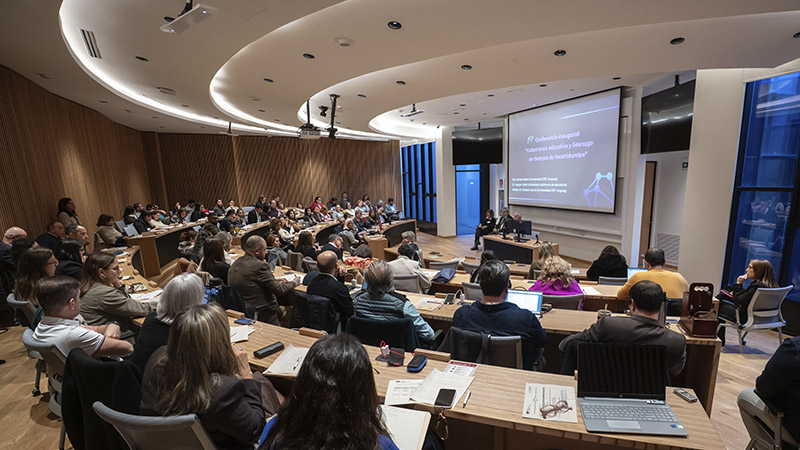
Over the course of two days, the questions were almost as important as the answers. How can we manage institutions that must respond to increasingly complex challenges? What kinds of leadership do educational teams need today? How can we make decisions in ever-changing circumstances? What role should technology play? How can we develop governance models capable of better coordinating institutions, communities, and regions?
These discussions brought together nearly 150 teachers, researchers, administrators, officials, and leaders from more than ten countries in Montevideo. The 5th International Congress on Educational Management: “Governance and Leadership for Global Justice, ” held on July 29 and 30 at the Universidad ORT Uruguay, turned the city into a meeting place for sharing research and experiences, comparing perspectives, and collectively addressingthe main challenges of educational management in Ibero-America.
Lectures, panel discussions, and thematic roundtables fostered dialogue on issues as diverse as innovation, digital transformation, sustainability, equity, inclusion, teacher training, and public policy. But beyond the diversity of topics, the initiative—organized by the Institute of Education of the Universidad ORT Uruguay, RedAGE Uruguay, and RedAGE International—shared a common purpose: to strengthen ties, expand collaborative networks , and continue reflecting on educational management, leadership, and governance in the region.
Complex challenges = shared responsibilities
“In increasingly complex contexts, no single organization or authority can respond on its own to the challenges we face today, ”said Dr. Denise Vaillant. During the conference’s opening session, the dean of the Institute of Education at the Universidad ORT Uruguay , emphasized the importance of reaching agreements, building collective capacity, and creating conditions for effective participation. “It is essential to recognize that cooperation among governments, educational institutions, teaching communities, students, and social organizations does not arise spontaneously, but rather requires clear rules, trust, spaces for dialogue, and shared responsibility for the results, ”she stated.
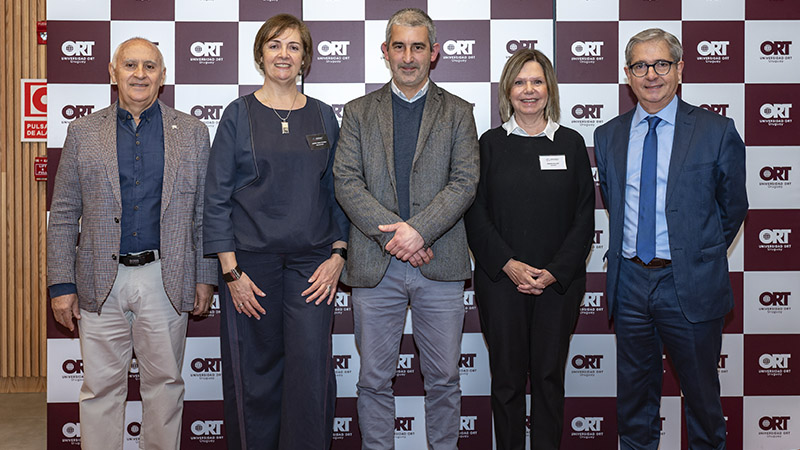
In times of uncertainty, coming together to create something new is no small matter. It is a way to renew our commitment to education and to affirm that complex challenges require collective intelligence, cooperation, and leadership.
Dr. Denise Vaillant
Dr. Pablo Landoni, academic vice president of the National University of the City of Buenos Aires ( Universidad ORT Uruguay), highlighted the value of the conference as a forum for international collaboration and shared learning. “Education faces enormous challenges in our countries: old challenges—which we are familiar with but struggle to overcome—and new challenges—which have thrown us into the midst of a whirlwind,” he stated. In light of this situation, he championed forums for knowledge generation as a means to “study, propose, and collaborate” on improving educational management.
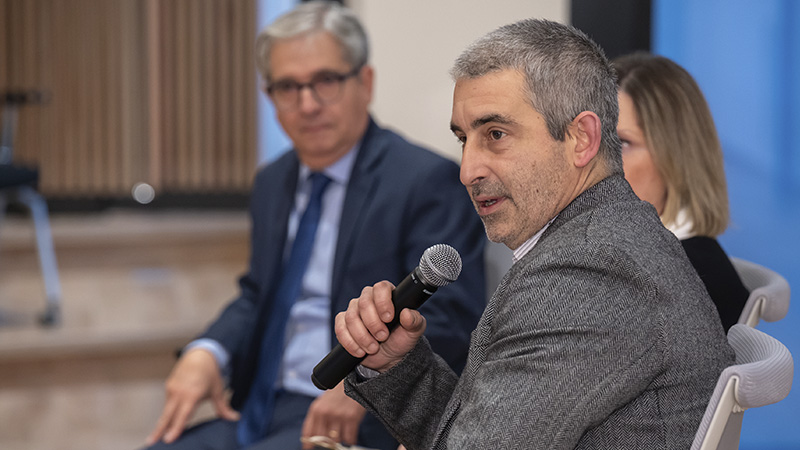
“Educational institutions are called upon to address a set of challenges and demands that no other institution or system faces,” said Pablo Caggiani, president of the National Public Education Administration. From that perspective, he praised the conference as an opportunity to “share experiences, organize ideas, and generate knowledge”about improving educational management—a topic whose importance, he noted, is often overlooked by those working in education. “Indeed, this is a very fertile ground for generating knowledge and reflection, and events like this are key to that, ”he concluded.
Leading in Times of Uncertainty
What are the challenges and dilemmas facing educational institutions today? That was one of the questions addressed during the inaugural conference “Educational Governance and Leadership in Times of Uncertainty,” featuring Dr. Denise Vaillant and Dr. Joaquín Gairín —chair of the RedAGE Executive Committee— and moderated by Dr. Esteban Zunino —dean of the ORT School of Communication.
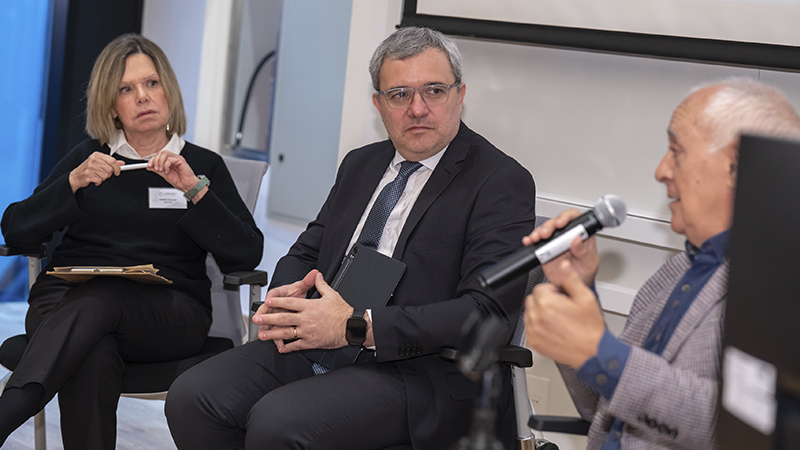
Equity, digital transformation, the sustainability of improvements, and the ability to attract and retain good teachers were some of the challenges Gairín brought to the table. However, he went further and posed a question: Is education really making progress? “If we look at the last hundred years, we’ve improved citizens’ access to schooling. But if we look at the last 10 or 15 years, I get the feeling that we’ve made little progress, ”he stated, questioning whether the pace of progress “is sufficient, ” given that the education system tends to be, by nature, “very conservative.”
Solutions from 15 years ago are being applied to new situations, and that makes educational systems even more outdated.
Dr. Joaquín Gairín
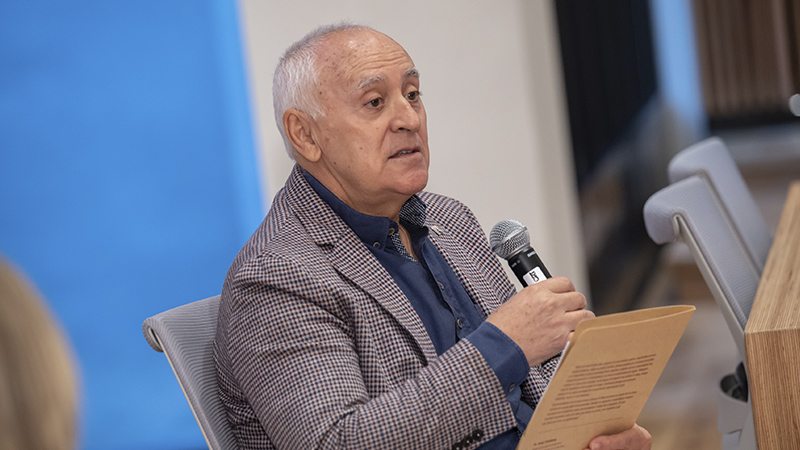
“We are faced with education systems that move at three speeds: slow, very slow, and extremely slow, ”added Vaillant, in contrast to societies that move at “extremely high speed.” In this context, teachers, school leaders, and policymakers play a key role in thinking strategically and managing change to ensure that students receive relevant learning experiences. They must also give meaning to decisions, mobilize people, and convey the message that “education is everyone’s responsibility.”
During the conference, Gairín emphasized the need to promote distributed leadership, as well as to build teams and foster a shared vision capable of engaging people, reducing tensions, and fostering collective creativity. At the same time, he called for promoting innovation —understood as the “institutionalization of best practices”—because the challenge lies in driving a few changes, sustaining them, and ensuring that they gradually become part of the “institutional DNA.”
Leading in times of uncertainty means striking the right balance between the pressing demands of daily life and a forward-looking vision of where education is headed and what kind of future we are preparing students for.
Dr. Denise Vaillant
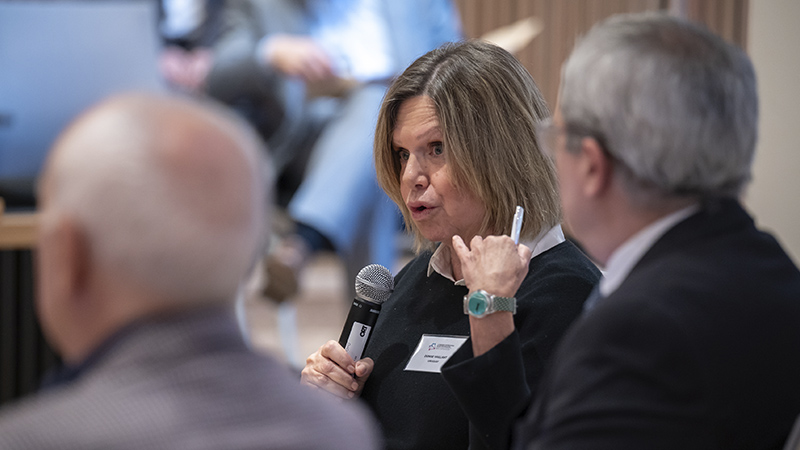
“A good leader does not hoard knowledge but multiplies it,”said Vaillant, who emphasized that “leadership is not an individual task.” In fact, according to the dean, a good leader is one who manages to become “increasingly dispensable” because they build teams, develop others’ capabilities , and create opportunities for shared decision-making.
Both Gairín and Vaillant agreed that leaders should not manage change from their offices but should return to the classrooms to listen to and engage in dialogue with teachers, students, and families.“The best principal is the one who is never at school, because that’s the one who is out in the community, building relationships with organizations and businesses,” added Gairín.
“Just as effective learning requires teachers who are convinced that students can learn, changes in education systems require education officials who have complete confidence in their own ability to innovate and transform education systems, ”Vaillant concluded.
Education: The Foundation of a New Model of Civilization
Artificial intelligence was not the focal point of Mag. Renato Opertti’s lecture, but rather the gateway to a much broader discussion: what kind of education a society undergoing disruptive changes needs , and what kind of civilization we want to build.
Under the title “Technologies with Meaning? Rethinking Education, Educational Systems, Society, and Civilization,” the international projects advisor at the ORT Institute of Education proposed opening education up to dialogue with other disciplines, institutions, and stakeholders. “We must avoid educational isolation, ”he stated during the conference coordinated by Dr. Dora Sajevicius, a faculty member at the Institute of Education and coordinator of the conference’s Executive Committee.
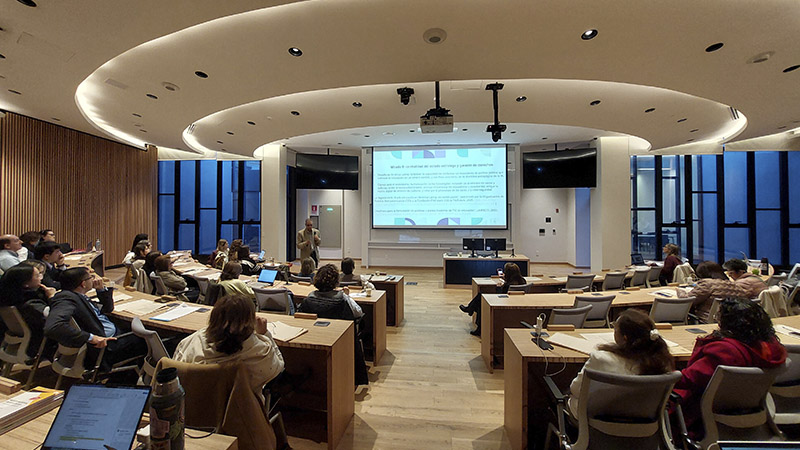
Opertti highlighted a key tension: while the world is undergoing exponential, simultaneous, unpredictable changes in multiple directions, educational systems continue to be conceived primarily in terms of gradual transformations. “There is a major disconnect between non-disruptive education and a disruptive world, ”he noted.
In that context, on the one hand, he called for “demystifying” technology. From the printing press to the internet, these tools have expanded scales and accelerated processes, but they have not brought about transformations on their own. “It is not technological innovation that makes humans smarter or dumber,” he said, noting that its impact depends on the pedagogical, curricular, and theoretical guidance that accompanies its implementation.
He also urged the audience at the 5th International Congress on Educational Management not to fall into the traps of technosolutionism, technoskepticism, or technocatastrophism. Although these are seemingly opposing perspectives, in his view, they share a common denominator: they do not trust in the potential of human intelligence to overcome and solve problems.
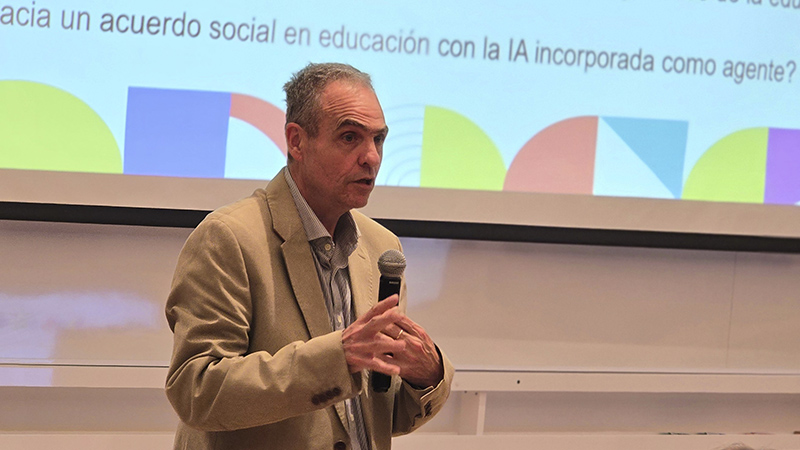 “The the fundamental task of education should be to nurture free and thinking individuals”, said the speaker, who added that, in the age of artificial intelligence, "Thinking for oneself is not something that can be delegated". For Opertti, that goal also requires restore education's place as a public priority and move beyond the search for simple solutions to complex problems. “It’s time to stop naively believing in silver bullets,” he warned.
Education is the foundation for envisioning a new civilization.
Renato Opertti, M.A.
In the face of these challenges, he emphasized the importance of educators playing an active role: not as consumers or mere implementers, but as “architects of experiences and thought.” Above all,this is essential for fostering more personalized learning opportunities, “without boundaries or barriers,” and for more closely linking the “why we educate” with “what is taught, what is learned, and how it is assessed.”
View this post on Instagram
New Perspectives on Educational Governance
Teacher training and professional development, digital transformation, a gender perspective, sustainability, territorial governance, and public policy evaluation were some of the topics addressed in Panel 1: “Educational Governance and Public Policy.”
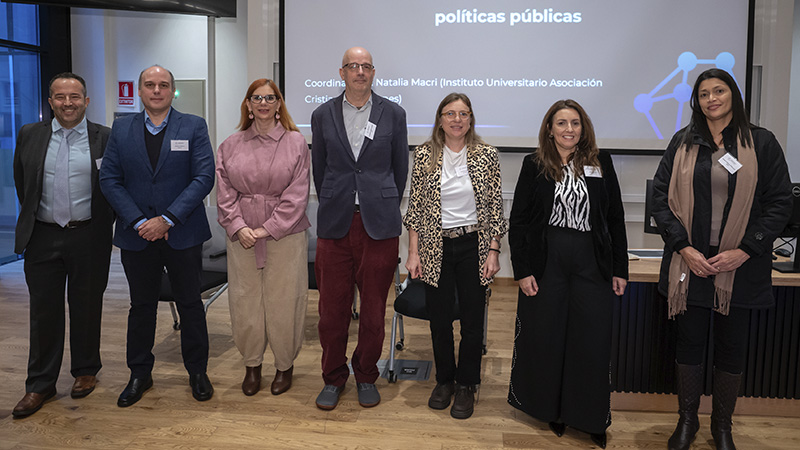
Coordinated by Natalia Macri, M.A. —dean of the Young Men’s Christian Association University Institute—the panel featured six presentations by experts affiliated with institutions in Brazil, Chile, Mexico, and Uruguay, who addressed the challenges of educational governance from institutional, territorial, and public policy perspectives.
From the Technological University of Uruguay, Dr. Marina Melani —a professor and researcher—presented the Master’s program in Learning Environment Design as a “driving force for democratization and the professionalization of teaching in the region.” One of the program’s distinctive features is its design-based research approach, aimed at bringing about changes in educational practices through analysis, experimentation, and reflection on specific problems. “There are many things that teachers are already doing, ”noted Melani, who explained that the master’s program seeks to systematize that knowledge so that it can be transformed into useful insights that can be replicated in other contexts. In this process, she added, the goal is for teachers to transition from a more technical role to that of “designers and researchers” of their own practices and contexts.
Dr. José Ignacio Porras presented the initial findings of the project “Educational Digital Transformation and Institutional Maturity: A Comparative Study of Educational Digital Transformation in Rural Schools in Uruguay and Chile.” In particular, the managing partner of the consulting firm ARSChile shared some of the methodological decisions made during the early stages of the study. Focused on the regions of Canelones (Uruguay) and Aysén and Magallanes (Chile), the project aims to address digital transformation from a broad perspective that goes beyond connectivity or the introduction of devices. “Applying a single instrument to such a diverse range of cases yields results that are not very sensitive to that diversity,” Porras cautioned, noting that one of the main challenges is developing tools capable of capturing less tangible dimensions, as well as the specific characteristics of each rural context.
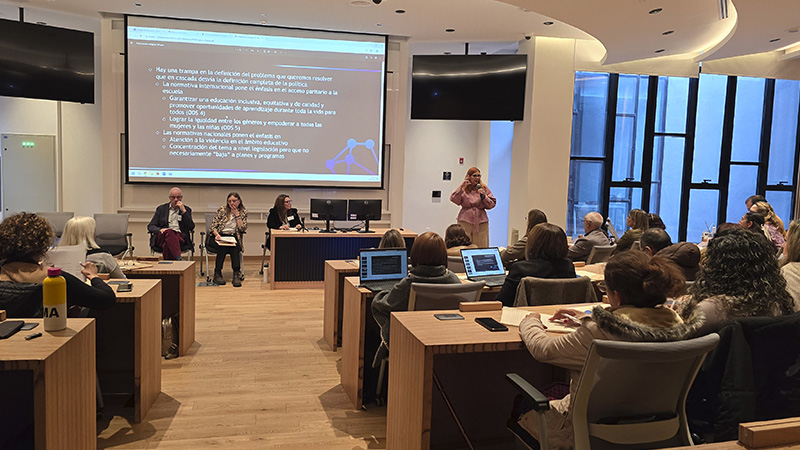
For her part, Dr. Miriam Hinojosa Dieck —dean of the Institute for Research, Innovation, and Graduate Studies in Education of the State of Nuevo León (Mexico)—raised an apparent paradox in gender-sensitive education policies: the fact that girls and boys have similar rates of enrollment or dropout does not mean they face the same conditions. “If we fall into the trap of treating them equally just because the numbers are identical, we will be making a tremendous mistake, ”she stated. The reason is that the causes of school dropout may stem from different gender-based pressures and stereotypes: while expectations associated with the role of provider more frequently weigh on boys, girls are affected by caregiving responsibilities, marriage, or early pregnancy. For Hinojosa Dieck, schools play a key role in addressing these inequalities since, in her words, the influence of gender roles “does not act solely in the present, ” but also shapes how boys and girls “envision their future.”
Experts from Brazil, Chile, Mexico, and Uruguay discussed various challenges in educational governance
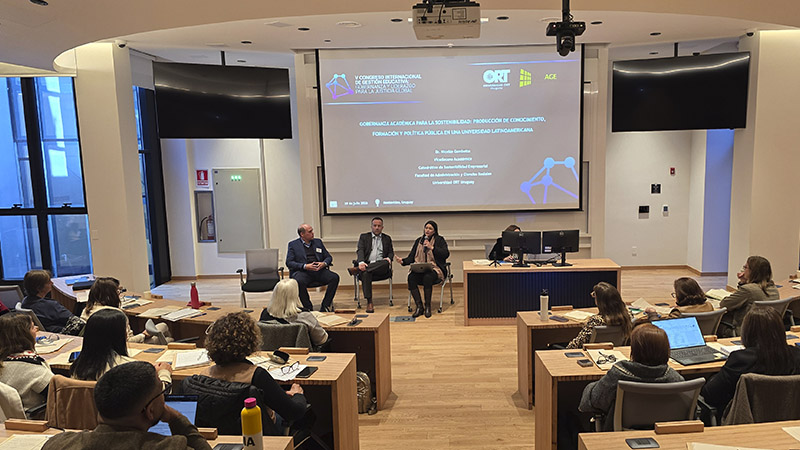
Incorporating sustainability into a university requires much more than promoting individual initiatives. That was the view expressed by Dr. Nicolás Gambetta, academic vice dean of the School of Management and Social Sciences, who stated that it must become an institutional decision and part of the university’s governance. Drawing on the experience of the University of the Republic ( Universidad ORT Uruguay ), he explained how this process has evolved over the past decade—from isolated actions toward coordination structures, accountability mechanisms, and a growing effort to influence regulations and public policies.“It cannot be an individual effort if we want to incorporate sustainability into everything we do,” he stated. Among the milestones along the way, she mentioned the creation of the Chair in Sustainability at the School of Administration and Social Sciences, the formation of a university-wide sustainability committee, and ORT’s participation in international initiatives aimed at measuring and strengthening its social, environmental, economic, and governance impact.
Dr. Andréia Vicência Vitor Alves focused her remarks on a key tension in contemporary education policies: how to align international agendas with the needs and specific characteristics of each region. While the associate professor at the Faculty of Education of the Federal University of Grande Dourados (Brazil) acknowledged the growing influence of global goals and strategies, she cautioned that these“will not always directly address the specific needs of each location.” In light of this, she emphasized the importance of considering the organizational, cultural, and economic particularities of countries, as well as strengthening local participation. For the speaker, the challenge lies in advancing along two complementary paths: an international agenda guided by common goals and another capable of responding to the concrete needs of communities and regions.
What do we leave out when we evaluate an education policy? Based on this concern, Dr. Manuel Cardoso —Director of Research at ORT’s Center for Continuing Education in Higher Education —presented the “6Es” framework, which originated from his research on grade repetition and was later expanded as a tool for analyzing other education policies. This model proposes considering six dimensions: effectiveness, efficiency, equity, empathy, exclusion, and evaluability. Cardoso clarified that it is not always possible to address all of them in a single study, but it is necessary to recognize which ones are prioritized and which ones are left out. “If one chooses to focus on efficiency rather than equity, one is taking a stance,” she said, noting that any evaluation involves a decision about which values are prioritized.
Valuable, Collaborative, and Network-Based Leadership
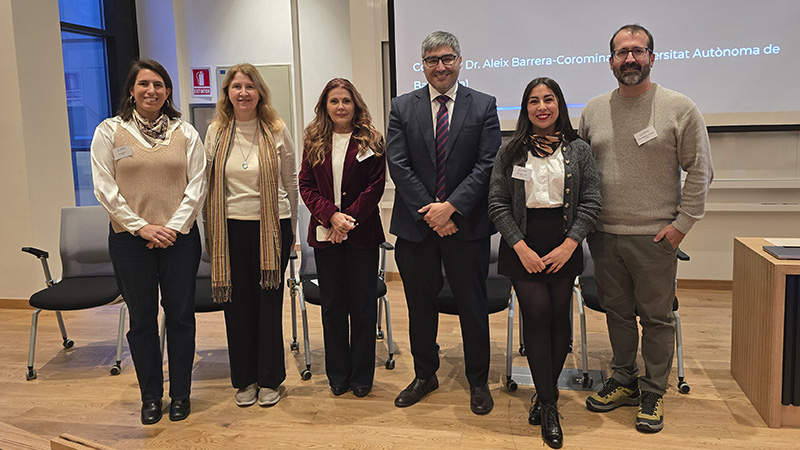
Leading an educational institution today involves much more than managing resources, following procedures, or making decisions from the top down. Panel 2: “Leading Educational Institutions in Complex Contexts, ” focused on what it means to lead in environments shaped by new demands. From diverse perspectives, the session— coordinated by Dr. Aleix Barrera-Corominas, a professor in the Department of Applied Pedagogy at the Universitat Autònoma de Barcelona—brought together five experiences and perspectives on distributed leadership, teacher well-being and retention, collaboration among organizations, and educational innovation.
 The Dr. Sandra Ziegler —academic director of the Master’s Program in Social Sciences with a focus on Education at FLACSO Argentina—placed the debate within the context of social, cultural, and technological transformations that are generating new demands and a the growing burden on educational institutions. Facing systems that have historically been organized along vertical lines and centralized leadership, he proposed moving toward a network leadership, where knowledge is shared and responsibilities are shared. But he cautioned that Collaboration does not happen automatically: requires trust and involves challenge traditionally individualistic work cultures. “Networks don’t work by decree,” he said, but are built by “sharing problems, exploring alternatives and working on collective solutions”.
Teacher well-being was the starting point for Dr. Christian Lazcano, who presented the results of a study on the relationship between instructional leadership and the intention to leave the profession among secondary school teachers in Chile, Argentina, Colombia, and Mexico. “Amid various debates about what kind of leadership we should follow, I prefer the kind of leadership that works—the kind that succeeds in conveying and transferring learning,” stated the director of Research and Public Policy at the Center for Innovation in Educational Leadership at the Universidad del Desarrollo (Chile). During his presentation, he explained that the evidence showed that“instructional leadership significantly reduces teachers’ intention to leave the profession,”while job satisfaction emerges as a particularly relevant factor in encouraging teachers to remain in the profession. Therefore, for Lazcano, improving working conditions and professional development yields a dual benefit: it promotes both student learning and teacher retention.
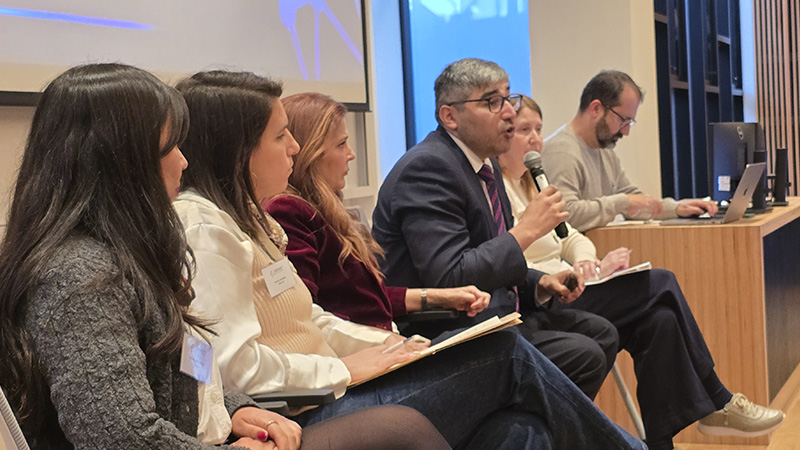
What makes leadership truly valuable? Dr. Claudia Romero’s presentation centered on that question. The advisor to the “ Programme ” (Program for Educational Innovation) of the Aprende Secondary Education Initiative and to the Comprehensive Evaluation of Quality and Equity Unit of the Ministry of Education of the City of Buenos Aires (Argentina) argued that it is not enough to simply establish a vision: it is necessary to inspire others, develop capabilities, and guide decisions toward goals that truly matter. “Leadership is educational if, and only if, it leads toward valuable goals,” she stated. Among these goals, she cited improving learning outcomes and reducing inequalities, but she also added another dimension: the way schools are governed also teaches what it means to participate and make decisions in a democratic society. Along these lines, she summarized the key elements of what would constitute “wonderful educational leadership”: leadership that is pedagogical, distributed, evidence-based, ethical, and empathetic.
Five exhibitions brought together perspectives from Argentina, Chile, and Uruguay on the strategic role of leadership in educational improvement
Drawing on the experience of the ReachingU Foundation, Paula Mosera, M.A. —its executive director—shifted the discussion toward building partnerships. After 25 years of the organization’s work in the field of education, she noted that problems of such complexity cannot fall solely on the government, schools, or teachers, but also require the involvement of universities, civil society organizations, families, businesses, and other stakeholders. “Complex problems require unlikely partnerships, ”she said. Throughout this journey, ReachingU has mobilized more than $20 million, worked with over a hundred organizations, and funded more than 300 educational projects across the country’s 19 departments. According to Mosera, the value of these networks lies precisely in making possible what each organization could hardly achieve on its own. “Organizations do not transform systems, but the relationships between organizations are what do transform them, ”he concluded.
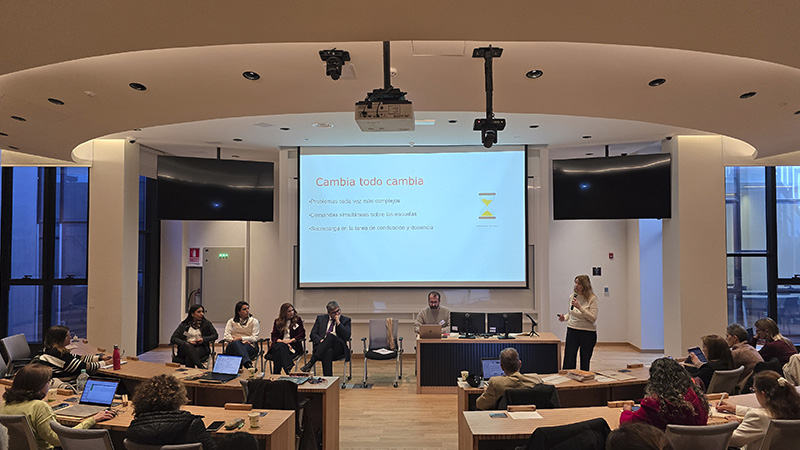
The collaboration across different sectors also went through the experience described by the Pilar Beas Cofré, M.A., Head of Educational Projects at Fundación País Digital (Chile). Based on digital transformation projects carried out in Chile, proposed considering the educational innovation as a process that brings together four dimensions: access, adoption, ownership, and innovation. In this scenario, infrastructure and connectivity are just the starting point, since it is also It is essential to support teachers and school leadership teams so that technologies can be effectively incorporated to teaching practices. “The the relationship between the private sector, the public sector, and civil society "makes these changes possible," said Beas Cofré, highlighting the the value of collaborative and network-based leadership to support innovation processes.
The 5th International Congress on Educational Management has begun: “Governance and Leadership for Global Justice.”
— Universidad ORT Uruguay @UniversidadORT) July 29, 2026
Over the course of two days, leading experts from various countries will gather at ORT to discuss governance, leadership, artificial intelligence, inclusion, and innovation in education. pic.twitter.com/z8W04zk8Mv
- You may also be interested in: “Universidad ORT Uruguay ” served as a meeting point to discuss “a more equitable education system” in Ibero-America”
Research, Networking, and Knowledge Sharing
A very important part of the conference’s richness lay in the parallel thematic sessions, where more than 40 presentations provided an opportunity to delve deeper into issues and experiences from different contexts. The presentations addressed issues related to policies on improvement and equity, leadership, artificial intelligence and digital transformation, teacher professional development, higher education, inclusion, assessment, and change management, among other topics. Organized into seven sessions over the course of the two-day event, they provided a more intimate setting for presenting research, comparing findings, and sparking new discussions among colleagues from different countries.
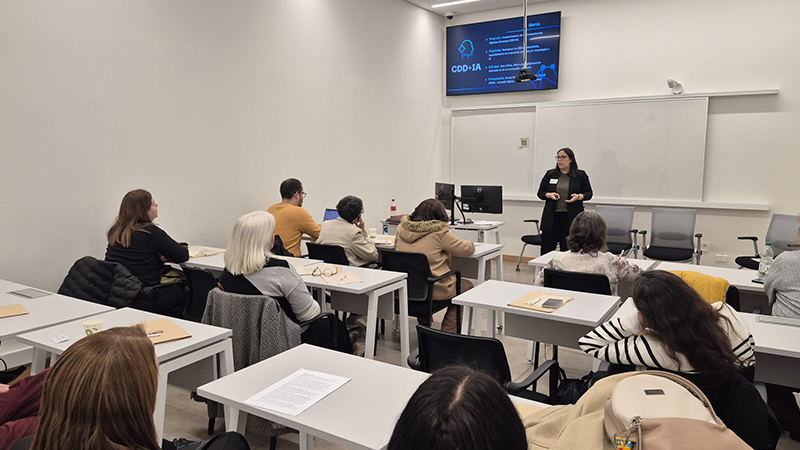 Behind those presentations there was also a prior academic process. The call for The 5th International Conference on Educational Management accepted original, unpublished papers, which were to provide empirical evidence, theoretical developments, or critical analyses related to the conference's themes. The contributions were submitted to double-blind peer review, and the papers presented were later compiled in the proceedings, Governance and Leadership for Global Justice, coordinated by Dr. Andrea Tejera Techera and Dr. Joaquín Gairín Sallán.
The exchange also went beyond academic presentations. The first day concluded with the open session “Networks to Transform Educational Management,” which brought together experiences from five networks focused on management, digital transformation, and educational training in various countries and territories: RedAGE International, Red LATE, the Network for Studies on Educational Policy and Management in the Global South (RELEN), and RedAGE Uruguay. Moderated by Dr. Andrea Tejera Techera, the session provided an opportunity to share different forms of cooperation and discuss the potential of networks to connect institutions, knowledge, and experiences beyond national borders.
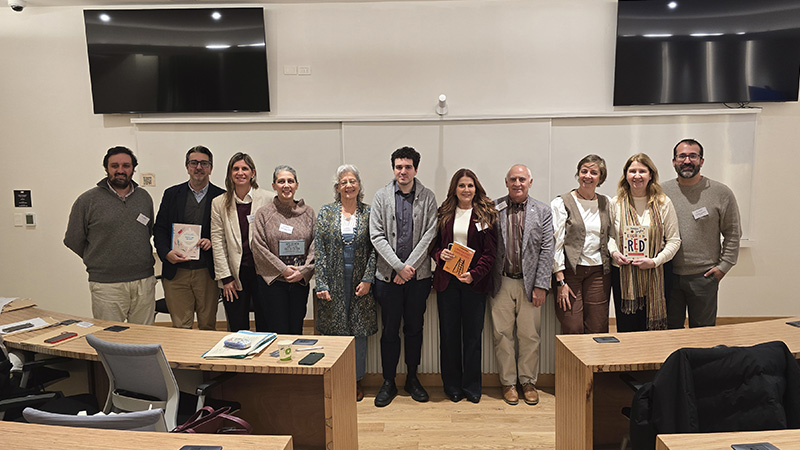
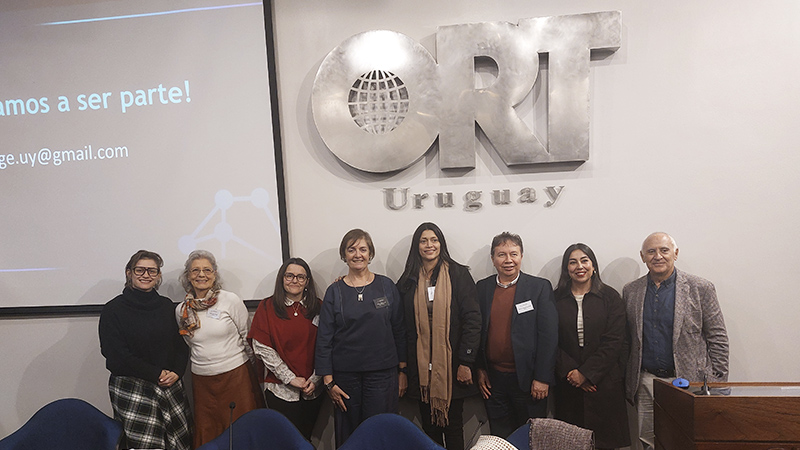 The second day added another dimension to the exchange, with the RedAGE Publishing: Books and Magazines for Reflecting on Educational Management. The following were presented there recent publications on leadership, innovation, artificial intelligence, and educational management, along with academic journals related to these fields. The proposal reinforced another of the Congressional Bets: not just to produce and discuss knowledge, but also create channels to circulate it and keep those conversations going after the meeting.
- You may also be interested in: “Joaquín Gairín: Education Needs Principals ‘Who Don’t Focus Solely on the Rules’ and Address ‘Community Needs’”
What the Congress Left Behind
“Conferences take on true meaning when something shared continues after they end: when a question becomes a research project, a conversation becomes a partnership, an experience becomes a shared practice, or a concern becomes an institutional decision,” said Dr. Andrea Tejera Techera, general coordinator of the 5th International Conference on Educational Management. In her words, the event leftparticipants with “new questions, new opportunities for exchange, and the need to foster collaborations”to promote “more humane and distributed leadership, stronger networks, and fairer educational systems.”
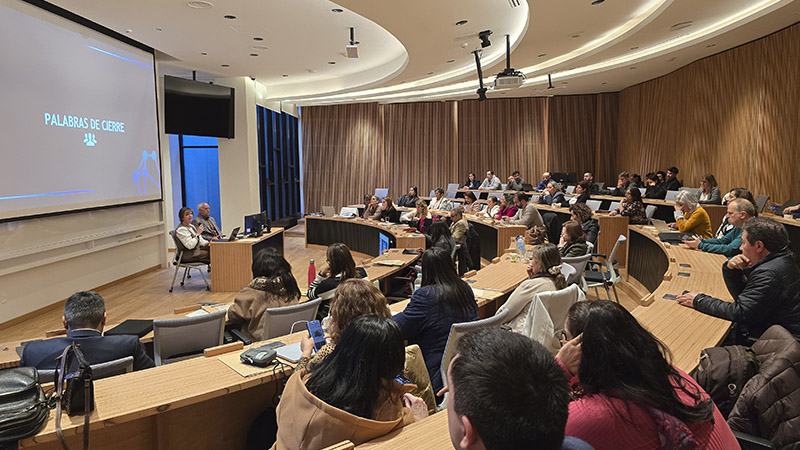 Finally, at the close of the conference, the Dr. Joaquín Gairín, chairman of the RedAGE Executive Committee, He described the conference as “successful”. After managing to gather representatives from more than ten countries in Ibero-America —including Argentina, Brazil, Chile, Colombia, Costa Rica, Spain, the United States, Mexico, Panama, Paraguay, and Uruguay—Gairín attributed this to “ongoing community support" and, in particular, to its ""commitment" to educational management and international exchange.
Image Gallery

The 5th International Congress on Educational Management is linked to the Sustainable Development Goals (SDGs), adopted by the United Nations in 2015 to address the major global challenges by 2030. In particular, it relates to the SDG 4: Quality Education, for its focus on equity, inclusion, teacher training, and the improvement of education systems, and with the SDG 17: Partnerships to Achieve the Goals, for promoting cooperation among educational institutions, governments, social organizations, and international networks to generate knowledge and shared responses to the challenges facing education.