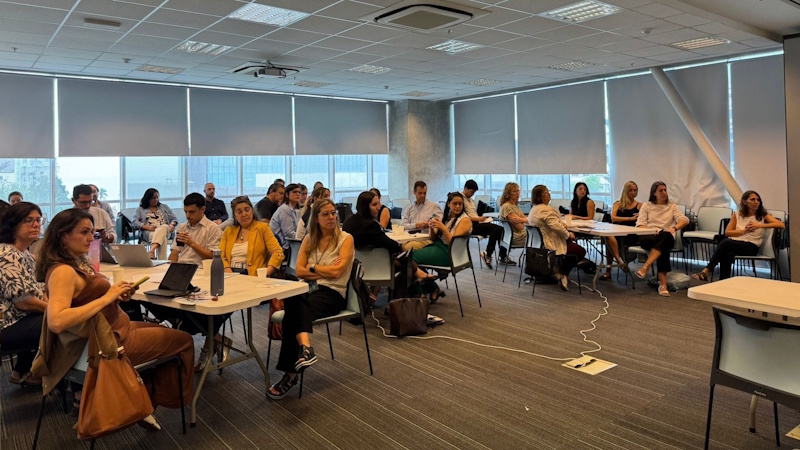
Universidad ORT Uruguay in an exchange program organized by the Office of Planning and Budget (OPP) to gather input for the preparation of the 6th Voluntary National Review on the Sustainable Development Goals (SDGs), which Uruguay will present to the United Nations in mid-2026.
The event brought together representatives from government agencies, universities, and international organizations to share experiences and discuss potential contributions related to the SDGs highlighted in this edition of the report.
Focus on Partnerships
Representing the university systemwereUniversidad ORT Uruguay and the Technological University (UTEC). Representing ORT was Inés Tiscornia, M.A., deputy coordinator of Environmental Management, who participated in the roundtable discussion on SDG 17 (Partnerships for the Goals), one of the five goals prioritized in this edition of the report along with SDGs 6, 7, 9, and 11.
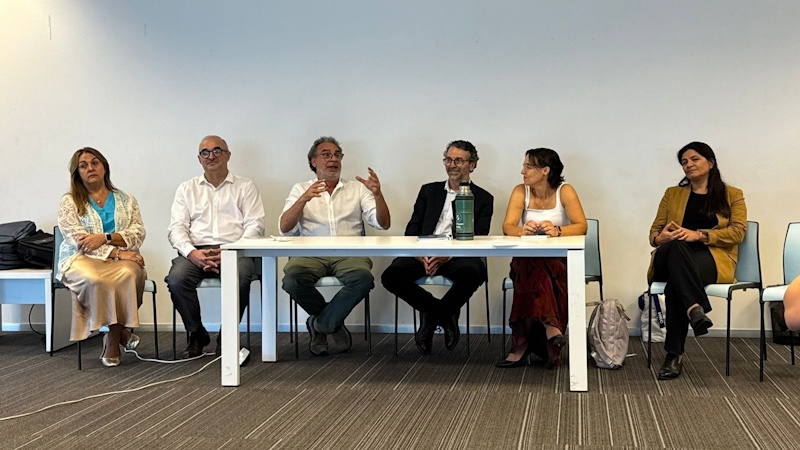
The roundtable also included representatives from the Movement for the Eradication of Substandard Rural Housing (Mevir), the Programme DevelopmentProgramme (UNDP), and the Ministry of Foreign Affairs, in a discussion aimed at identifying experiences and insights that could be taken into account during the report-drafting process.
Contribution from ORT
In this context, ORT presented initiatives to foster ties with the business sector, led by the School of Business and Social Sciences through the Business Planning Department.
As part of this effort, the department entered into partnership agreements with three business organizations: the Uruguayan Chamber of Commerce and Services, the Uruguayan Exporters' Association, and Endeavor Uruguay.
Based on these partnerships, a call for business challenges is issued, which are then tackled by MBA teams, incorporating environmental, social, economic, and governance dimensions in accordance with ESG criteria (environmental, social, and governance).
Commitment to sustainability
Universidad ORT Uruguay participation Universidad ORT Uruguay this initiative is aligned with its academic sustainability agenda, as it contributes educational experiences that integrate graduate-level instruction, partnerships with organizations, and capacity-building to foster alliances focused on sustainable development.