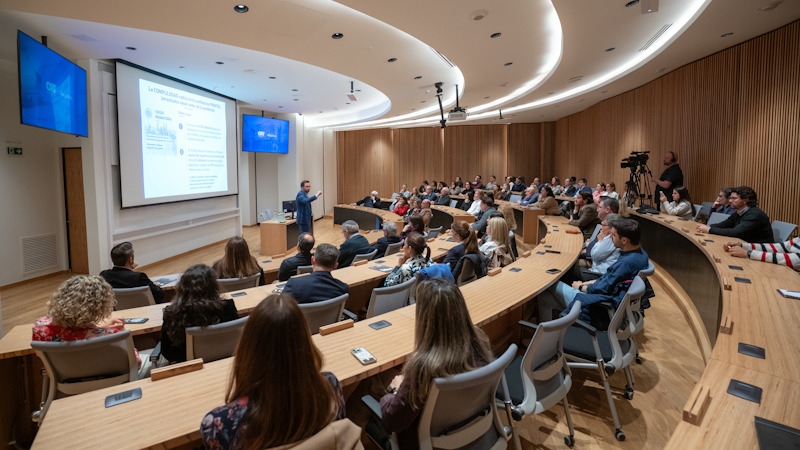
The opportunity to earn an MBA at two universities, share experiences with professionals from different countries, and benefit from a binational faculty is the cornerstone of the new program presented by the Universidad ORT Uruguay , and the University of San Andrés on Tuesday, October 13.
The launch of the Dual MBA brought together academic representatives from both institutions, who discussed the program’s key features and the opportunities offered by an education geared toward business challenges in an international context.
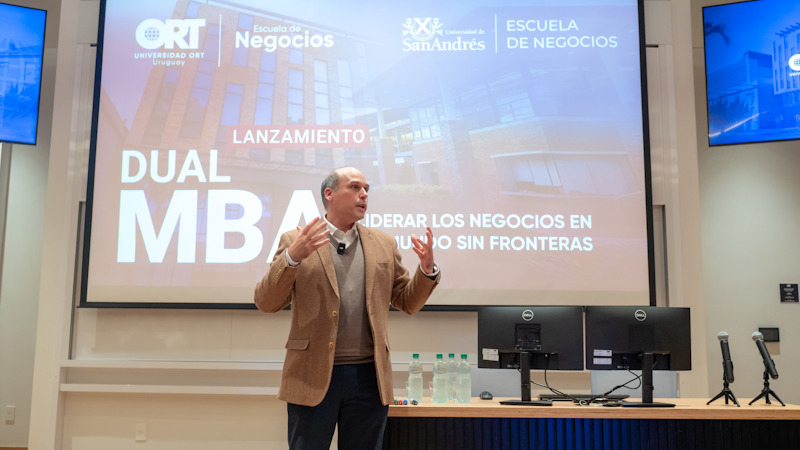
Dr. Nicolás Gambetta, director of the ORT Business School, opened the event and explained that this initiative is part of the institution’s internationalization strategy and reflects its interest in strengthening academic ties in the region.
“Two schools, one MBA, two degrees,” said Gambetta as he presented a proposal aimed at expanding educational opportunities and strengthening the integration between the two universities.
An Academic Exchange Between Uruguay and Argentina
The new program will last 18 months and will allow participants to earn two university degrees, one from the Universidad ORT Uruguay , and the other from the University of San Andrés.
The program combinesHyFlex® classes—which allow students to take courses online or in person in Montevideo—with in-person sessions in Buenos Aires.
In addition to these programs, there will be two intensive regional sessions, which will take place in Bariloche and Punta del Este. During these sessions, participants will engage in academic activities, company visits, and events related to innovation, technology, and networking.
Another distinctive feature of the Dual MBA is its binational faculty. The program will bring together professors from both universities, with some courses taught by each institution and others taught jointly.
The program, which will begin in June 2027, is designed for professionals seeking to deepen their business education and broaden their regional and international perspective.
Two institutions that share a vision for business education
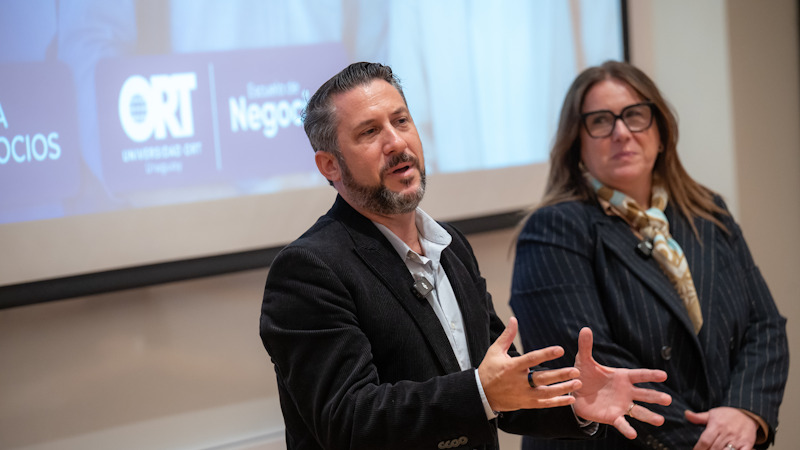
During the launch, Ximena Fernández, PhD, academic coordinator of the Graduate Management Programs at the Universidad ORT Uruguay, and Daniel Serrot, M.A., director of the Executive MBA program at the Universidad de San Andrés, discussed the details of the new program.
Fernández spoke about the entrepreneurial and innovative spirit that characterizes ORT and the importance of identifying opportunities in an increasingly connected world. In particular, he highlighted the role of entrepreneurship in recognizing opportunities for development even in situations with limitations.
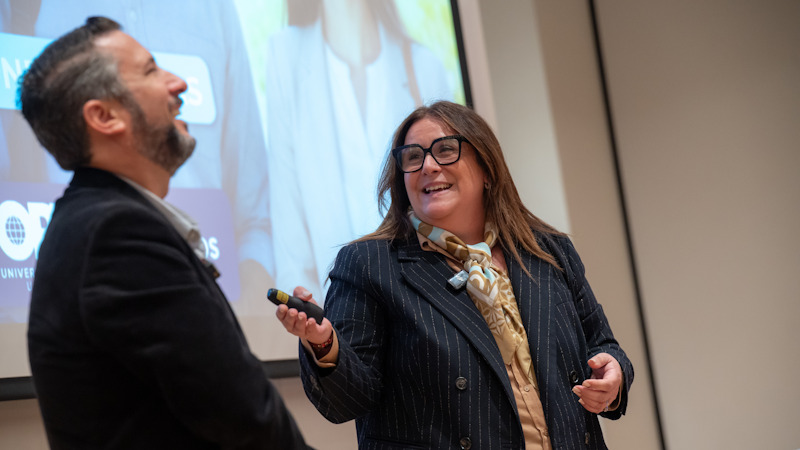
Serrot, for his part, highlighted the similarities between the two business schools in terms of quality and academic excellence. For example, he mentioned that both institutions were pioneers in their respective countries in obtaining AMBA international accreditation.
He also explained that academic integration was one of the central aspects of the program’s design, with the goal of capitalizing on each university’s strengths and offering an education that enables professionals to “look out into the world.”
Geopolitics and Its Impact on Business Decisions
The event featured a lecture titled “Leading Business in a Borderless World, ” presented by Dr. Nicolás Albertoni, professor of International Relations at the Universidad ORT Uruguay.
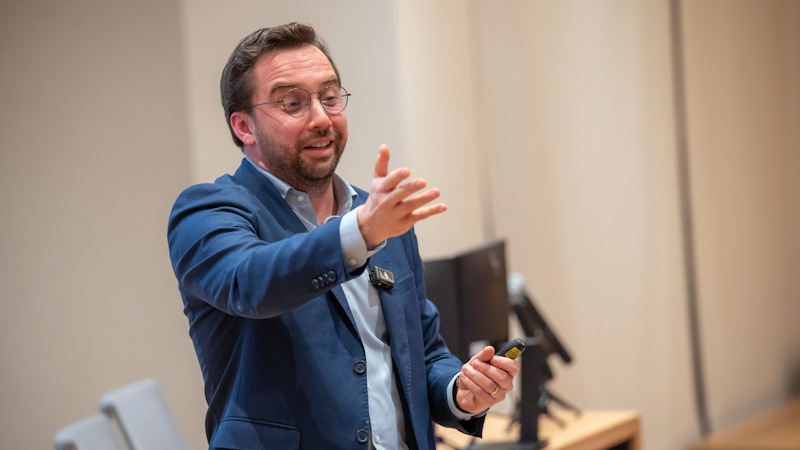
In his presentation, Albertoni analyzed how geopolitical tensions, changes in international trade, and the growing interdependence among countries affect the environment in which companies operate.
The world has never been as highly interconnected as it is today. We are not merely in a time of change; we are clearly witnessing a new era.
To illustrate the complexity of the international landscape, the expert cited the existence of 29 active conflicts and six territorial disputes, as well as the growth in international trade agreements, which have increased from about 40 in the 1990s to about 560 today.
Based on this data, he emphasized the importance of incorporating geopolitical analysis into business decisions and of developing tools to navigate uncertain scenarios.
Along those lines, he shared a thought from Paul Ingram of Columbia Business School: “Today, preparing is more useful than predicting.”
The conference provided insight into the international context in which businesses operate and the challenges faced by those who must make decisions and lead organizations.