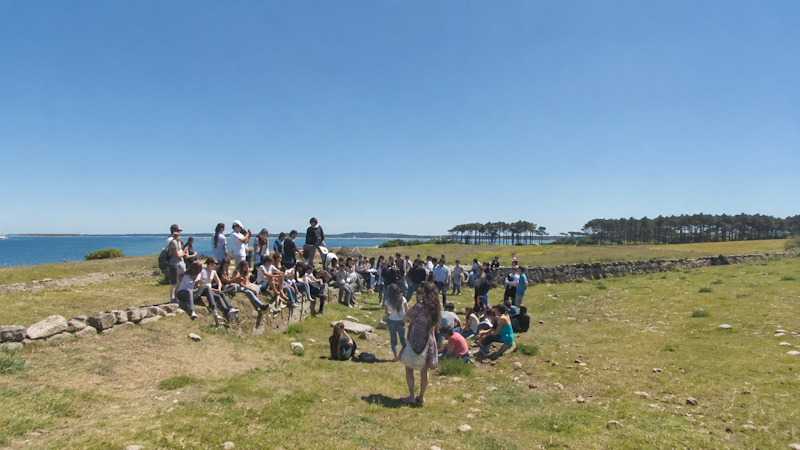
On October 18, 2008, the School of Architecture welcomed 15 Chilean architecture students from the Universidad del Desarrollo, who were accompanied by professors Marcela Pizzi, Architect, and Roberto Saelzer, Architect.
For one week, the Chilean students participated alongside ORT’s second-semester architecture students in a design workshop on Gorriti Island.
Interview with the Dean of the School of Architecture, Architect Gastón Boero.
- What is the Isla Gorriti project?
This is a course assignment for Project 1, a course offered in the first semester of the Architecture program.
- When did it start? Will it continue throughout 2009?
- "This type of activity, known as a project exchange, began in June 2007. Together with another professor and a group of students from the Project 1 course, we traveled to Santiago, Chile, and joined first-semester architecture students from the Universidad del Desarrollo, with whom we designed an exhibition space and observation deck in the city of Valparaíso. In October of that year, the same group of Chilean students visited us, and for a week, together with all our students from Project 2, we designed a lookout point on San Gabriel Island, located across from Colonia del Sacramento.
The same thing happened last year. In June, I traveled with a delegation of our students to Santiago, Chile, and we designed a space for meditation and worship along the Mapocho River. In October of that year, they visited us, and together with our students, we designed a whale-watching lookout on Gorriti Island.
We plan to repeat the experience in 2009 with students from the Project 3 and Project 4 courses—who are in their third and fourth semesters of architecture—rather than with the first-year students."
- What assignment were the students given?
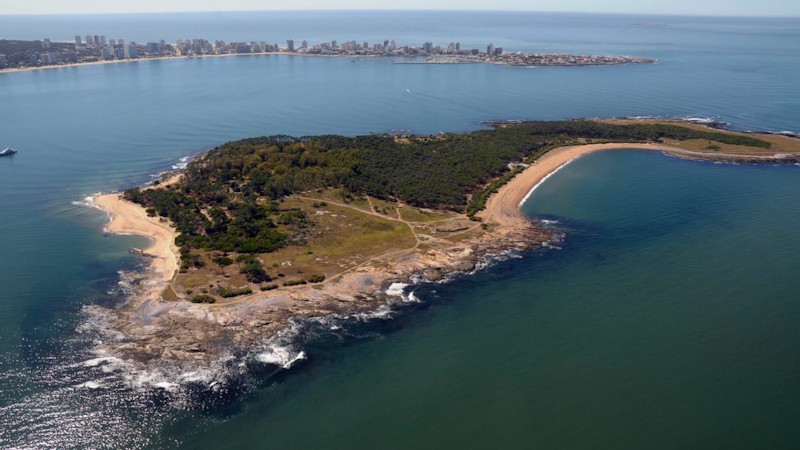
The design of a whale-watching lookout. The location on the island was chosen by the faculty.
- How did the idea to design the observation deck come about?
- "Our teachers came up with the idea while trying to balance academic requirements with a program that was meaningful and practical."
- What was it like to work alongside students from the Universidad del Desarrollo in Chile?
- "Excellent. The benefits for all students should be understood from a disciplinary perspective, in terms of professional training, and from a human perspective. For some students, it meant reaffirming or finalizing their commitment to architecture; they were able to compare their ways of thinking and working in architecture with those of other students from a different academic and cultural background—that of Chile—and were even corrected by instructors from outside the ORT faculty."
- What was the reaction from the ORT students?
- "As with any exchange program, living together involved the typical challenges of human relationships: some interactions were very successful, and others not so much. In any case, the overall experience was always positive. It’s worth noting that student housing for this program is arranged through a “home exchange”: when we visit, our students stay with Chilean students, and vice versa when they visit us."
- Do you plan to carry out this academic work through agreements with public or private institutions?
That might be the case, but it is not one of the objectives. This is an activity with a strong academic focus, aimed at strengthening ties between universities, architecture schools, faculty, and students.
- What is the overall assessment of the activity?
- "The overall assessment of the activity is extremely positive, as it is a rare experience. While this type of project-based collaboration is relatively common in our discipline, it is not so common for it to be included as a curricular activity or to be carried out systematically with students who have just entered the program. Generally, inter-faculty meetings are held as extracurricular activities, without continuity, and they address topics that require knowledge typically possessed by students who are further along in their studies.”
Interview published in March 2009