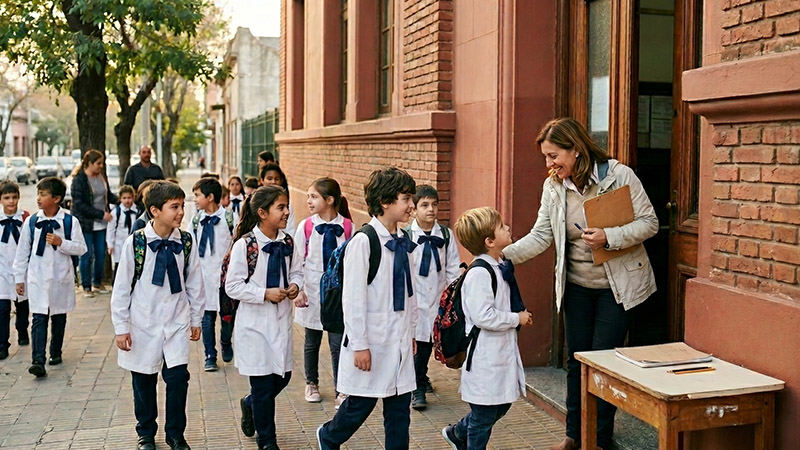
Regular class attendance not only affects learning but is also key to moving toward more equitable, inclusive, and sustainable education systems. Therefore, understanding its causes, dynamics, and effects is essential for guiding policies and practices that address the current challenges facing primary education in Uruguay.
Within this framework, the Institute of Education at Universidad ORT Uruguay carrying out the project “School Attendance in Primary Education in Uruguay: Evidence-Based Knowledge to Inform Policies and Practices,” a research initiative aimed at generating evidence-based knowledge on school attendance in primary education.
The initiative was one of four projects selected —in March 2026— for funding by the Education Sector Fund, under the “Digital Inclusion” category, a program promoted by the National Agency for Research and Innovation (ANII) and the Ceibal Foundation.
The project is led by Dr. Denise Vaillant —dean of the Institute of Education, who serves as co-principal investigator—and by Dr. Manuel Cardoso —director of research at the Center for Continuing Education in Higher Education (CAES)—who serves as co-principal investigator.
The team also includes the following researchers: Dr. Andrea Tejera Techera —academic coordinator of the Master’s in Educational Management, the Master’s in Trainer Education, and the CAES—; Dr. Erik Caseres —tutor at the Institute of Education—; Fabián Téliz, M. A. —guidance counselor and tutor at the Institute of Education— ; and Natalia Zambon —instructor and tutor at the Institute of Education—.
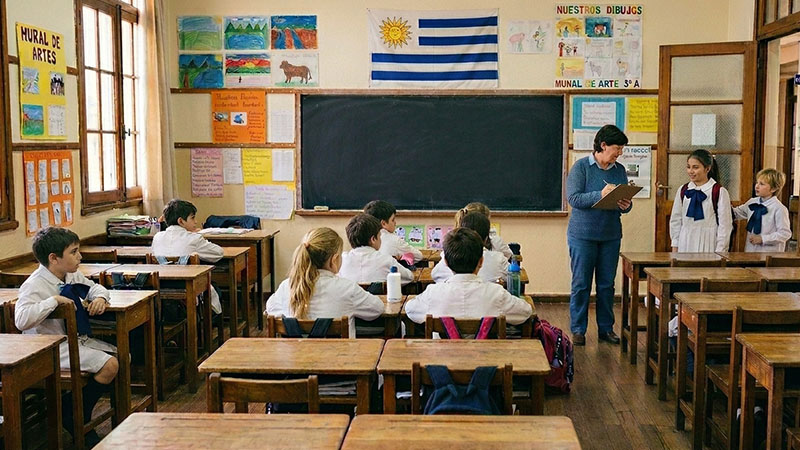
"School Attendance in Primary Education in Uruguay" proposes to analyze school attendance from a multidimensional perspective, taking into account the sociocultural context of schools, institutional and pedagogical variables, academic outcomes, and the strategies that schools can develop to promote attendance or mitigate the effects of absenteeism.
To this end, the research combines quantitative and qualitative analysis. More specifically, the study includes an analysis of databases available within the Uruguayan education system, a survey of elementary school teachers, a review of interventions implemented in Uruguayan schools, and an examination of existing initiatives in other countries that have shown promising results.
Based on this approach, the goal is to produce a comprehensive assessment of school attendance in elementary school, identify patterns of absenteeism and risk profiles, and provide evidence on the relationship between attendance and educational outcomes.
The project also aims to develop recommendations for decision-makers, school administrators, teachers, families, and school communities, with the goal of guiding policies, programmes institutional practices that help improve school attendance.
The project contributes in particular to Sustainable Development Goal 4: Quality Education, which promotes inclusive, equitable, and high-quality education for all. By providing evidence to strengthen school attendance, improve educational trajectories, and reduce learning gaps—with a focus on critical sociocultural contexts—it reinforces an approach centered on equity and educational inclusion.