
Interest in science, technology, engineering, and mathematics (STEM) has increased significantly due to thegrowing demand for professionalswith technical skills and the ability to adapt to technological advances.
These experiencesfoster hands-on learning, creativity, and teamwork, all of which are essential in anacademic and professional environmentthat is increasingly focused on innovation.
STEM skills have evolved from being merelysupplementary activitiesto becoming aneducational experience that has arealimpacton students' learning.
What Are STEM Skills?
STEM competencies areeducational experiencesin which studentsapply knowledgefrom multiple areas of science and technology to solve problems and develop projects that address specific challenges.
These may take the form of academic competitions, science fairs, robotics tournaments,programming contests,hackathons, or innovation events.
The acronym STEM comes from the English words science, technology, engineering, and mathematics.
Although each discipline hasits own methods and content, this approach seeks to integrate them in order toanalyze situations from different perspectivesand develop concrete solutions.
According toUNESCO, STEM disciplinesdrive innovation andfoster skills such ascritical thinkingand creativity. The organization also notes that this knowledgeprovides toolsfor addressing complex issues andcontributing to sustainable development.
In this type of approach, each areaserves aspecificfunction, but they allcomplement one anotherthroughout the learning process.
- Science: It allows students to observe phenomena, ask questions, formulate hypotheses, conduct experiments, and analyze evidence to understand how natural and technological processes work.
- Technology: Provides digital tools, software, devices, and resources that facilitate research, data analysis, project design, and the implementation of solutions.
- Engineering: It focuses on designing, building, testing, and optimizing products, systems, or processes that efficiently address a specific need or problem.
- Mathematics: Provides methods for measuring, calculating, interpreting data, identifying patterns, developing models, and supporting decision-making with quantitative information.
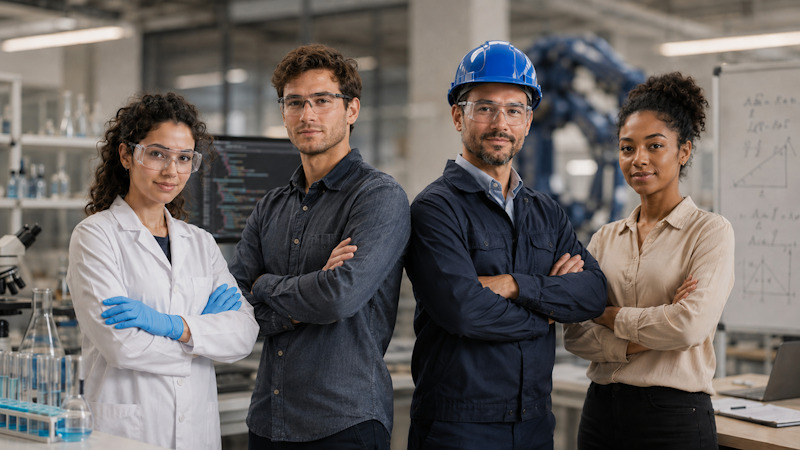
Taken together, these disciplines enable students todevelop a comprehensive view of problemsand understand how different areas of knowledge can be combined tofind innovative solutions.
STEM skills do not merely assess the knowledge acquired in the classroom.
By participating in these competitions, studentsput their technical knowledge into practice and strengthenskills that are applicableboth to their academic studies and to real-life situations.
How STEM Skills Work
The way STEM competitions workvaries depending on the discipline, the participants' ages, and theobjectives of each event.
Generally, students are required to solve a problem anddevelop a projectrelated to science, technology, engineering, or mathematics. Participation can beindividual or in groups, and in many cases, has students receiveguidance from mentors or specialists.
The final result is only part of the work. Some STEM competitions take place over a single day, while others canlast several monthsand involve multiple stages of preparation, refinement, and final presentation.
- Challenge Overview: The organization sets a theme, a problem to solve, or a topic to work on.
- Research and Planning: Participants seek out information and analyze alternatives to develop a strategy, both individually and as a group.
- Solution Development: Depending on the type of competition, students may program an application, build a robot, conduct an experiment, or create a model.
- Testing and adjustments: The proposal is evaluated to identify errors and verify its functionality. If necessary, modifications are made.
- Presentation of Results: Students explain the process, demonstrate the solution, and answer questions from a panel of judges, who evaluate them based on criteria such as accuracy, creativity, and feasibility.
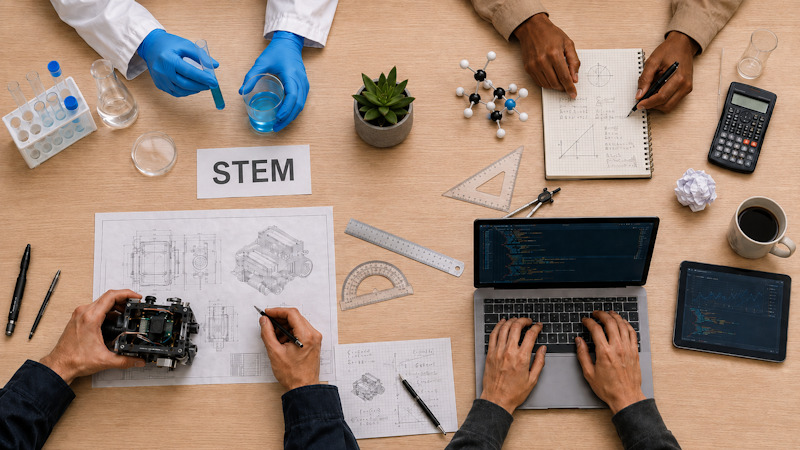
According to the Science Competencies Organization, building prototypes, conducting experiments, andpresenting researchrequire skills such ascritical thinking, trial and error, andadaptability.
Beyond the scientific knowledge or technological tools used , these types of experiences emphasize theability to investigate, test different alternatives for the same problem, and explainwhy a particular solution was chosen.
What Types of STEM Skills Are There?
STEM skills canfocus on a specific disciplineor combine knowledge ofscience and technology. Some assess problem-solving within a set time frame, while others involveresearching, designing, and improving a solution.
Robotics and Programming Skills
These skills are characterized bythe integration of technical knowledge withthe development offunctional solutions.
Students must not only ensure that adevice or programfulfills its purpose, but alsounderstand the problemand manage the work required to achieve a result. According to the proposal, this may include:
- robot construction and programming;
- problem-solving using algorithms;
- application development, video games, or digital systems;
- use of sensors, programmable boards, and simulators.
One example is theFIRST Robotics Competition, in whichteams of students design and build robots to tackle adifferent challengeeach season.
Science and Research Fairs
Science fairsdiffer from other competitions because their focus is on thegeneration of knowledge.
Projects begin with aquestion or problemand must demonstrate howthepresentedresultswereobtained and interpreted. Typically, these projects require:
- formulate a research question;
- review information and background material on the topic;
- formulate a hypothesis or define an objective;
- design experiments or observational methods;
- draw conclusions supported by evidence;
- present the work to teachers, specialists, or a panel of judges.
TheRegeneron International Science and Engineering Fairis an international competition forhigh school students. Projects advance to the international level afterqualifying at affiliated science fairsand are divided into categories related to differentscientific and technological fields.
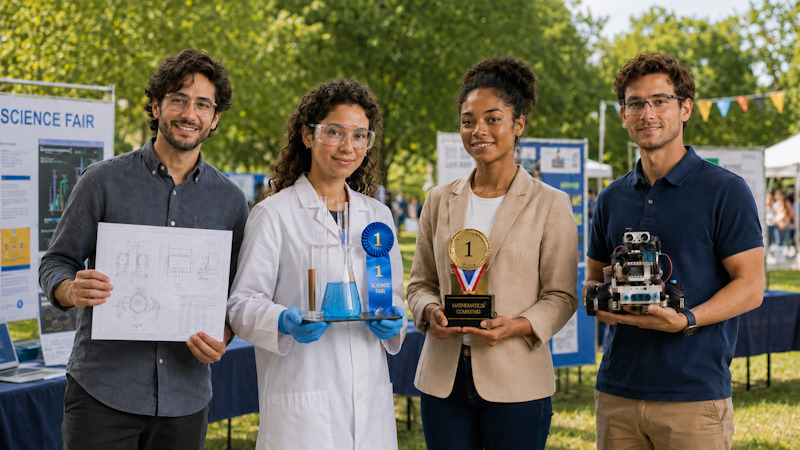
Math and Science Olympiads
Academic competitionsaim to assess students' ability toreason and apply knowledgein response to challenges of increasing difficulty.
Instead of presenting a pre-prepared project, participants mustcomplete a challengeunder conditions set by the organization. Among its main features are:
- problems that require logical reasoning;
- applying concepts to unusual situations;
- time-limited individual tests;
- division of participants by levels or categories;
- evaluation of the response and the procedure used.
In Uruguay, theNational Mathematics Olympiad Foundation organizes a competition forelementary and secondary school students, featuring various categories and stages. In thefirst round of 2025, 7,611 students from 340 schools across multiple departments of the country participated.
Hackathons and Innovation Challenges
Hackathons takeplace over ashort, intensive period, which can range froma few hours to several days.
Its goal is to produce aninitial, viable response toa challenge, so the process requiresprioritizing tasks and quickly turningan idea into a demonstrable proposal. During these competitions, participants typically:
- analyze a specific problem;
- work in teams with diverse profiles;
- use data, programmes , and digital tools;
- design a solution or a prototype;
- Prepare a brief presentation to explain the idea and receive feedback from the judges.
TheNASA International Space Apps Challengepresentschallenges related to Earthand space based onopen data provided by NASAand other space agencies. The competition is opento participants of all ages andexperiencelevels.
STEM programs offer formats tailored to different interests.
Some skillsprioritize accuracy and speed, while others focus onresearch, creativity, and collaborationor the development of practical solutions.
How to Prepare for a STEM Competition
Before signing up for a STEM competition, it’s a good idea to start byreading the rulesto learn about the requirements, deadlines, evaluation criteria, and permitted resources. You should also find out about any other important information well in advance .
This review helps ensure thatproposalsarenotdevelopedthat do not conformto the guidelines or that cannot be submitted inthe required format.
Preparation depends on the format of the competition.
Anacademic competitionrequires practicing problem-solving, while ascience fair or robotics challengerequires planning a project, assigning tasks, and conducting tests over a longer period of time.
Here are some helpful steps to take to prepare for a STEM experience:
- Review prior knowledge: Determinewhich concepts, tools, or procedures should be studied before beginning;
- Manage your time: Breakthe work downinto stages and set deadlines for researching, developing, testing, and preparing the presentation;
- Distribute responsibilities:When working as a group, assign tasks based on each member’s knowledge and strengths;
- Review past exams:Look over prompts, projects, or exercises from previous years to understand the level of difficulty and the criteria used.
In addition, it is advisableto keep organized documentationof the process, noting progress, results, and errors to be corrected.
Preparation involveslearning how to manage resources and respond to challengesthat may arise during the competition. The more organized the process is, the easier it will beto identify problems early on and make adjustmentsbefore the final round.
- More on this topic:What is a hackathon, and what do you learn from these collaborative challenges?
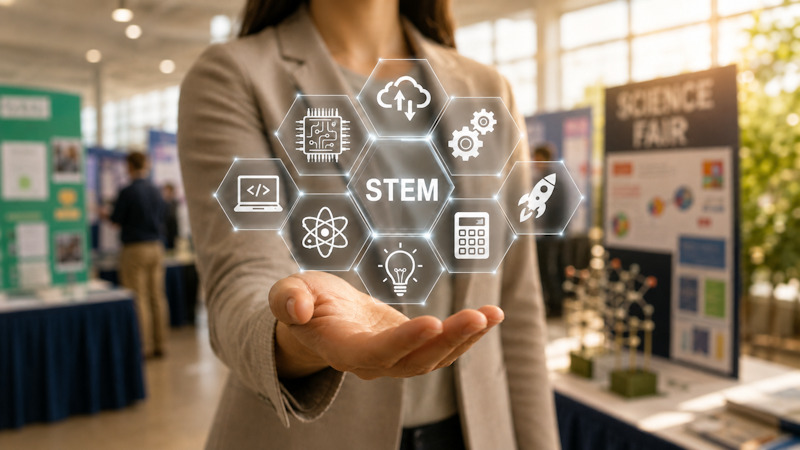
STEM skills continueto gain groundas a way to introduce students to science and technologyfrom a hands-on perspective.
Beyond the resultsachieved in each competition, the experience of researching, designing, experimenting, and collaborating fostersaform of learningthat extends beyond the classroom.
These initiatives have become apowerful educational toolthat helpsprepare students tothrive in a constantly changing environment.