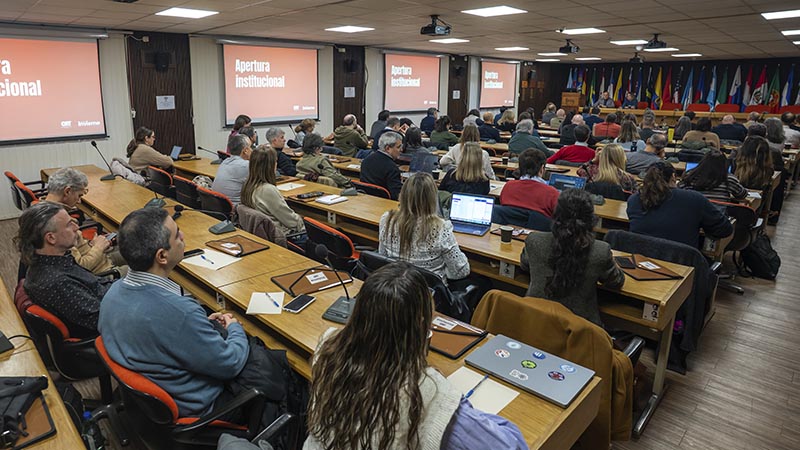
How can we train professionals in a world where artificial intelligence is already transforming the way we learn, work, and generate knowledge? That was one of the questions central to the second edition of the Winter School “Teaching, Assessing, and Innovating in the Age of Artificial Intelligence: Teaching Experiences for Meaningful Learning”—a training program specially designed for faculty members at the Universidad ORT Uruguay.
Organized by the Center for Continuing Education in Higher Education (CAES), with support from People, the event brought together more than a hundred faculty members from various schools over two days for lectures, workshops, and discussion sessions focused on professional development, knowledge exchange, and collaborative learning.
Rather than focusing on the use of new tools, the 2026 edition invited participants to examine fundamental questions: what to teach, how to assess, and what learning experiences to design in a context shaped by artificial intelligence.
Joaquín Gairín: Working in Teaching Teams Is Both Possible and Necessary
“What guides us is the desire to improve our professional practice and the context in which we operate, which is university education, ”said Dr. Joaquín Gairín during the conference “Developing Educational Innovation at the University: Working in Teaching Teams Is Both Possible and Necessary.”
The professor of Teaching Methods and School Organization at the Autonomous University of Barcelona explained that good teachers share one common trait: they constantly reflect on their own practice, identify mistakes , and make changes.
However, he cautioned that individual reflection, on its own, “does not bring about change” nor “is it enough.” Nor is it enough for a teacher to act responsibly and try to improve in isolation. “Individual action isoften undermined by the inaction of other groups, ”he cautioned. “We need teachers to work in coordination with one another and within an institutional framework that enables change, ”he added.
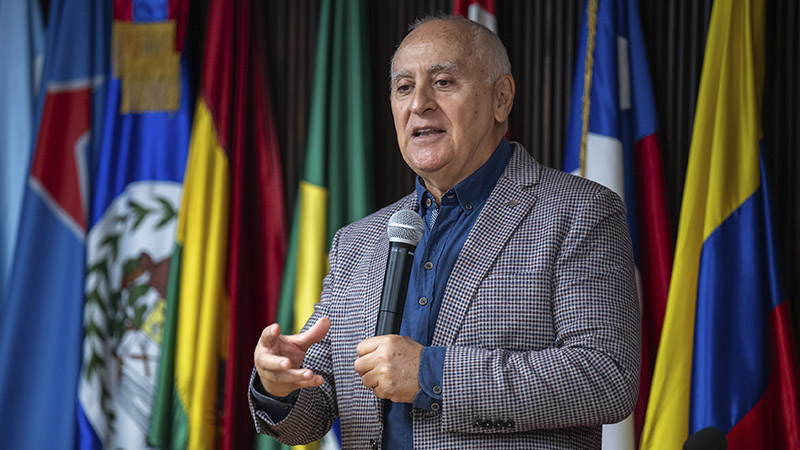
“Is it really possible to work collaboratively at the university, or is that just a pipe dream?” asked Gairín. Using various examples, he sought to demonstrate that not only “is it a possible reality,” but that it is also necessary.
How can this be achieved? The expert offered some key points to keep in mind, such as fostering interdisciplinarity in the face of a system that promotes individual development. The challenge, he explained, lies not so much in individual learning—which already takes place—but in how to foster collective learning capable of transcending individuals.
The great challenge is to move from the individual to the collective and, above all, from the collective to a global system, so that knowledge endures even as people come and go.
Gairín also proposed reexamining a widely held belief in higher education: that the student must necessarily be the center of the university. “What is the focus of universities?” he asked. As he explained, this concept took hold in the European context, although he offered a different perspective.
“The fundamental focus and the very reason for the university’s existence is knowledge. Its primary purpose is to understand what reality is like, how it works, what variables influence it , and how we can change it, ”he said. From that perspective, he added that the best professor is one who“stays up to date, has a deep understanding of their field, and applies their research to teaching.”
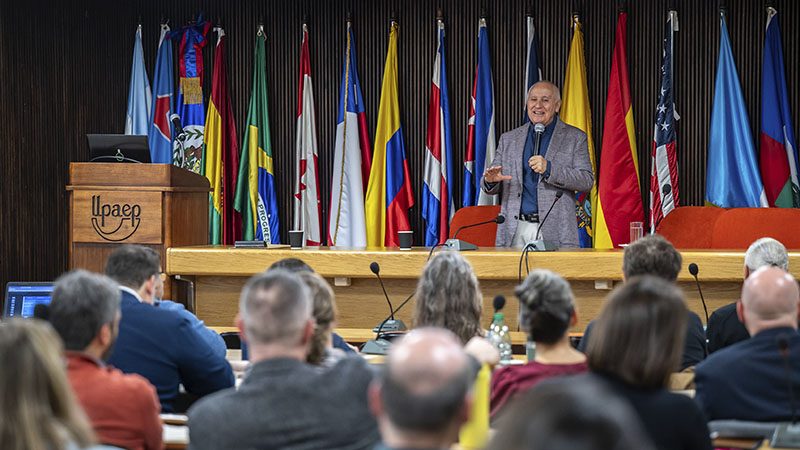
“The student is not the focus—we all are,”he declared. In his view, it is not possible to “replace the student’s effort with the teacher’s effort,” since the student’s learning is not “solely the teacher’s responsibility.” The student must be part of the learning process because, if not, he or she will also be “part of the failure of the outcome.”
Improving teaching and learning processes is not just the teacher's responsibility; it is also the student's responsibility.
Along those lines, he questioned the fact that educational improvement initiatives focus solely on teachers and their methodologies. “If we want to improve, we must also focus on the students and the institution, ”he said. To illustrate his point, he noted that a teacher may set out to develop more active classes, but will find it difficult to do so if the institution lacks adequate spaces to foster interaction or the resources to support those practices.
“Individual effort alone is not enough to bring about effective change. Collective effort alone is not enough. Institutional commitment is also necessary, and these must be balanced,” he emphasized. In his view, the outcome of education depends on “various factors.” While he said it is “fine” to focus on one of them, we must not overlook the rest. “Achieving higher quality in education is everyone’s responsibility, ”he concluded.
Martín Rebour: Training Professionals in the Age of Artificial Intelligence
How does artificial intelligence change university education when it can explain, translate, correct, or program in a matter of seconds? Dr. Martín Rebour, an advisor on graduate programs at the Institute of Education, used this transformation as a starting point to analyze the challenges and opportunities that artificial intelligence presents for higher education.
In his lecture titled “Training Professionals in the Age of Artificial Intelligence,” he reflected on how various technologies—from the printing press to the internet—have transformed the production and dissemination of knowledge. However, in the case of artificial intelligence, he emphasized that it is not simply “just another technology,” but rather represents a “much more profound transformation” that challenges teaching and learning practices.
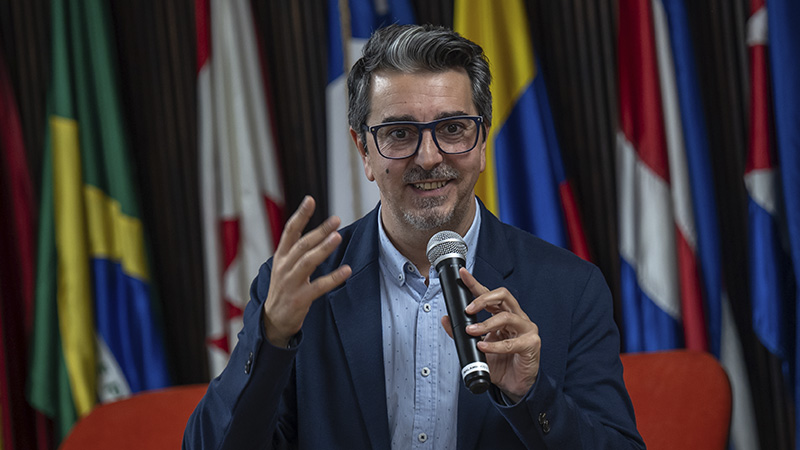
To translate that discussion into concrete practices, Rebour suggested that teachers work collaboratively, using three guiding questions as a starting point:
- What are we teaching in our coursestoday simply out of habit or tradition, even though we know that the profession no longer requires it or that technology can handle it in seconds?
- If technology takes over the technical aspects,what is the irreplaceable human value that we should cultivate?
- What skills will be needed in the coming decade, and what should the profile of the class of 2035 look like?
“It’s not that I have many answers,” Rebour acknowledged, focusing instead on organizing some thoughts to continue reflecting on the concerns of teachers.
The question is not what artificial intelligence can do for the university, but what kind of university we need to train professionals capable of working intelligently with it.
What role is left for teachers in a world where artificial intelligence can take on more and more tasks? What kind of learning experience is truly worth designing? How can a class be made more engaging in this highly technologized context? According to Rebour, it is no longer enough to simply explain content; rather, we need to “iterate, discuss, engage in dialogue, experiment, and make mistakes”: “What remains for us is to interpret, provide context for meaning, and integrate. If there’s one thing teachers have, it’s professional experience.”
In this context, he argued that one of the main tasks of teachers is to develop the skills that future professionals will need. Working with real-world problems, promoting interdisciplinary approaches, and evaluating the learning processes —rather than just the final products—were some of the strategies Rebour shared.
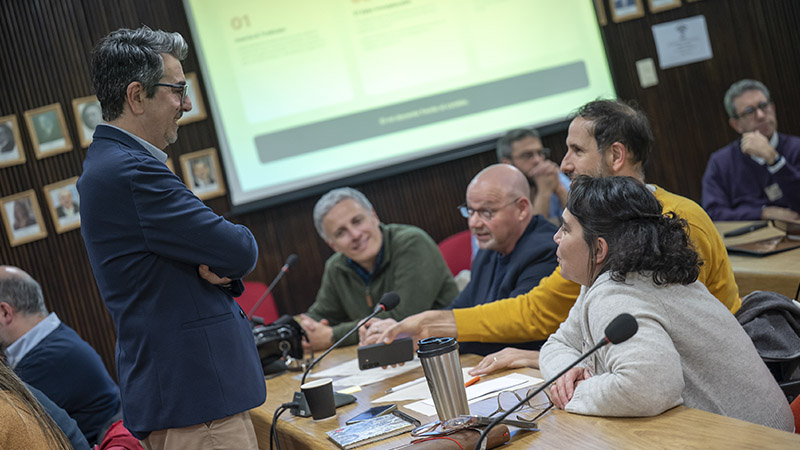
At the same time, he placed the development of professional judgment at the center of that training, which is underpinned by pillars such as critical thinking, ethics, and problem-solving skills. “A teacher’s greatest value is helping to build professional judgment, ”he said, because“that is what will make the difference.”
What makes a teacher irreplaceable is their ability to be there for students—to be present with their whole being, with their ears and their eyes. It’s about supporting students and helping them make sense of what they’re doing.
The adoption of these technologies opens up possibilities related, among other things, to multimodality and student autonomy, but it also presents risks. These include the illusion of understanding, superficiality, dependence, and a loss of cognitive effort, for example.
To address this tension, Rebour proposed thinking of technology as a scaffold for learning: a support that enables progress in the construction of knowledge and that can be gradually removed as that knowledge becomes more solid.
“What this allows is for you to start building, and as it becomes more solid, you can gradually remove the scaffolding, leaving the structure behind,” he explained. In this analogy, the building represents knowledge, and the teacher’s role is to provide the necessary scaffolding until it can stand on its own: “And then the building doesn’t collapse, because the knowledge remains.”
Experiences that span academic departments
Convinced that peer learning is one of the best ways to continue strengthening professional development, ORT teachers had the opportunity to learn about initiatives developed by other colleagues and participate in discussions.
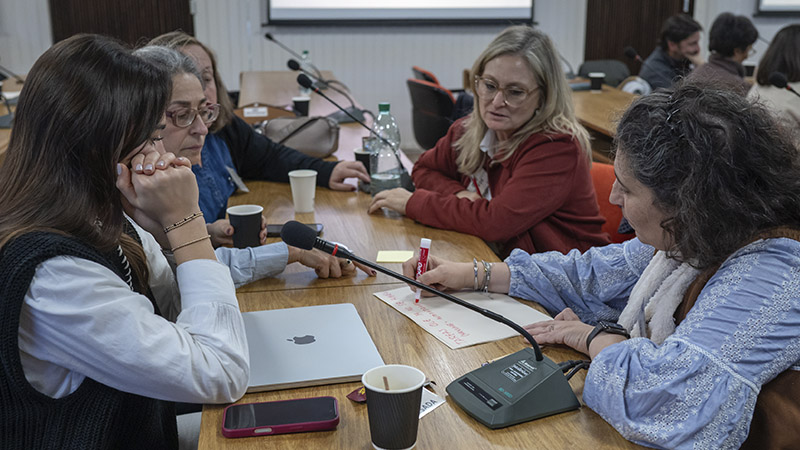
That spirit was reflected in five concurrent workshops, organized by the schools and open to faculty members from across the Universidad ORT Uruguay. The workshops drew on specific experiences to share lessons learned, identify transferable practices, and discuss common challenges related to teaching, assessment, and innovation.
The workshops addressed various aspects of university life: from the use of artificial intelligence to foster design thinking and critical thinking in the School of Architecture to the lessons learned from the international accreditation process of the School of Business and Social Sciences.
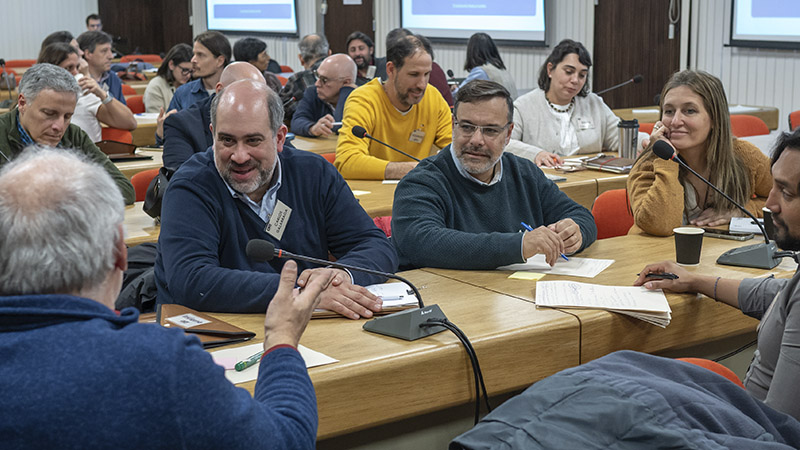
Experiences were also shared regarding the integration of research and artificial intelligence into the classroom by the School of Communication; support for diverse student pathways by the School of Design; and a process of reviewing and improving teaching practices carried out by the School of Engineering.
A university that learns from its faculty
“I am, above all, a teacher who is trying to learn,” said Dr. Denise Vaillant, dean of the Institute of Education, during the opening of the Winter School. According to her, the second edition sought not only to discuss the topics that brought everyone together—training, innovation, and artificial intelligence—but also to “collaborate and share what we’ve learned” among colleagues, as well as to foster an “informed dialogue” with new ideas and reflections.
He also addressed the challenges involved in turning those discussions into concrete changes. “In Uruguay, there are many things that define us and that are positive aspects of our culture. But there are others that we may need to overcome, such as the slow pace of change, ”he said, noting that digital transformation is a constant challenge for educational institutions.
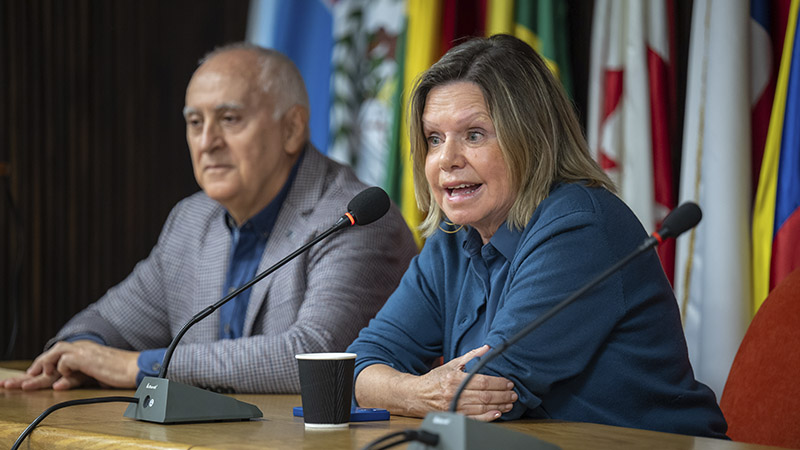
Dr. Andrea Tejera Techera, academic coordinator of the Center for Continuing Education in Higher Education (CAES), highlighted the value of creating opportunities for exchange among faculty members from different fields. “The Winter School allows us to expand as a university,” she said.
In his remarks, he encouraged faculty members to see themselves as “leaders and stewards”—regardless of the different roles they hold at the university— in order to advance the search for “context-specific solutions to problems.”
At the same time, he emphasized the role of the concurrent workshops, in which teams from different schools shared experiences to “think about and rethink practices, ” as well as to identify potential areas for improvement.
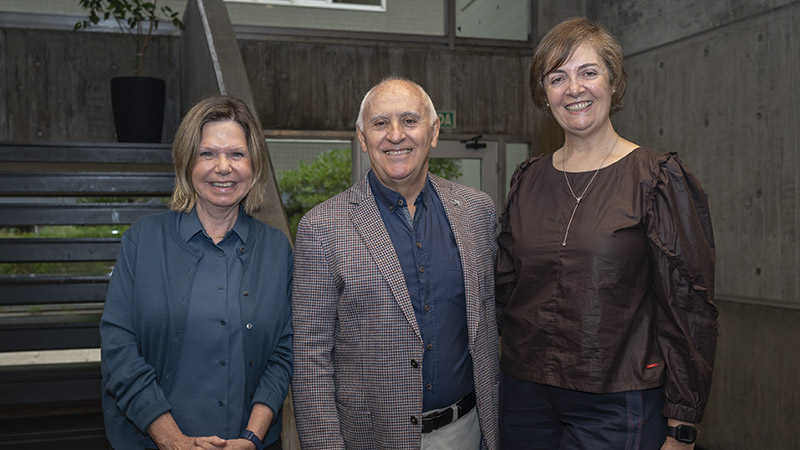
“Why does a university devote so much time to these kinds of activities?” asked Dr. Pablo Landoni, academic vice president of the Universidad ORT Uruguay, during the closing ceremony of the Winter School. In his view, the answer lies in the very nature of the university: “A university is a place where faculty members play an important role.”
The vice president stated that these initiatives make it possible to incorporate professional development and the professionalization of faculty into the educational process. To keep these issues on the agenda, he emphasized the importance of “discussions among faculty members,” noting that the university has learned that meeting with colleagues fosters “dynamic interactions, learning communities, and surprising and innovative dialogues.”
For the authorities, he added, the challenge lies in “listening,” “implementing,” and gathering the ideas that emerge, in order to transform them “into projects and activities.” “We are part of an active, dynamic, and innovative university, and we want many of the innovative initiatives and projects to arise from meetings like this one,” he concluded.
Image Gallery
“Experience,” “motivation,” “collaboration,” “knowledge,” and “transformation” were some of the words the teachers highlighted and said they took away with them at the end of the second edition of the Winter School.

The 2026 Winter School was aligned with Sustainable Development Goal 4, which aims to promote quality education. Discussions on educational innovation, collaborative work among teachers, assessment, and artificial intelligence were aimed at strengthening educational processes that are more relevant, critical, and up-to-date—ones capable of preparing professionals to act responsibly in complex contexts.