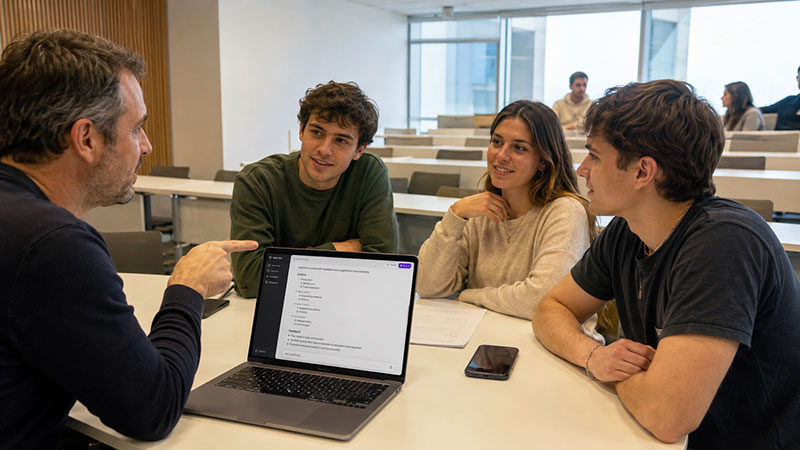
Universidad ORT Uruguay its institutional guidelines on generative artificial intelligence with two documents aimed at faculty and students.
The guidelines propose criteria for integrating these tools into courses, assignments, and assessments, with a focus on transparency, critical thinking, academic integrity, and learning.
This update is part of an initiative the university has been pursuing since 2023, when it issued recommendations on the use of generative artificial intelligence tools in teaching and on the assessment of learning in this new context.
Thesis
Since then, ORT has launched various initiatives to support the integration of generative artificial intelligence into academic life.
These include educational innovation projects using artificial intelligence, which involved 15 implemented projects and more than 30 teachers.
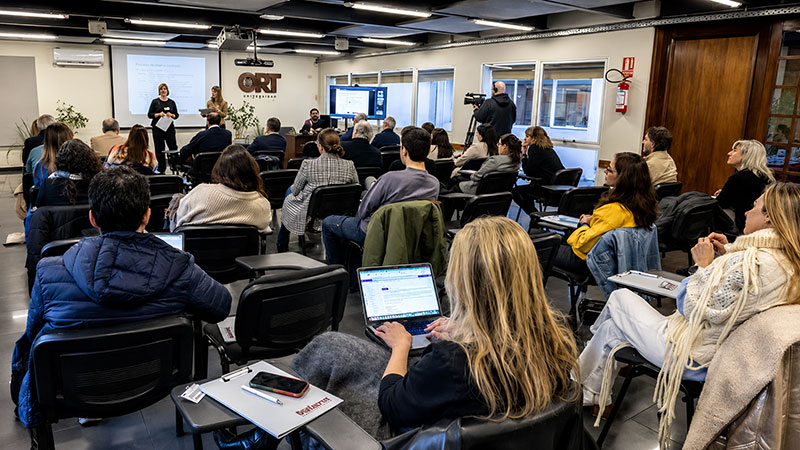
Also noteworthy are the development of the IA-ORT Teaching Assistant, designed to support tasks such as lesson planning, activity design, and assessment development, and the 2025 Winter School titled “Higher Education and Technology: The Strategic Role of Artificial Intelligence in Learning.”
The event, organized by the Center for Continuing Education in Higher Education (CAES) with support from the Department of Human Resources, brought together experts and faculty members to discuss the impact of artificial intelligence on higher education.
New guidelines
The new documents were developed by CAES, a division of Universidad ORT Uruguay to supporting the modernization and innovation of university teaching practices.
The guide for teachers provides guidelines for deciding when, how, and to what extent to incorporate generative artificial intelligence into academic activities.
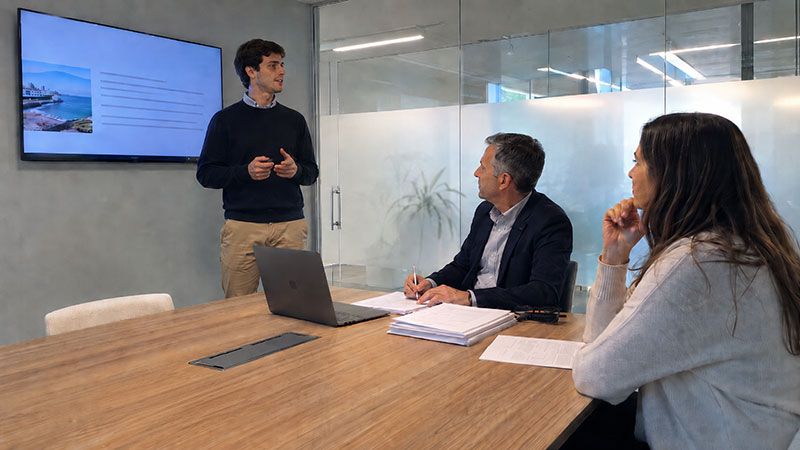
The document argues that these tools should not be approached with a blanket ban or uncritical acceptance, but rather through well-founded pedagogical decisions aligned with the expected learning outcomes.
It also recommends clearly stating in programmes, guidelines, instructions, or virtual classrooms whether the use of generative artificial intelligence is permitted, restricted, or prohibited, and for what purpose.
Responsible use
The student guide provides guidance on the ethical, responsible, and critical use of tools such as ChatGPT, Claude, Copilot, Gemini, and other similar platforms.
The document is based on a pedagogical conviction: the focus should be on what students learn and how that learning takes place.
In this context, artificial intelligence can support the work process, but it cannot replace understanding, independent reasoning, or the ability to explain the results achieved.
The guide also promotes transparency. When the use of generative artificial intelligence is relevant to an activity, students are expected to state which tool they used, for what purpose, and which decisions they made independently.
Training and Innovation
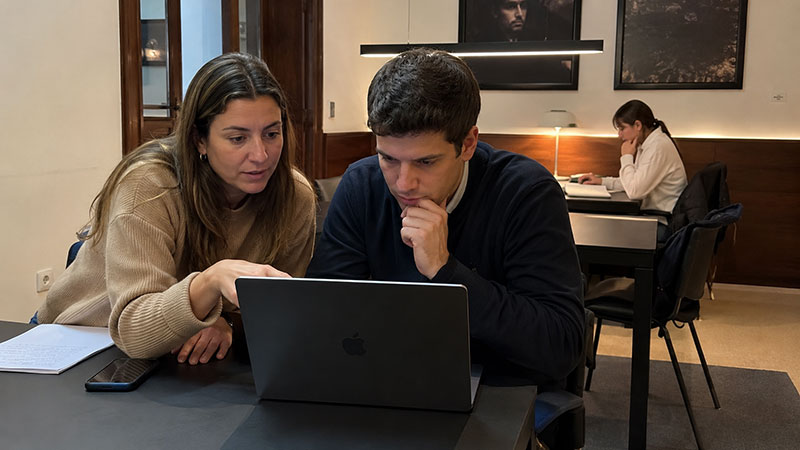
With these new guidelines, Universidad ORT Uruguay is establishing a common framework to support the integration of generative artificial intelligence into teaching and learning.
The institutional approach aims to harness the potential of these tools without losing sight of pedagogical principles, student responsibility, and the development of professionals capable of acting independently in changing contexts.
The initiative is linked to Sustainable Development Goal 4: Quality Education. The Sustainable Development Goals are an agenda adopted by the United Nations in 2015 to address global challenges such as education, equality, sustainability, innovation, peace, and partnerships by 2030.
From this perspective, ORT’s work in generative artificial intelligence aligns with a university education focused on developing critical thinking skills, meaningful learning, and the responsible use of emerging technologies.