The Uruguayan pharmaceutical industry is undergoing a period of transformation and is playing an increasingly important role in the national economy.
In this context, the Universidad ORT Uruguay School of Business Universidad ORT Uruguay the Center for Economic Research (CINVE) organized a panel discussion titled “The Present and Future of the Pharmaceutical Industry in Uruguay, ” providing a forum for discussion on the challenges and opportunities facing the sector.
The event took place as part of the launch of the new Programme in Health Management and Economics in Uruguay, promoted by the ORT Business School and CINVE.
Growth potential
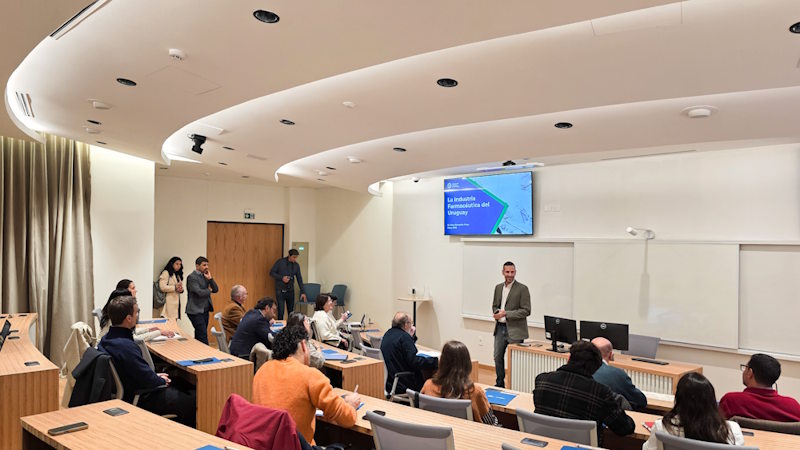
The event, held on May 27 at the Business School, brought together experts from various fields to discuss the economic, health, and industrial aspects of the pharmaceutical industry and its impact on the country.
The panel featured presentations by Sebastián Pérez, CPA —economic advisor to the Uruguayan Chamber of Industries—; Dr. Alicia Ferreira —alternate president of the National Resources Fund—; and Daniel Olesker, M.A. Daniel Olesker —undersecretary of the Ministry of Industry, Energy, and Mining—and Carlos Grau —a faculty member of Programmewho shared complementary perspectives on the industry’s economic, regulatory, and health challenges.
One of the highlights of the meeting was the discussion of the strategic role this industry plays in Uruguay, both in terms of its capacity for growth and its potential to create diverse, high-quality jobs.
During the presentation, it was noted that the pharmaceutical sector is one of the best examples of industries capable of integrating a diverse range of job profiles, from operational staff to highly specialized professionals, such as doctors, scientists, and individuals with master’s or doctoral degrees.
We need sectors that can attract a wide range of people to work in them.
The event highlighted the importance of industries capable of creating opportunities for workers with varying levels of education in a country facing growing challenges related to workforce diversity.
Leadership
Data was presented on the performance of the pharmaceutical industry compared to other manufacturing sectors in the country. The pharmaceutical industry has led the way in terms of production growth in recent years.
It has been the most dynamic sector within Uruguay's manufacturing industry over the past 15 years, driving growth in physical production volume even amid a period of relative industrial stagnation.
The data show that it is one of the most important sectors, in terms of production, exports, foreign exchange earnings, and wages paid.
Sebastián Pérez, Esq.
Regulation and Debt
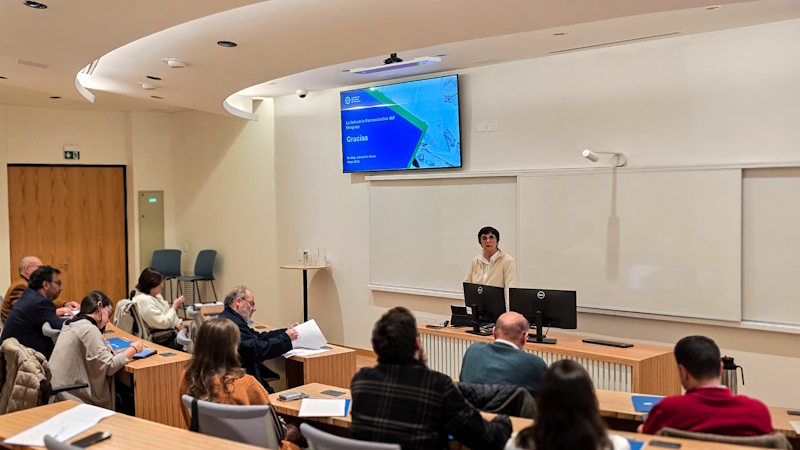
Dr. Alicia Ferreira highlighted one of the sector’s structural challenges: the need to strengthen Uruguay’s regulatory framework for medicines.
During his presentation, he explained that most countries have autonomous national regulatory agencies that are technically, financially, and administratively independent from their ministries of health, as recommended by international organizations such as the Pan American Health Organization (PAHO) and the World Health Organization (WHO).
As he pointed out, this type of regulatory framework not only allows for greater control and oversight of medical devices, but can also become a key tool for boosting the competitiveness and exports of the pharmaceutical industry.
In that regard, Ferreira pointed out a long-standing shortcoming in Uruguay’s healthcare system: the lack of a national drug policy with long-term strategic guidelines.
Although he acknowledged the progress made by the National Integrated Health System, he maintained that there remains a regulatory deficit.
“Our National Health System had many strengths, but our drug policies remained a major shortcoming. We never had a drug policy,” he stated. He also criticized the current regulatory model and summed up the challenge: “Our country did the opposite of what other countries do and put the cart before the horse.”
A long-term commitment
Olesker discussed the prospects and challenges facing the pharmaceutical industry in Uruguay, noting that the Ministry of Industry, Energy, and Mining has designated it as a priority sector.
During his presentation, he emphasized both its economic significance and its potential for growth. “The data is intended to illustrate the quantitative importance,” he noted, while also encouraging the audience to consider the qualitative aspects related to the sector’s growth.
In that regard, he emphasized the strategic role of industry in the country’s development. He added:“There is no development without industry, and there is no industry without a domestic industry.”
Health and Industry
For his part, Carlos Grau delved into the relationship between the pharmaceutical industry and the healthcare sector, and explained why the launch of the new executive program is part of this discussion.
In that regard, he emphasized that the sector’s importance extends beyond its productive and economic impact, as it is directly linked to the functioning of the healthcare system.
He emphasized the need to understand the sector from a comprehensive perspective that combines management, economic, and health tools.
“The program is about understanding how the Uruguayan system works. We believe that is essential for effective management.”
Learn about the newProgramme in Health Management and Economics atProgramme
Programme , Uruguay