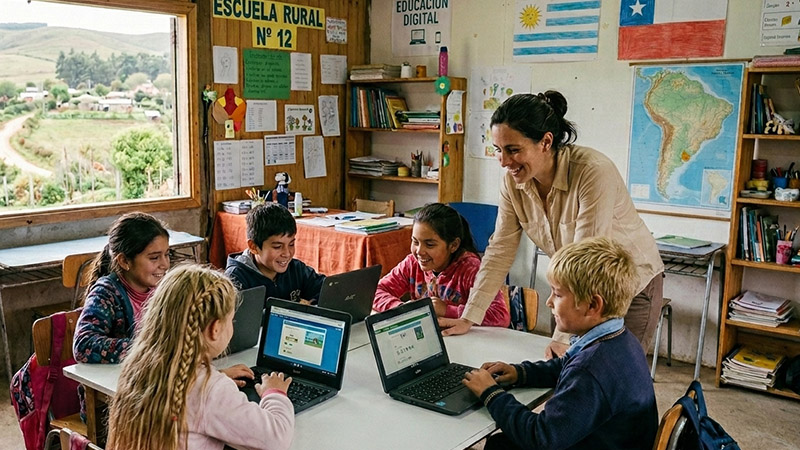
How does the level of digital maturity relate to improvements in school management and the enhancement of learning in rural schools? That is the central question of the project “Educational Digital Transformation and Institutional Maturity: A Comparative Study on School Management and Strengthening Learning in Rural Schools in Uruguay (Canelones) and Chile (Aysén and Magallanes),” developed by the Institute of Education at Universidad ORT Uruguay with the consulting firm ARS Chile.
This initiative aims to gather evidence on how the integration of digital technologies can help improve school management and create teaching and learning opportunities in remote rural areas.
The proposal is also linked to the Latin American Network for Digital Transformation in Education (Red LATE), launched by the Ceibal Foundation as a regional platform for coordination and knowledge generation regarding digital transformation in education.
In this vein, the project engages with the recent report Digital Transformation in Education in Latin America and the Caribbean: Where Are We and Where Are We Headed?, a regional assessment based on contributions from stakeholders in 25 countries, which analyzes the progress, challenges, and levels of maturity of the region’s education systems.
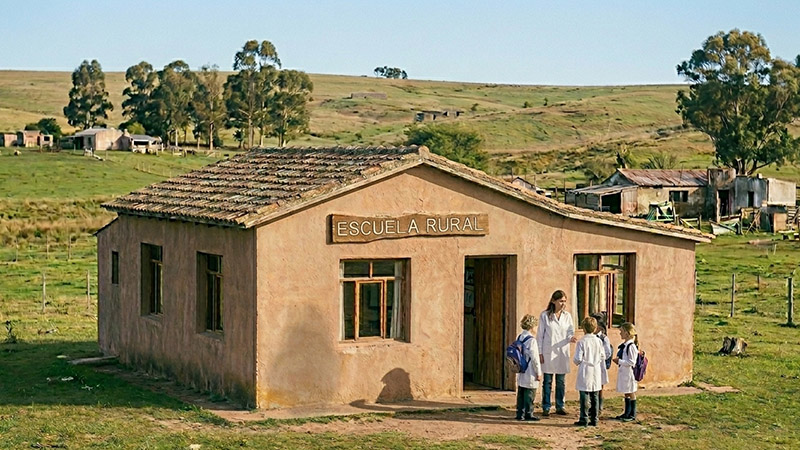
In addition to characterize rural public schools from the regions of Aysén and Magallanes (Chile) and the department of Canelones (Uruguay), the study proposes the Development of an Educational Digital Transformation Maturity Index, to rank schools based on their level of technological integration—taking into account rural settings and multigrade classrooms—.
"Digital Transformation in Education and Institutional Maturity" also aims to compile a catalog of transferable best practices, along with strategic recommendations to strengthen digital transformation in education in rural areas of Latin America and the Caribbean.
Its transformative potential lies in generating scalable and transferable evidence that promotes equity, improves educational outcomes for vulnerable populations, and contributes to the design of data-driven public policies.
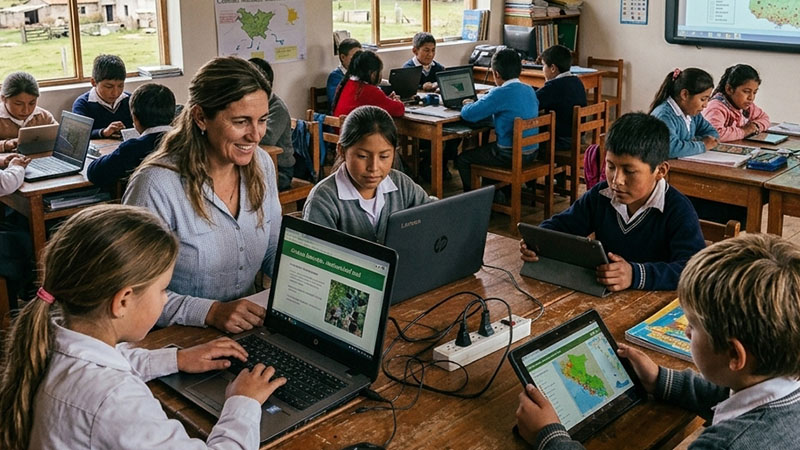
As for the team, the project is composed of:
- Andrea Tejera Techera, who serves as the scientific director.
- José Ignacio Porras, who is the co-principal investigator.
- Claudia Cabrera Borges, Mariela Questa-Torterolo, Dora Sajevicius, Matías Arniz, Camila Fajardo, Miguel Juan Pérez Bade, and Paloma Sepúlveda, who are participating as researchers.
The research was selected —in March 2026— for funding by the Ceibal Foundation and the International Development Research Centre, with support from the National Agency for Research and Innovation.
It was one of three projects approved under the call for proposals titled “Promoting the Integration of Digital Technologies to Strengthen the Educational Pathways of Socioeconomically Vulnerable Populations in Latin America and the Caribbean,” which aims to generate evidence on the current state of the adoption of educational technologies in the region.