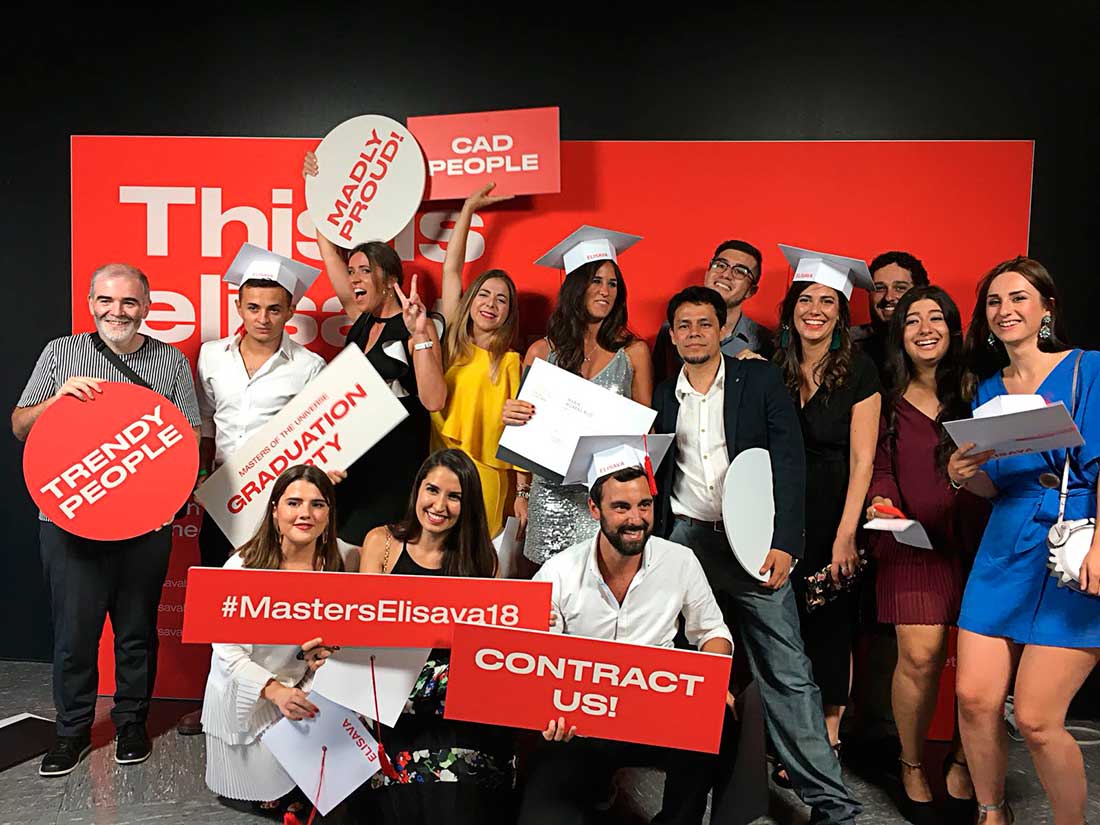
Sebastián Granotich, who holds a bachelor’s degree in Industrial Design, has just completed his master’s degree in Design of Furniture for the Home at ELISAVA University, an institution affiliated with Pompeu Fabra University, in Barcelona, Spain. At the same time, the company Mobly—which manufactures and sells furniture and home décor items in São Paulo, Brazil—is currently producing the Bourdeaux table, an original design by Granotich.
What was it like to be part of an international graduate program?
It’s a great experience in every way. Beyond the academic aspect itself, I think graduate school offers a lot in terms of real-life experiences. You have to go in ready to meet people, be proactive, ask questions, and above all, keep an open mind about practically everything.
How did your studies in the ORT bachelor's program help you pursue your graduate studies in Spain?
People from various disciplines participated, including architects, interior designers, and industrial designers. Although our fields of study differed, we all shared a similar and consistent foundation in terms of academic training. I believe that the knowledge I gained during my undergraduate studies was on par with the general standards set in the course. While each degree program has its own focus and strengths, I found that the level of general knowledge and proficiency with design tools was very consistent across the board.
Academically speaking, what did it entail?
The graduate program focused specifically on designing furniture. Although there are various projects within the program, they all focus on creating home furnishings and accessories.
Throughout the course, students undertake approximately five projects, working both individually and in groups. The course runs from February to July, and each project is divided into stages. On several occasions, students are required to present their progress, developments, and projects to the rest of the class and the instructors.
Of everything you've learned, is there any new idea or concept you'd like to share?
What stood out most to me about the graduate program was the daily interaction with professors, factory visits, and talks with renowned designers. You learn a great deal by talking to experienced professionals who know and understand every aspect of product development.
We had the opportunity to learn from world-renowned designers, and that alone raises the quality of the graduate program. We also had the chance to meet leading figures in the design world, such as Alberto Lievore and Martín Azúa. These are experiences that would be difficult to have otherwise.
Did this training in any way change your perspective on the audience you design for?
Not specifically. Although the course focused on creating furniture for the home, I don't think it had that kind of influence.
Regardless of the target audience or the product being designed, I believe that what matters most is the design process and everything that goes into it.
Did you design any products during your graduate studies?
During the course, we designed everything from chairs and coffee tables to light fixtures. Each project followed its own development process, completely different from the others. Even the work dynamic varied greatly depending on whether the project was a group effort or something we had to tackle on our own.
Your career has always focused on furniture design.
I’ve always had a passion for product design, and I think my degree helped shape my direction and focus me on furniture design. I feel like I’m just getting started in the world of furniture design, but I believe the biggest challenge is understanding how the market and the industry work. It’s not just about creating beautiful products; there’s a whole complex system involving manufacturers, prices, intermediaries… I’m sure I’ll come to understand all these aspects better as the years go by and I gain more experience.
What market are you targeting? I imagine that creating original work is also an important aspect, with the potential to produce something that can be sold commercially.
I am currently focused on the Brazilian market. A few years ago, I was fortunate enough to travel to Brazil and meet people in the industry with whom I am still in touch today.
I consider myself part of the new generation that is trying to establish itself in Brazil, with all that that entails. There’s certainly a different scale to things here, and as a designer, you can take advantage of that.
I find it fascinating to think that one can design and create a product that is later manufactured in another country and used by people there.
What are your hopes for the future?
My personal goal is to remain involved in the furniture industry and gain more experience as a designer. I believe that in this field, experience is essential to fully understanding every aspect of product development.