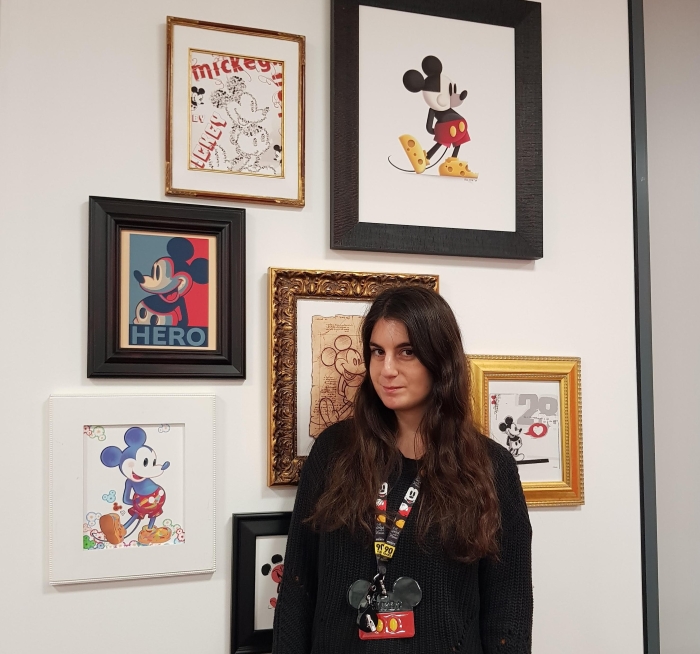
Joanna Blankleder has been living in London for five years. She moved there out of love for a city she feels is ideal for her work. London, Joanna describes, is a very dynamic city, and that quality perhaps also suits her personality.
Joanna holds a bachelor’s degree in Communication with a concentration in Advertising from Universidad ORT Uruguay, and even before graduating, she had already created a blog to write about topics that interested her. She then ventured into freelance community management, and soon after, the job market presented her with the challenge of breaking into digital marketing—a field that involves applying marketing strategies to digital media and platforms.
After graduating, she decided to “try her luck” in London, where she embarked on a path that led her this year to land one of the most coveted jobs. For the past few months, she has been working at The Walt Disney Company’s offices in the British capital.
She works there as a Digital Marketing Supervisor, and her job is to promote television content. “I focus on creating audiovisual content for YouTube channels as well as the Disney Channel app,” said Joanna, who, as a communications professional, has successfully established herself in the field of digital marketing.
“Studying Communication gives you the flexibility to adapt to any medium and the ability to work in both external and internal communication, whether digital or offline. The important thing is to do what you love without compromising your professional ethics.”
Here, Joanna tells you about her journey:
While you were a student at ORT, you worked at the Lowe-Ginkgo agency, where you handled tasks related to digital marketing. What did you gain from that experience?
I really value my experience at Ginkgo because it helped me put everything I’d learned into practice. During my studies, I’d already gotten a sense of what to expect in an agency setting, so I felt prepared. At the agency, I worked with a high-profile government brand, and the content standards were very high—as was the pressure.
At the time, I was the only one working exclusively in digital alongside the creative team. I was proud to have worked for a top-tier, internationally recognized agency like Lowe-Gingko.
You studied communications—did you specifically choose digital marketing, or was it just a coincidence?
What I always say is that digital marketing chose me. I consider myself a digital native, and it just happened naturally. At first, I landed a job through someone who had read my blog, and then at some point I started reaching out to clients on my own, offering social media management services.
Combining my passion for brands and the digital world came naturally to me.
What role does digital marketing now play in your professional identity?
I am currently working in digital marketing, but I have also worked as a brand manager (responsible for brand strategy), a role that also required the use of offline strategies.
I see digital marketing as a solid foundation for all other brand promotion strategies. The key advantage of digital marketing is that its results are easier to measure. Today, it’s becoming increasingly possible to do the same with other media.
So that helps you see the media from that perspective. There are also new digital media platforms, which makes it more challenging. I think someone with a background in digital marketing is well-equipped to handle any multimedia campaign.
What role do you think digital marketing plays in the skills a communicator needs today?
Since I started my degree in 2008, I’d say it’s essential. Digital media is accessible to any brand, and it’s much easier to measure the return on investment.
Today, there is no such thing as a 360-degree strategy without a digital component, and I would go so far as to say that it is one of the most important aspects.
In 2013, you moved to England. Why did you make that decision?
I left shortly after graduating, mostly just to try my luck. My English was pretty good, and I felt it was the right time. I’d visited London and fallen in love with the city. To be honest, I didn’t have any expectations, but the city won me over and I ended up staying. I’ve been here for over five years now—sometimes I can’t believe it!
In London, you worked at an insurance company called Vitality, at London Bridge Hospital, and at the website lastminute.com. What did you learn from each of these jobs?
London is a very dynamic city, and you don't stay in one job for 10 years because opportunities are always popping up. Sometimes the contracts are short-term, and that gave me exposure to a wide variety of industries.
VitalityLife is a well-known insurance company; I worked there on a short-term contract helping with a digital rebranding project.
London Bridge Hospital is a private hospital, and I served as the digital marketing coordinator, acting as the primary point of contact for digital agencies and guiding them from the client’s perspective.
There, I gained exposure to various areas of digital marketing, such as SEO, PPC (Pay Per Click), and social media; I even briefly participated in a digital transformation project (which refers to the integration of digital technology across all areas of a business).
Lasminute.com is a well-known travel agency with a presence in the United Kingdom, Spain, Italy, and France. It was an opportunity to engage with various European markets, and although I was a brand manager—a role that wasn’t strictly digital—the fact that I was working at a .com company meant that digital strategy was essential.
It was an experience that helped me bridge the gap between the digital and offline worlds and see how the offline experience could be amplified through digital media.
This year, you joined The Walt Disney Company in London as a digital marketing supervisor. How did you land that job, and what does this opportunity at an internationally renowned company mean to you?
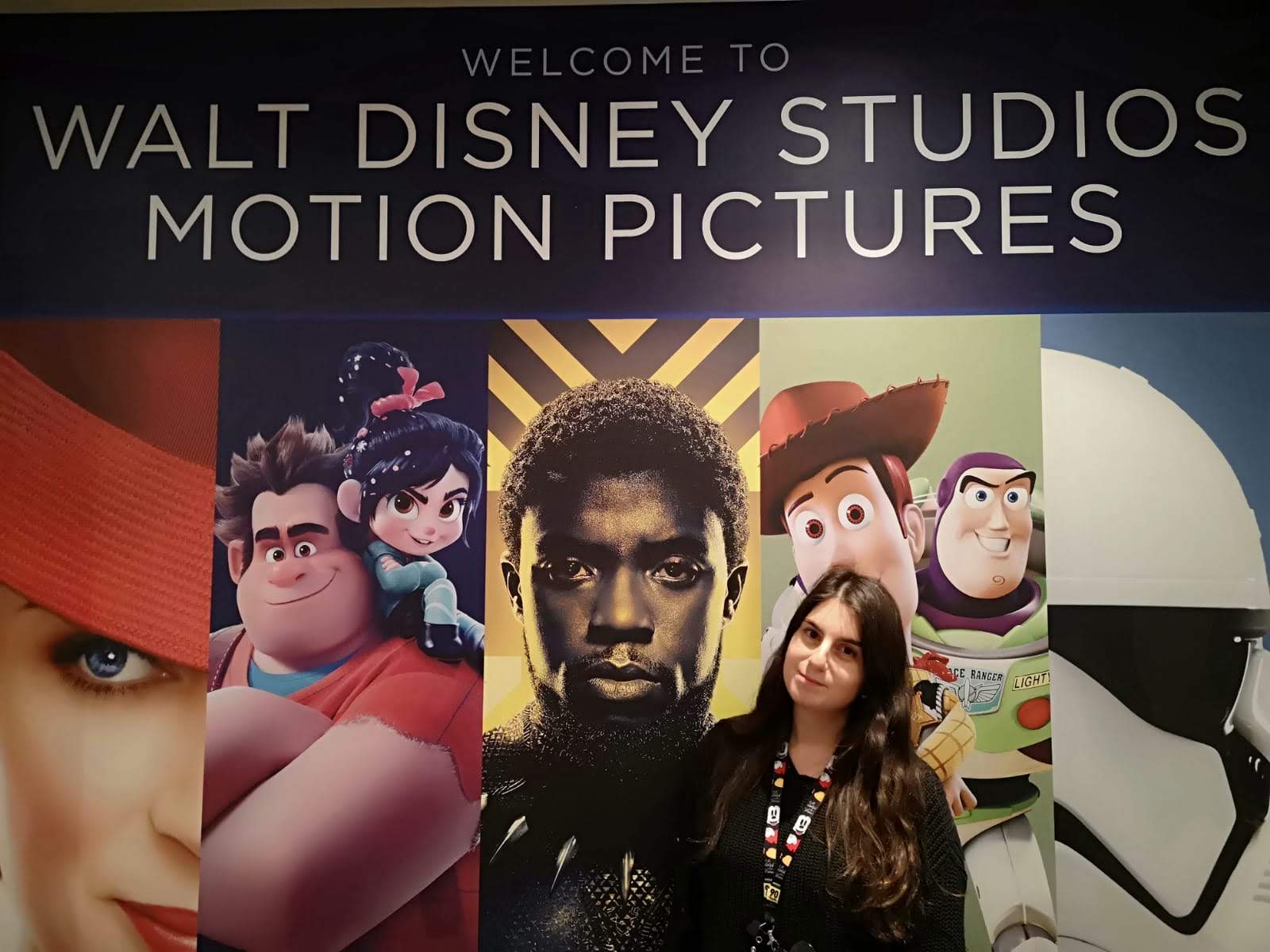
I am currently working as a Digital Marketing Supervisor for Disney Channel at the headquarters for Europe, the Middle East, and Africa, and I landed this job through a recruitment firm.
First and foremost, I appreciate the fact that I get to work in London and live in this city, but sometimes when I think about working at Disney, I can’t believe it. It really is a place of the highest professional caliber, and I’m proud to be a part of it.
Not only do I really enjoy my job, but it also exposes me to a wide range of experiences that contribute to my professional development every day, from conferences to meetings where global strategies are discussed.
What advice would you give to a communications student today? What do you think are some of the current job opportunities in the market for these professionals?
My advice to communication students is that, beyond just having an idea, it’s important to figure out how to put it into practice and apply it to a specific brand.
Something that happened to me when I was a student was that I was full of ideas—something that’s highly valued in the professional world, but only as long as those ideas are tied to a plan and measurable results.
I would also recommend that you attend conferences and events of all kinds. I know there are plenty of opportunities in Uruguay to see the work of other professionals. Everything counts!
I would also advise you not to take everything so seriously, to learn to have fun and enjoy yourselves at work—sometimes it’s during those relaxed moments that the best ideas come to mind.
In my view, communications professionals have a place in any type of company, from an SME to a multinational.
In addition, studying communication gives you the flexibility to adapt to any medium and the ability to work in both external and internal communication, as well as in digital and offline settings. The important thing is to do what you love without compromising your professional ethics.