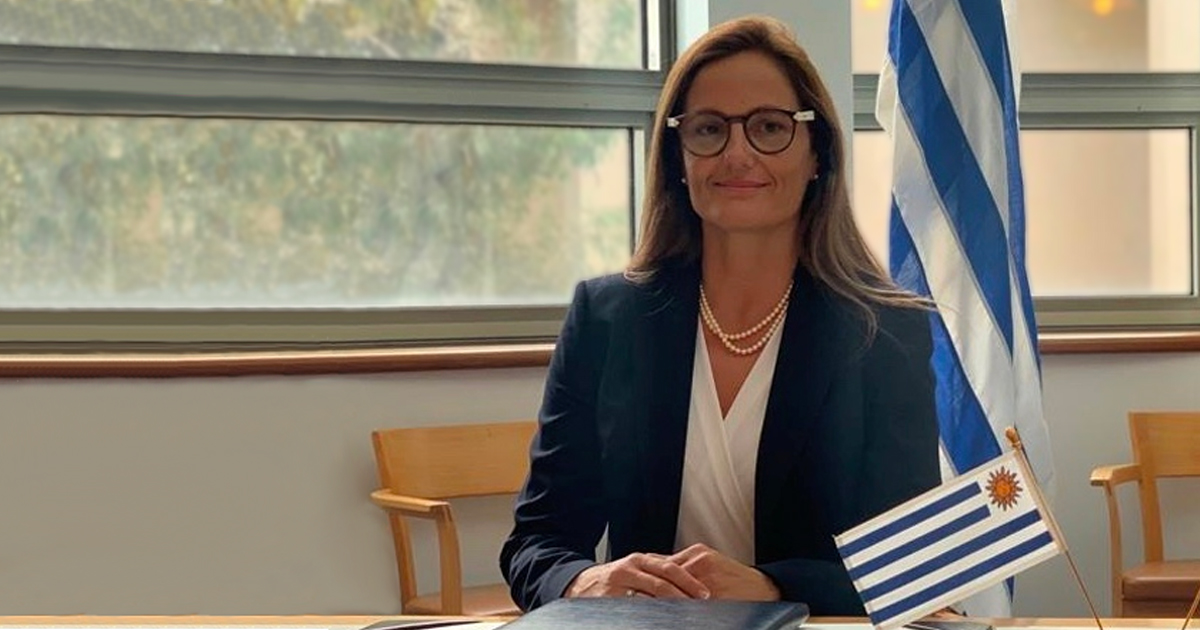
Nineteen years ago, Victoria Francolino arrived in Australia, the first of several postings in her diplomatic career. At the time, she was 26 years old and had graduated with a bachelor’s degree in International Studies from Universidad ORT Uruguay nearly five years earlier. In Australia, Francolino arrived as Third Secretary and head of the Embassy’s Consular Section. She spent five years there, and after some time, she was posted to Brazil, where she headed the Economic and Commercial Department.
He later served as a member of Uruguay's Permanent Mission to the World Trade Organization (WTO) and other international economic organizations based in Geneva, Switzerland.
Nearly two decades after that first step onto the international stage, in February of this year, Australia welcomed Francolino back—but this time she arrived as an ambassador.
As always, her husband—an electronic music producer and DJ—and their two children accompany her, and despite the challenges associated with a diplomat’s nomadic lifestyle, the family’s overall experience has been positive. In her husband’s case, for example, the ambassador believes that their various postings, far from hindering his work, have enriched him musically. “His music is a mosaic of influences and trends,” she says.
Just a few months after taking office, Francolino—who also holds a master’s degree in Mercosur Agricultural Integration and Policy and an MBA earned in Australia—is finalizing his agenda and preparing future projects. In this interview, he discusses some of these projects and the career path that led him to his current position.
Although you have only recently taken office as ambassador, what projects have you already been involved in, and what initiatives are on your agenda for the near future?
A few weeks ago, I signed the new Agreement on the Promotion and Protection of Investments (APPI) between Uruguay and Australia. It is very rewarding to sign an agreement because it generally marks the culmination of months—or even years—of intense negotiation efforts by the technical teams of the signatory countries.
On a personal level, this signing was also very rewarding because, during my previous time in Australia, the first APPI agreement between the two countries was negotiated (signed in 2001 and in effect since 2003).
In addition, I anticipate significant results in the areas of cooperation and applied scientific research. We are also exploring the possibility of organizing business missions to Uruguay and are considering participating in trade and investment promotion events, among other initiatives.
In particular, the audiovisual production sector also holds a special place on my list of priorities.
Can you tell us more about this?
I don't think many people know this, but in the past, major Australian advertising campaigns were filmed in Uruguay.
During my assignment in Uruguay between 2012 and 2014, it was very rewarding to witness major Australian-Uruguayan productions being filmed in Uruguay. I visited the film sets and saw firsthand the quality of our audiovisual services and even the related services (costumes, catering, post-production, equipment rental, actors, animation, etc.).
In addition, I had the opportunity to hear from Australian producers and directors who traveled to Uruguay to shoot advertising campaigns, and I must say I felt a great sense of pride in their professionalism and in all that Uruguay has to offer. They left with a very favorable impression of our “Uruguayan audiovisual industry,” and I was inspired to devote myself fully to this nationally significant sector, which is highly competitive on the international stage.
During my time in Brazil, I also had the opportunity to engage with this sector. Now (in Australia), I have set out to explore opportunities aimed at resuming film production in Uruguay. This specific activity represents a significant source of revenue for our economy and, at the same time, serves as a vehicle for promoting our country and its human capital.
For these and other projects, what do you feel you can contribute as Uruguay’s ambassador to Australia?
Knowledge, connections, perseverance, commitment, and dedication. I want to emphasize my enthusiasm for fostering relationships of all kinds and, above all, for creating opportunities for our country and its people.
Many Uruguayans have chosen Australia as a place to work. What do you think is the main draw?
The English term "like-minded " perfectly describes how we Uruguayans feel when we meet Australians. There’s a special connection; we’re very similar, and we feel right at home in Australia.
Australians are kind, friendly, honest, sincere, and spontaneous (to name just a few of the qualities I value most).
How do you think your university studies at ORT contributed to your diplomatic career?
Universidad ORT Uruguay empowered Universidad ORT Uruguay . I’ll use a term that’s very trendy right now but is also perfectly suited to my situation.
When I think of ORT, I have no doubt that it was the university that gave me the tools I needed to succeed on the international stage and also taught me to think big. I also value the relationships I built with the professors and university administrators.
In addition, ORT has had a special connection with Australia for several years now, as the university is home to the only Center for Australian Studies in Latin America. What do you think you can contribute to this relationship in your role as ambassador?
Facilitating and supporting initiatives related to the Center is one of my top priorities for this year, and I am already reaping the rewards of years of hard work by my predecessors and the teams in both countries—in Australia and Uruguay.
I believe that all ongoing bilateral initiatives are relevant to the Center for Australian Studies. It is important to remember that, from its base in Uruguay, the Center carries out initiatives throughout Latin America.
Strengthening the relationship between Uruguay and Australia thus helps position the Center as the leading hub for interaction between Australia and our region.
What advice would you give to a student in ORT’s Bachelor’s Degree in International Studies who dreams of becoming an ambassador?
I would tell him to aspire to contribute to bilateral relations between the two countries or to contribute, from Uruguay’s seat, to the work of international organizations.
May he dream of venturing out into the world to seek new opportunities for our entrepreneurs, our students, and people in general.