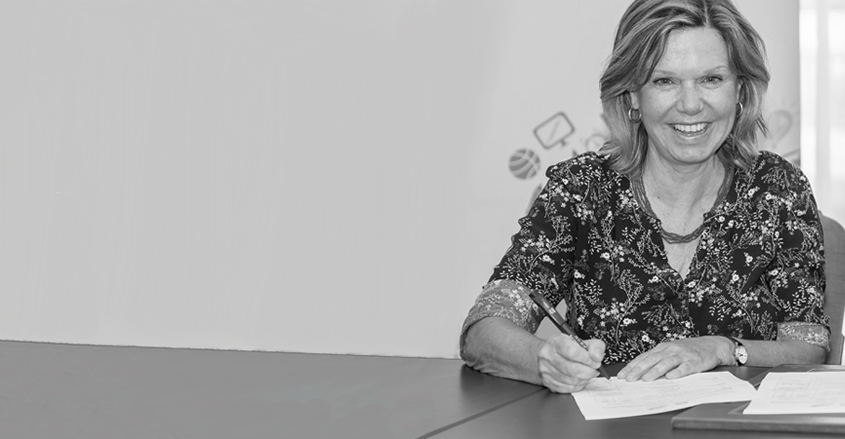
For the first time since its creation ten years ago, the National System of Researchers (SNI)—which brings together more than 1,800 scientists from across the country who publish and conduct research of international significance—has promoted a researcher in the field of education to Level III, the highest rank in its hierarchy.
This achievement was made by Dr. Denise Vaillant, academic secretary of the Institute of Education at Universidad ORT Uruguay, who now joins a group of just over a dozen female researchers active at Level III within the system.
The SNI is a tool created in 2007 by the national government with the aim of promoting knowledge production and strengthening and expanding the national scientific community.
To this end, it provides a financial grant to scientists who apply and undergo a performance evaluation to determine the amount of the incentive each will receive. This evaluation categorizes applicants into four levels: introductory, Level I, II, and III.
The higher the level, the greater the demands in terms of the quantity and quality of scientific research conducted, human resources development, contributions to institutional development, and so on.
Highest level
For Level III, in addition to demonstrating the ability to conduct independent research (as required for Level I) and to lead teams (Level II), scientists must establish international research networks and engage in institutional development.
Vaillant, for example, was the one who launched the Doctorate in Education and the Master’s in Teacher Education at Universidad ORT Uruguay. programmes are programmes produce programmes ,” says the academic secretary of the Institute of Education.
Furthermore, this appointment not only signifies that she has reached the highest level of the SNI, but also that she is one of the few women to have achieved this distinction and the first representative from the field of education in the social sciences.
Special Recognition
“Advancing to Level III is not only a personal achievement but also a significant milestone for the field of education. Unlike the hard sciences, the field of education has long lacked systematic research that would allow for the accumulation of data and the generation of empirical evidence. Researchers in this area got a late start; it is only now that we are beginning to see PhDs in education in this country,” explains Vaillant, who holds a PhD in Education from the Université du Québec à Montréal.
According to the expert, of the more than 1,800 researchers classified by the SNI, fewer than 50 focus their research on educational research.
Since 2011, when Vaillant joined the SNI, his research has always aimed to reflect developments in education policy.
On the one hand, he has examined the social perception of teachers—that is, how society views them and how they perceive themselves. He has also researched initial teacher training.
“In our country, there is a non-university post-secondary education model; in others, there is the university model. I have conducted studies comparing these models to assess the efficiency and success of each,” he says.
“This provides important data for policy decisions. It offers insights to decision-makers and those responsible for teacher professional development,” he adds.
Further research
Currently, the academic secretary of the ORT Institute of Education is conducting a study with a team of ORT researchers funded by the María Viñas Fund of the National Agency for Research and Innovation (ANII). The study focuses on how mathematics teachers use the platforms and technology available to them.
“We conducted a survey and found that a fairly high percentage of people underutilize them. We’re looking into why that is,” says Vaillant.
The second project is an update initiative carried out under the auspices of the International Observatory on the Teaching Profession, which is based at the University of Barcelona and of which Vaillant is a member.
“In 2006, I led a study titled ‘Elementary School Teachers in Latin America: Toward an In-Depth Analysis of the Profession.’ Now, using the same methodological framework, I am participating in a comparative study of elementary school teachers in Latin America and Europe,” he concludes.