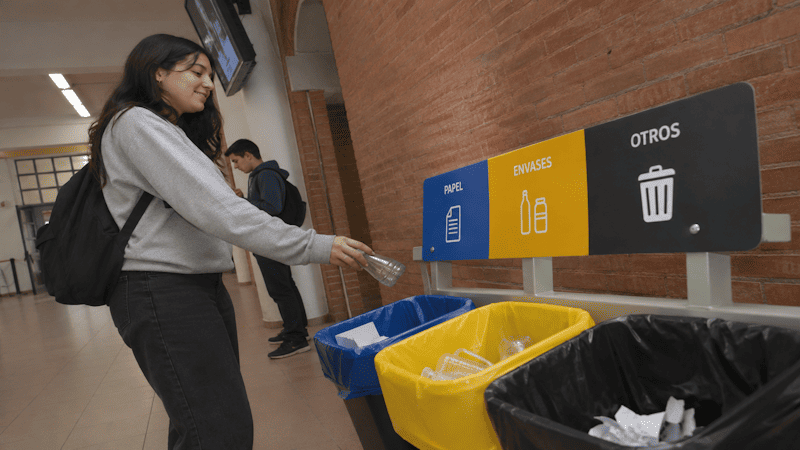
On college campuses, wherethousands of people come together every day, small individual actions canhave a significant environmental impactwhen they become collective habits.
At ORT, students are encouraged to reflect on the role each of them plays in creating a more sustainable environment.
Properly sorting waste, reducing the use of single-use plastics, reusing study materials, andusing resources responsiblyare simple practices thathelp reduce our environmental footprint both onand off campus.
Learn more about ORT's recycling initiatives
Why Recycling Is Important at College
A university functions like a small city, wherestudents, faculty, researchers, and staff move aboutevery day, using classrooms, offices, libraries, cafeterias, and common areas.
This ongoing activity involveshigh resource consumption and the generation of various types of waste, ranging from paper and cardboard to packaging, electronic devices, and organic waste.
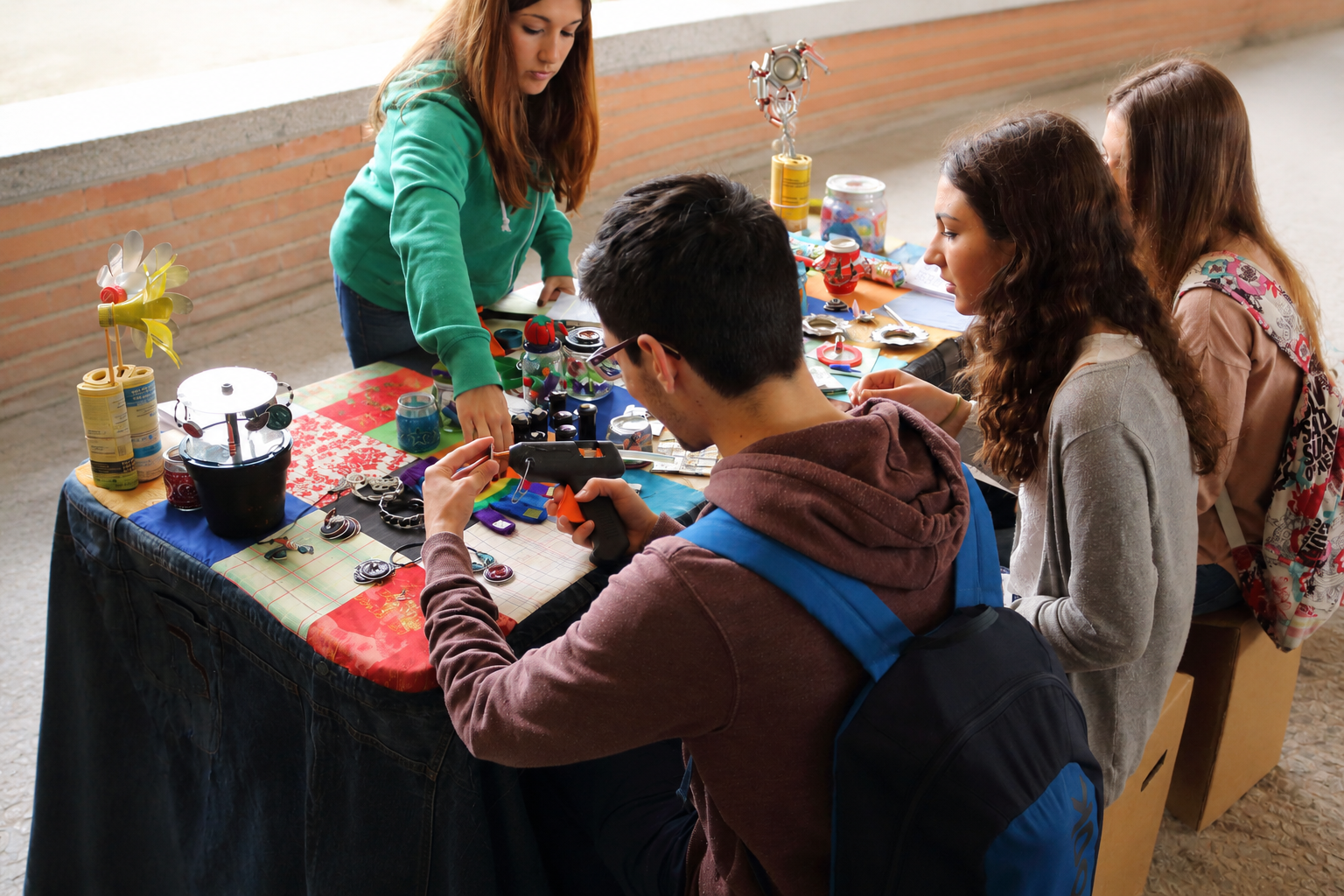
Implementing measures focused on waste management helpsreduce the environmental impactof the university campus.
One of the targets ofSustainable Development Goal 12isto reduce waste generationthrough prevention, reduction, recycling, and reuse. In the university setting, these actions can be incorporated intoeveryday habits, such as sorting recyclable materials, printing less, reusing resources, and reducing the use of disposable items.
When recycling becomes part of your daily routine, you can reap numerous benefits.
- Reduces the volume of waste generated:Proper sorting facilitates the recycling of materials such as paper, cardboard, plastic, glass, and metal, thereby reducing the amount of waste that requires final disposal.
- It promotes the efficient use of resources:Recovering recyclable materials reduces the need to use raw materials to manufacture new products, which also helps conserve energy and water.
- Promotes a culture of sustainability: Adoptingthese habits during college helps foster greater environmental awareness, which is more likely to extend to one’s personal and family life.
- Create more environmentally responsible spaces:A campus where the community actively participates in waste management conveys a collective commitment to caring for the environment.
Sustainability at the universitygoes beyond infrastructure and institutional policies. It also depends on thedecisions made by each memberof the community.
https://youtu.be/n2fse-R0big?si=b-QBQCZGnARZUb3N
A simple action likeproperly sorting a containeror printing only when necessary canmake a differencewhen thousands of people do the same thing.
Simple Habits for Better Recycling
Adopting recycling habitsdoesn't require major changes to your routine. Often, simplypaying more attention to the choicesyou make throughout the day to reduce waste is enough.
According toYale University, asustainable campusdepends on the individual behaviors and actions that each person carries out on a daily basis, such asmanaging materials more effectively, reducing paper use, and knowing theproper disposal methods for each type of wasteon campus.
Recycling doesn't begin when waste is placed in a bin—it starts long before that.
The moment a decision is madeabout what to consume, how much to use, and how to make the most of each resource, ashift in mindsetis already taking place—and an actionis being takenthatcan have a positive impact on both university students and the environment as a whole.
- Before discarding any material,determine which bin it belongs in—the recycling bin, the general waste bin, or the organic waste bin. Proper sorting makes the recycling process easier.
- Print only when absolutely necessary. Whenever possible,use digital documents, take notes on electronic devices, or print double-sided toreduce paper consumption.
- Reuse school supplies. Folders, notebooks with blank pages, envelopes, file folders, or materials from previous projects canbe given a second life before they become waste.
- Replacing plastic bottles and other disposable items withreusable alternativesreduces the amount of waste generated during the school day.
College life offers numerous opportunities toincorporate these practices naturally withoutaffecting academic activities.
At a university, whereactivities are constantand there is a steady flow of people,small actions carried out over time canmake a difference.
Learn more about ORT's recycling initiatives
What types of waste are generated at the university?
Every degree program hasdifferent study dynamics, but they all share one thing in common:they generate waste as part of their academic activities.
Frommaterials used in class tofood packaging and electronic equipment, thevolume of wastegenerated on a campus can be substantial when youfactor in the daily activitiesof the entire university community.
https://youtu.be/gWUB9wMRiUQ?si=SXR5Hatt8XQsicHH
Although theamount and type of waste varyby discipline, paper, cardboard, electronic waste, and office supplies arevery common oncollege campuses.
In addition to this general waste, some degree programs generate specific materials that require responsible management.
- Design:Whether it’s graphic, fashion, or industrial design, it’s common to use fabrics, cardboard, large-format paper, material samples, plastics, threads, or fabric scraps. Many of these items can be stored for future projects or sent to workshops where they can be repurposed.
- Engineering: Laboratoriescan produce electronic components, cables, circuit boards, batteries, 3D-printed parts, and materials used in prototypes.
- Administration:Although much of the work is already done digitally, these fields continue to rely on printed documents, forms, folders, and administrative materials.
- Communication:Printing jobs, graphic designs, event posters, and promotional materials can generate large amounts of paper, cardboard, and vinyl.
Regardless of their chosen field of study,every student can identify opportunities torecycle paper, reduce material consumption, reuse resources, andhelp ensure more efficient waste sorting.
When these practices are integrated into university life, thepositive impact is reflectedboth in the functioning of the campus and in thedevelopment of professionals who are more committed tosustainability.
Recycling and Environmental Education
Recycling on campus ismuch more than just a way to manage waste.It is also aneducational toolthat helps fostervalues related to caring for the environment.
It prepares future professionals to address the growing importance of sustainability.
During one’s college years,participating in projects and research relatedto social and environmental impact fosters abroader understanding of current challenges anddemonstrates how different disciplines can contribute solutions from their ownfields of expertise.
Today, public organizations and companies are seekingto incorporate environmental criteria into their processes, so understanding concepts related to the circular economy, responsible consumption, and efficient resource managementis an increasingly valued skill.
As theselessons are incorporated into university life, they also helpdevelop skillssuch as:
- Greater awareness of the impact of everyday actions.
- Critical Thinking in the Face of Environmental Challenges.
- Collaborative work with interdisciplinary teams.
- Sustainability as part of professional practice.
- Good habits that stand the test of time.
According toUNESCO,education for sustainable development aimsto help people acquirethe knowledge, skills, values, and behaviorsthat will enable them to make responsible decisions in the face of environmental, social, and economic challenges.
https://youtu.be/zteuG1Jm91w?si=FtmMac0ZeYyOlKXn
Sustainability is a continuous learning process, and college provides aspace where it can be put into practice every day.
Learn more about ORT's recycling initiatives
The Role of the University Community in Recycling
Building a more sustainable campusdoes not depend on a single person or a single sector. Recycling initiatives aremost successful whenstudents, faculty, administrative staff, and university officialswork toward a common goal.
Whenbest practices are part of everyday life, others are more likely to adopt them,creating a ripple effect withinthe university community.
In college, learning takes place both in and out of the classroom, through example.
There are many ways to get involved, even without leading large projects.
- Participate in environmental campaigns or events organized by the university.
- Share reliable information about recycling and sustainability with classmates and teachers.
- Propose initiatives to reduce waste in classrooms, laboratories, or academic events.
- Collaborate with student organizations or university groups that carry out activities related to environmental protection.
- Promote the responsible use of common areas.
When theseactions become part of the university culture, recycling ceases to be an individual practice and becomes acollective commitment.
In this way, theuniversity not only reduces its environmental impact but also fosters amore engaged and aware community that is better prepared to tackle the challenges of sustainable development.
During college,students acquire knowledgefor their professional lives, but they also developways of thinking and acting thatwill serve them well in many other areas of life.
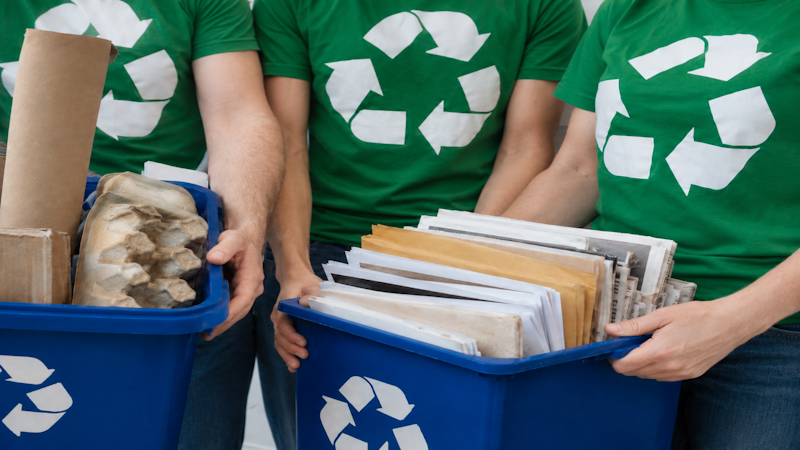
In this process, adopting amore mindful approach to resource useand the impact of decisions becomes anopportunity to bring about changesthat can inspire others to follow suit.
Makingshared spaces more sustainableis a shared responsibility that requireseveryone's participation.
Every action, no matter how small it may seem, helpsfoster a culture ofenvironmentalstewardship.
Learn more about ORT's recycling initiatives