The concepts of sustainability are no longer distant ideals, but real goals whose achievement has become more important than ever.
The climate crisis and pressure on natural resources have made it clear that traditional models of production and consumption are no longer sufficient. Against this backdrop, innovation offers a path toward a more equitable future that is kinder to the planet.
Definition of sustainable development
The term " sustainable development" was coined in 1987 in the Brundtland Report for the United Nations.
This report highlights the importance of meeting current needs without compromising those of future generations.
Since then, it has become a global benchmark for public policy, business, and social projects.
Being sustainable means thinking beyond the present to ensure that future generations can also meet their needs.
Sustainability is often explained in terms of three key dimensions:
- Environmental: Everything related to the protection of ecosystems and biodiversity. This includes the responsible use of natural resources and the reduction of the ecological footprint caused by human activity.
- Social: Aims to ensure equity and well-being for individuals and communities. This includes ensuring fair access to educational, employment, and health care opportunities, protecting human rights, and promoting the inclusion of vulnerable groups.
- Economic: Generating value and economic growth without compromising the natural resources or social conditions of future generations.
Although the definition is simple, putting it into practice has been a complex challenge.
How can we produce more without depleting resources? How can we achieve economic growth while reducing emissions and promoting greater social inclusion?
This is where innovative projects play a crucial role.
Sustainable and innovative projects
Technological advances and changes in business models or community structures— innovation in sustainability can take many forms.
This type of project aims not only to achieve economic efficiency, but also to have a positive impact on the environment and society.
Clean energy
Small-scale renewable energy projects enable rural or isolated communities to become self-sufficient.
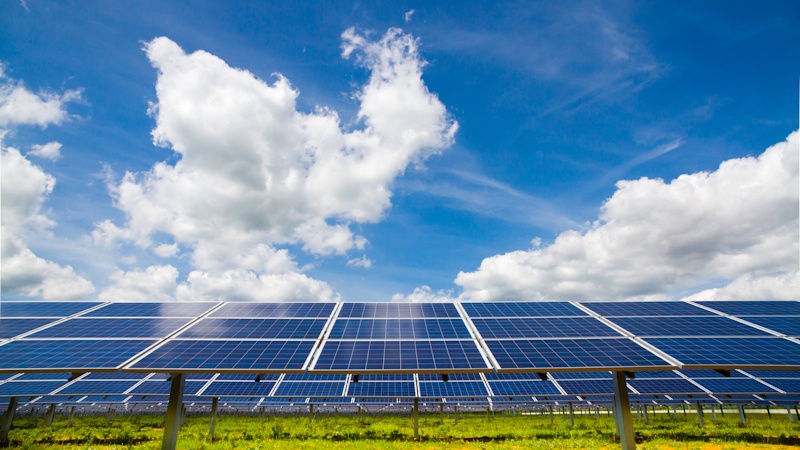
For example, in several countries in Africa and Asia, local cooperatives have installed solar power systems that provide electricity to homes and schools, reducing dependence on fossil fuels and improving quality of life.
In the report Toward a Shared Zero-Carbon Energy Future by the Rocky Mountain Institute, these rural energy cooperatives are demonstrating how renewable energy can strengthen community resilience, create jobs, and contribute to more sustainable development.
Circular economy
Another area with a significant impact is the circular economy, a model that aims to keep resources in use for as long as possible.
From recycled plastics turned into street furniture to industrial composting that returns nutrients to the soil, a variety of sustainable projects are currently underway.
This shows how sustainability can be both profitable and environmentally sound.
To achieve this, it is essential to prioritize design so that resources remain in use for as long as possible, thereby promoting truly sustainable processes.
Sustainable agriculture
Technologies such as precision agriculture, which uses sensors and data analysis to optimize the use of water and fertilizers, make it possible to increase production without harming the environment.
In addition, the implementation of regenerative practices, such as crop rotation and the use of organic fertilizers, helps improve soil fertility and sequester carbon, thereby contributing to the fight against climate change.

According to the study Emerging Technologies for Smart and Sustainable Precision, the integration of AI and sensor technologies significantly improves resource efficiency in agriculture, reducing environmental impacts while increasing yields.
Urban sustainability
Sustainability in cities is another area where innovation is driving significant change.
Smart mobility projects, such as electric public transportation networks, bike-sharing systems, and urban logistics apps, reduce greenhouse gas emissions and improve residents' quality of life.
In addition, they promote the expansion of greener and healthier spaces.
Technology
The use of new technologies also contributes to sustainable development.
Platforms that connect food donations with those in need, or tools that measure a product’s environmental footprint, enable people to make more informed decisions.
Innovation doesn't just apply to production and processes; it also transforms everyday habits.
According to the study, Smartphone apps for tracking food consumption and recommendations: Evaluating artificial intelligence-based functionalities, features, and quality of current apps, apps based on artificial intelligence allow users to monitor their food consumption, offer healthy recommendations, and help them make more sustainable choices.
The Impact of Sustainable Innovation
Innovation in sustainability is reflected not only in ideas and projects, but also in concrete results that can be measured in social, environmental, and economic terms.
- Environmental impact: Solar energy systems in rural communities reduce the use of fossil fuels, thereby lowering greenhouse gas emissions.
- Social impact: Sustainable projects create jobs, strengthen community ties, and improve access to basic services such as energy, water, and education.
- Economic impact: Circular economy models reduce production costs and use waste as a raw material. Green innovation also attracts investment and fosters local entrepreneurship.
According to the UN’s 2023 Sustainable Development Report, initiatives in renewable energy and sustainable production have directly benefited millions of people, improving their well-being and reducing social vulnerabilities.

A key element of sustainable innovation is its ability to scale up and adapt to different contexts. A successful project can reach different corners of the globe or be replicated in other industries, thereby multiplying its impact.
Innovation and sustainability around the world
There are a number of projects around the world that demonstrate how innovation can be applied in practical ways to sustainable development.
- Plastic Bank: This initiative turns plastic waste into a kind of “social currency.” Coastal communities collect plastic from the ocean and exchange it for basic goods or services. This reduces marine pollution while creating economic opportunities in areas affected by poverty.
- Grameen Shakti: This renewable energy program has installed millions of household solar systems in rural areas without access to electricity, providing light for homes and improving children’s education.
- Ecolana: A platform that connects residents with recycling centers in their area. Through the app, people can find out where to recycle different types of waste, thereby promoting the circular economy.
- The Ocean Cleanup: An engineering project that develops floating systems to collect plastic from oceans and fast-flowing rivers. Its technologies have successfully removed hundreds of tons of plastic waste, contributing to the recovery of marine ecosystems.
- CicloVivo: A community network that promotes sustainable mobility and environmental education in urban settings. Its mission is to support bicycle infrastructure projects, bicycle repair workshops, and public awareness campaigns to reduce car use on the streets.
Each initiative reflects the environmental, social, and economic challenges of our time.
These examples show that sustainability and innovation projects are not just abstract ideas, but initiatives that have already been put into action.
Challenges and Opportunities in Sustainable Development
Although sustainable innovation has shown promising results, its expansion faces a number of challenges.
- Lack of funding: Many communities are willing to adopt clean technologies or circular systems, but they do not always have the necessary resources to implement them on a small or large scale.
- Cultural resistance to change: Adopting new ways of producing or consuming resources requires changing habits. This can be achieved through environmental education, awareness campaigns, and public policies.
- Inequality in sustainable technologies: While some cities have electric transportation and smart waste management, many rural areas still rely on polluting fuels or unsustainable agricultural practices.
On the contrary, these very challenges present opportunities. The need to innovate creates opportunities for entrepreneurs, startups, and communities seeking solutions tailored to their specific circumstances.

In addition, growing pressure from more environmentally conscious consumers is driving companies to adopt more responsible production models. What was once seen as an additional cost is now viewed as an investment.
Ultimately, the challenges of sustainable development need not be viewed as insurmountable obstacles, but rather as opportunities for new ideas and collaborations.
Overcoming these challenges is the key to turning innovation into lasting, global change.
It is not just a matter of designing new technologies, but of bringing about structural changes in the way we produce, consume, and live together in society.
Innovation and sustainability have become inseparable concepts in building a viable future.
Each project demonstrates that it is possible to transform reality through creativity and commitment. Above all, sustainability is not a final destination, but a constantly evolving journey that involves continually learning something new.