
Have you ever wondered why some people learn best through images, while others need detailed written notes or to explain topics out loud? Everyone has their own optimal way of acquiring knowledge, which can be completely different from others'.
What may come easily or intuitively to one person can be a real challenge for another. Figuring out the best way to learn can make the difference between studying for hours on end and using your time productively.
Still not sure what to study?
Check out all the university degree programs offered by ORT
Learning styles
The term "learning styles " refers to the set of strategies or methods used to acquire knowledge.
These are the ways in which the brain processes information so that it can understand and remember it.
There is no single "correct" style, nor are there any rigid rules; rather, there are different approaches that suit each individual and can help organize and optimize the learning process.
Experiential learning cycle
Among the best-known models is that of the American psychologist David Kolb, who proposes an experience-based learning cycle that combines practice, observation, reflection, and conceptualization.
This cycle has four phases:
- Hands-on experience: a real-life situation or activity. For example, solving a problem, conducting an experiment, or participating in a group activity.
- Reflection: After the experience, this is the time to reflect on what happened and analyze what worked and what didn't.
- Abstract conceptualization: Reflection is transformed into ideas, concepts, or theories that help make sense of experience. This is where analytical thinking and the ability to structure knowledge come into play.
- Active experimentation: Finally, what has been learned is put into practice in a new context, closing the cycle and creating a new experience.

According to Kolb in Experiential Learning: Experience as the Source of Learning and Development, simply receiving information is not enough.
It is crucial to observe what happens during the experience, reflect on it, conceptualize what has been learned, and then apply it in new contexts.
VARK Classification
Another well-known model in the field of education is the VARK classification, proposed by Neil Fleming in the 1990s.
The name comes from the English words: Visual, Auditory, Reading/Writing, and Kinesthetic.
Everyone has their own preferred way of learning, although they often combine several methods.
Visual
People who prefer a visual learning style learn best when information is presented graphically.
For example, using diagrams, concept maps, outlines, and colors.
The more visual, the better.

- Examples of study techniques: underlining with different colors, creating comparison charts, drawing arrows to connect ideas, or creating infographics.
Auditory
People with an auditory preference process information better when they hear it.
It's very helpful for them to participate in discussions, attend lectures, or record their own explanations.
- Examples of study techniques: reading aloud, recording summaries and listening to them later, studying in discussion groups.
Reading or writing
This learning style is designed for those who learn best through written language.
They prefer to take notes, write summaries, and read material in depth.

- Examples of study techniques: writing detailed summaries, defining terms in your own words, and using flashcards.
Kinesthetic
Students who use this learning style need to move around and practice in order to learn.
They benefit from “learning by doing.”
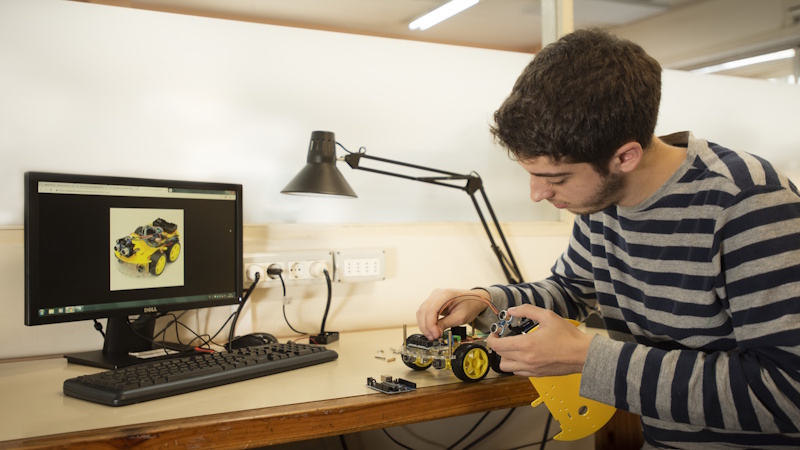
- Examples of study techniques: conducting experiments, practicing with hands-on exercises, using role-playing or dramatizations.
According to the article “VARK Learning Styles Among College Students, ” published in the journal *Propósitos y Representaciones* (Scielo Peru), after administering the VARK questionnaire to 218 students, clear differences in learning preferences were observed depending on the major.
The VARK classification remains one of the most useful tools for reflecting on how to learn more effectively.
This shows that study skills are not just an abstract theory, but have a significant impact in practice and can vary depending on the academic and professional context.
Theory of Multiple Intelligences
One concept that marked a turning point in education is the theory of multiple intelligences.
Developed by the American psychologist Howard Gardner in 1983, the theory posits that academic intelligence is not the only way to gauge a person’s true intelligence.
On the contrary, it is proposed that there are different types of intelligence that each person develops to a greater or lesser extent.

A person with musical intelligence may find it easier to learn through rhythms, while someone with bodily-kinesthetic intelligence may prefer to act or move.
The eight intelligences he described were:
- Linguistics: a knack for language, reading, writing, and expressing oneself clearly.
- Logical-mathematical: the ability to reason, solve problems, and work with numbers.
- Spatial: the ability to think in images, create mental maps, or visualize objects in motion.
- Musical: a sense of rhythm, melody, and sound.
- Bodily-kinesthetic: learning through movement, practice, and physical coordination.
- Interpersonal: the ability to interact with and understand other people.
- Intrapersonal: self-awareness, self-knowledge, and self-reflection.
- Naturalist: the ability to observe and understand natural phenomena.
In the article, A Valid Evaluation of the Theory of Multiple Intelligences, the author analyzes how Gardner’s theory was applied in education and highlights that, while it helps diversify teaching, it is still difficult to accurately measure its effectiveness.
Still not sure what to study?
Check out all the university degree programs offered by ORT
Discovering Your Own Learning Style
Knowing which study techniques work best for you can help you improve your study habits.
The good news is that you don't have to be an expert in psychology.
Pay attention
It’s a good idea to ask yourself in what situations you remember or absorb information best. Is it through graphics or written words? Summaries or recordings?
The answers to these questions can provide clues about a student's preferred or predominant learning style.
Try different techniques
The best way to discover your personal style is to experiment.
With a little self-reflection and a few simple tools, every student can discover what works best for them when it comes to learning.
One day , it’s a good idea to create a concept map; another day, record yourself reading from your notes; and yet another day, work through some practice problems.
First and foremost, it’s important to figure out which study technique you’re most comfortable with and which method helps you learn things faster.
Using questionnaires and tests
There are tools specifically designed to identify learning styles, such as the VARK questionnaire, which indicates whether a person tends to be more visual, auditory, reading/writing, or kinesthetic.

These tests are free and easy to find online, though they should be viewed as a guide rather than a definitive answer.
Listen to the feedback
As is often the case in life, sometimes the people around us notice things that we don't pick up on as easily.
A teacher might note that a student retains more information when they participate in discussions, or a classmate might find that using visual aids to study makes it easier to understand the material.
Beyond Styles
Although identifying your learning style can give you a head start, the reality is that no one learns using just one technique or methodology.
People are complex, and we can't always be pigeonholed into a single category, so we tend to mix and match strategies.
Each technique reinforces the other, and the information is retained much more firmly in memory.
That's why sticking to just one style can be limiting.
When studying history, a student can read a chapter, highlight the most important points with colored markers, explain it to a friend out loud, and finally, visit a museum or reenact a historical event.
Combining different methods helps keep you motivated.
If you always study the same way, the process becomes repetitive.

On the other hand, by alternating study styles and techniques, learning becomes more dynamic and enjoyable.
An interesting study is "Learning Styles and Adaptive Flexibility,", published in the journal Management Learning. This study suggests that people with mixed learning styles are better able to adapt to different situations.
Ultimately, thinking about the best way to learn shouldn't lead to a single answer, but rather to a range of strategies.
The key is to put together a plan for learning resources, test them, and refine them until you find the ideal approach that will make the learning process more rewarding .
- We also recommend: What is meaningful learning, and why is it changing the way we study?
Learning is a crucial part of life, something we engage in from childhood through adulthood.
Understanding your own learning style doesn't mean limiting yourself; it means studying and working in a way that best suits you.
We are constantly taking in information, whether at school, at work, or in our daily lives.
However, not everyone learns in the same way.
In a world where information is abundant and continuous learning has become essential, knowing which strategies work best is undoubtedly an advantage.
Still not sure what to study?
Check out all the degree programs offered by ORT