
The term “graduate program” is often used in a broad sense, but it is best to start with a precise definition. Generally speaking, a graduate program is a university program that follows an undergraduate degree and is designed to provide in-depth study, specialization, or advanced research in a specific field of knowledge. This definition appears in both the international classification of education and Uruguayan regulations.
UNESCO’s“CINE 2011 Operational Manual: Guidelines for Classifying National programmes and Related Qualifications” classifies levels of study beyond the first university degree as part of advanced tertiary education, whereas in Uruguay, Decree No. 104/014 defines postgraduate programs and distinguishes between specialization, professional master’s, academic master’s, and doctoral degrees.
That distinction matters because not all graduate programs address the same need.
- Specialization aims to deepen expertise in a specific professional field.
- The professional master's degree focuses on the design, development, and application of knowledge or processes within a professional context.
- The academic master's program emphasizes training in research and the active application of knowledge.
- The doctoral degree, for its part, is the highest level of graduate study and focuses on the original production of knowledge.
In other words, pursuing a graduate degree does not always mean the same thing: it can involve professional development, a career change, updating one’s methodological skills, or embarking on a research career.
It is also worth noting that, in Uruguay, Law No. 18,437, the General Education Law, stipulates that university-level tertiary education leads to undergraduate and graduate degrees. This positions graduate programs not as an informal supplement, but as part of the formal higher education system.
Are you interested in pursuing a graduate degree?
Learn about all the options offered by Universidad ORT Uruguay
What Are Postgraduate Programs For?
To think that graduate programs are merely a way to “get another degree” is an oversimplification. Their primary purpose is to provide greater depth in areas where an undergraduate degree, by definition, offers a more general education. In some fields, this means achieving a higher level of technical proficiency; in others, it involves developing skills in research, strategic analysis, or specialized practice.

This becomes particularly relevant in contexts of rapid change. In its "Future of Jobs Report 2025," the World Economic Forum notes that employers expect 39% of core job skills to change by 2030.
That figure does not mean that everyone should pursue a graduate degree, but it does underscore an important point: postgraduate education can be a valuable tool when the job market, technology, or professional practices require skills that are more sophisticated than those acquired during one’s initial degree program.
International evidence also shows that higher levels of education are generally associated with better overall labor market outcomes.
The report "How Does Educational Attainment Affect Participation in the Labor Market?", included in the OECD's *Education at a Glance 2025*, shows a consistent relationship between higher levels of education and higher rates of labor force participation and employment.
That relationship does not guarantee identical individual outcomes, but it does suggest that advanced training can strengthen one’s position in the workforce, especially when it addresses a real need in the professional or academic field.
When is the best time to pursue a graduate degree?
The best question isn't "Should I pursue a graduate degree?", but rather"Should I do it now, why, and what kind?"
In general, pursuing a graduate degree is a good idea when there is a clear connection between the program you choose and an academic or professional goal.
One scenario involves those who have already identified an area in which they wish to specialize. This happens, for example, when an undergraduate degree provided a general foundation, but professional practice requires a deeper understanding that cannot be easily gained through experience alone.
In that case, a graduate program can help organize knowledge, update theoretical frameworks, and provide more sophisticated tools for addressing specific problems.
A second scenario involves those who are looking to redefine their career path. It’s not always about switching fields entirely; sometimes it’s about moving within the same field.
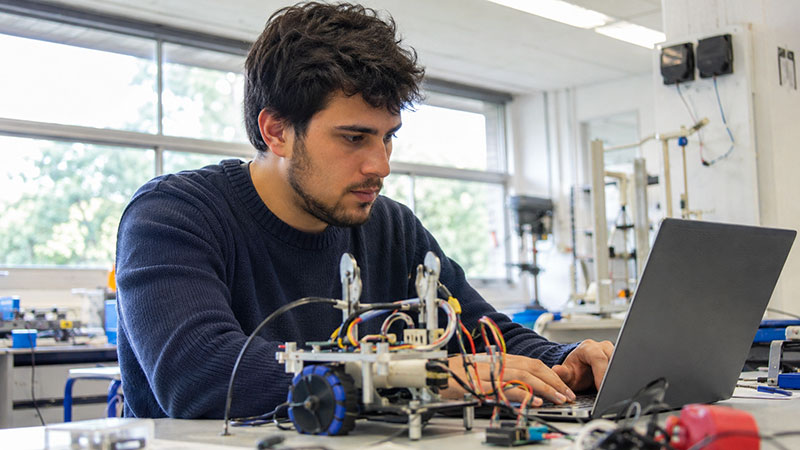
An economist may focus on data, an engineer on management, a healthcare professional on administration, and an education graduate on research or institutional leadership. In this context, graduate study serves as a transitional mechanism—not because it “replaces” what was learned previously, but because it reorients one’s career path.
A third scenario involves those who plan to pursue a career in research, university teaching, or the systematic production of knowledge. In this case, above all, a master’s degree and a doctorate are no longer merely optional advantages but become part of the standard path of professional development.
Uruguayan regulations on graduate programs and the training calls issued by the National Agency for Research and Innovation reflect this approach: master’s and doctoral programs are treated as a strategic component for strengthening the country’s research and development capabilities.
Are you interested in pursuing a graduate degree?
Learn about all the options offered by Universidad ORT Uruguay
When it's not yet the right time to do it
There are also times when it’s best not to rush into things. One such time is when uncertainty is the main driving force. Finishing a college degree often raises questions about work, professional identity, and next steps. But using graduate school as a refuge from uncertainty can lead to poor choices regarding the program, field of study, or format.
It’s also usually not a good idea to start a graduate program without being able to answer three basic questions:
- what I want to explore further,
- what good would that do me, and
- what kind of demand I am in a position to make.
International experience with the organization of advanced studies helps explain why. The European Commission’s European Credit Transfer and Accumulation System (ECTS) emphasizes that credits reflect learning outcomes and total workload, not just class hours.

This lesson applies beyond Europe: pursuing a graduate degree involves reading, writing, producing academic work, engaging in academic discussion, and, in many cases, reworking one’s work and personal schedules.
In practical terms, postponing graduate school may be a sensible choice when you lack the experience to identify real-world challenges in your professional field, or when your decision is driven more by external pressure than by your own goals. In such cases, working first, exploring different areas, and then returning to your education can lead to a more informed decision.
What to Consider Before Choosing Between Different Graduate Programs
Choosing a graduate program requires looking at much more than just the program’s name. A key factor is the program’s academic focus. A program centered on professional practice is not the same as one geared toward research. This difference affects the curriculum, the methodology, the type of final project, and the value the program will hold for each career path.
Another key factor is official recognition. For those comparing graduate programs in Uruguay, this point is by no means trivial.
The Ministry of Education and Culture states in its "Frequently Asked Questions on Higher Education" that specialization, master's, and doctoral degrees awarded abroad may require validation or recognition, depending on the case, and that the practice of certain professions is governed by specific regulations.
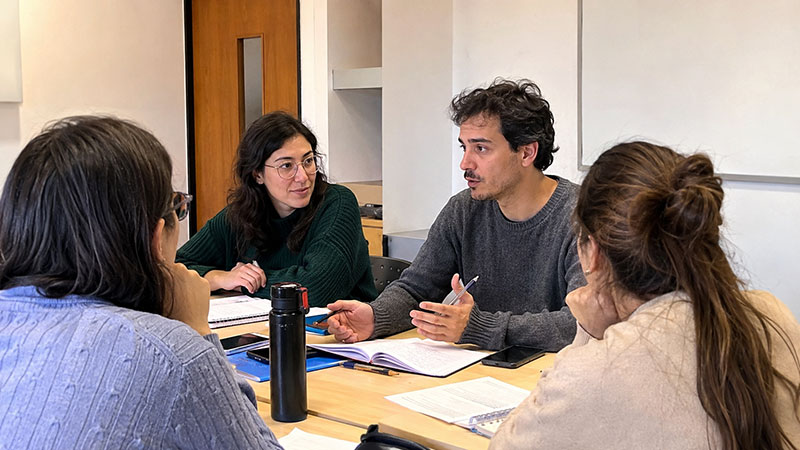
This means that, before enrolling, it is advisable to check the program’s status and the conditions for future recognition, especially if you are considering studying abroad. In Uruguay, moreover, the regulatory framework for private undergraduate and graduate programs is defined by specific regulations.
The Regulation on Public Higher Education and Decree No. 104/014 help clarify that these designations are not merely marketing terms: the terms “specialization,” “master’s degree,” and “doctorate” refer to distinct educational objectives.
Choosing wisely, then, means ensuring that the format of the graduate program aligns with the type of career development each person is seeking.
Graduate Programs in Uruguay: Why the Local Context Matters
When discussing graduate studies in Uruguay, the conversation should not be limited to asking where to study, but should also consider the country’s educational goals and the support available for such advanced training. The ANII, for example, offers specific programs to support graduate studies both domestically and abroad.
On its website dedicated to education, ANII lists national, international, and mobility scholarships aimed at fostering human resources for research and development. In addition, the guidelines for Programme 2025 National Graduate Programme establish, among other provisions, monthly stipends for master’s and doctoral programs and maximum funding periods of 24 and 36 months, respectively.

Beyond the specific economic details, these policies demonstrate that graduate education plays a strategic role in building advanced capabilities.
That context also helps debunk a common misconception: that pursuing a graduate degree only makes sense if you want to “stay in academia.”
In fact, graduate programs can serve different purposes in a small but internationalized system like Uruguay’s: professional specialization, the development of innovation capabilities, applied research, the improvement of practices, and engagement with global knowledge networks.
Are you interested in pursuing a graduate degree?
Learn about all the options offered by Universidad ORT Uruguay
Training in ORT and Its Relationship to the Uruguayan Context
In Uruguay, postgraduate programs combine professional specialization, in-depth academic study, and advanced research across a wide range of fields. These include management, technology, design, architecture, communication, education, and health, among others.
For those considering continuing their education, this diversity matters because it shows that graduate study does not serve a single purpose: in some cases, it allows students to develop applied knowledge for complex professional contexts, and in others, it helps strengthen analytical, methodological, or research skills.
In this context, Universidad ORT Uruguay a wide range of advanced degree programs, with more than 40 graduate programs across various fields of study.
This breadth is significant because it reflects an educational philosophy that does not focus on a single profile, but rather on diverse career paths: programmes on management and business, engineering and technology, architecture and the built environment, communication and design, education, and specific fields within healthcare.
Taken as a whole, this range of programs shows that graduate programs can address a wide variety of needs, from professional development specialization, innovation, and applied research.
This diversity also reflects a broader characteristic of graduate programs in Uruguay: their value depends less on the program’s reputation than on the alignment between the chosen field of study and the educational objective.
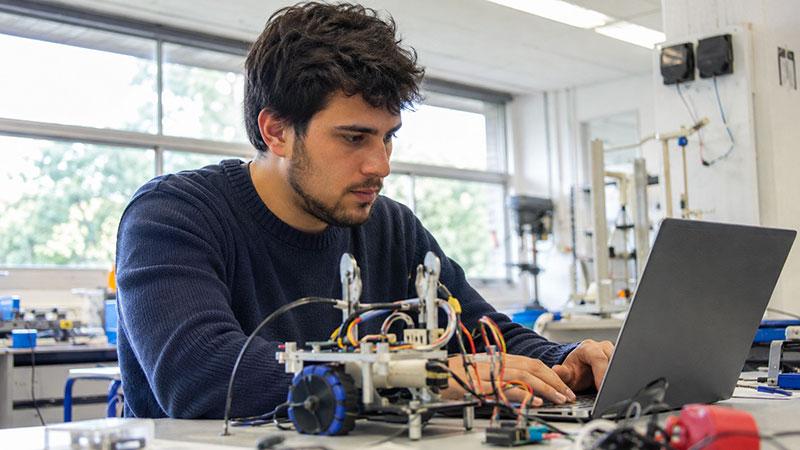
In fields undergoing rapid technological change, for example, advanced training is often associated with updating and developing technical skills. In areas related to management, education, or communication, it can provide conceptual frameworks and tools for analyzing complex problems, designing strategies, or leading processes.
In any case, the important thing is that the choice of graduate program aligns with a specific intellectual or professional need.
Furthermore, when an institution offers programs in diverse fields, a key point becomes clear: pursuing a graduate degree does not always mean the same thing. It may involve delving deeper into a chosen field, changing one’s focus within a discipline, or moving toward research opportunities.
Therefore, rather than viewing graduate school as an automatic extension of an undergraduate degree, it is better to see it as a tool for advanced education, the value of which depends on the stage of one’s career and the type of professional development each individual seeks to pursue.
The right decision is not universal
One of the most important things for someone finishing their undergraduate degree to understand is that there is no universally right time to pursue a graduate degree. The decision depends on one’s prior academic background, field of study, career goals, and the type of problem one hopes to solve.
It makes sense to pursue a graduate degree when the additional training provides something that an undergraduate degree alone does not offer in sufficient depth: specialization, analytical skills, advanced knowledge, research methodology, or a career change. It does not make sense, however, when it is chosen out of habit, without a clear goal, or without addressing a real need.

Therefore, the central question is not just what graduate programs are, but what role they should play in a specific career path. For some people, the answer will be early specialization. For others, a master’s degree after a few years of work. For still others, a research-oriented doctoral degree.
Making the right choice means understanding that pursuing a graduate degree isn’t simply about moving up the ladder; rather, it involves making a decision that makes sense both academically and professionally, especially when weighing options between graduate programs in Uruguay and international opportunities.
Are you interested in pursuing a graduate degree?
Learn about all the options offered by Universidad ORT Uruguay