Learning involves much more than the formal education we receive in school or college. Although it may not seem like it, we are learning in different ways throughout our lives.
Technological innovation, globalization, and rapid social change make knowledge a dynamic resource that requires constant updating to meet the challenges of today's world.
Adapting, developing professionally, and actively participating in society is becoming increasingly important.
Are you looking for continuing education courses for teachers in Uruguay?
Learn about ORT’s professional development courses
Lifelong learning
Lifelong learning, or lifelong learning, is defined as the continuous process of acquiring knowledge, skills, and competencies, which begins at birth and continues throughout one’s entire life.
According to the article “What is lifelong learning? How to stay ahead in your career in today’s changing workforce,” published on the Stand Together website as part of its “Future of Work” series, lifelong learning not only improves career prospects but also enables individuals to adapt to changes in their professions or explore new areas that previously seemed out of reach.
It takes place both consciously and unconsciously and includes educational activities for all ages, educational levels, settings, and purposes.
This means that the knowledge gained in school or college is not enough to meet the challenges of today and tomorrow.
Continuing education is now considered a strategic pillar, not only for competing in the workforce but also for fostering the personal development of individuals who are capable of constantly learning, unlearning, and relearning.
Learning formats
There are three main types of education that interact with one another and enrich the learning experience.
According to UNESCO, in its article “What You Need to Know About Lifelong Learning, ” learning is possible in all forms:
- Formal education: The process of acquiring knowledge in educational institutions, such as schools or universities, by following a set curriculum and objectives. This is the foundation for acquiring fundamental knowledge in areas such as mathematics, science, languages, and social skills.
- Non-formal education: This refers to learning that takes place outside of academic settings and institutions, such as workshops, courses, or seminars. It generally has a more flexible approach, where students can set their own goals, and tends to be more practical.
- Informal education: Knowledge acquired naturally and spontaneously through everyday situations and social interactions. There is no set curriculum or exams to ace. Instead, it involves learning about the world through lived experiences.
While educational institutions play a key role, it is now widely recognized that learning also takes place in non-traditional settings— in courses of all lengths, through social interactions, and through work experience or hobbies.
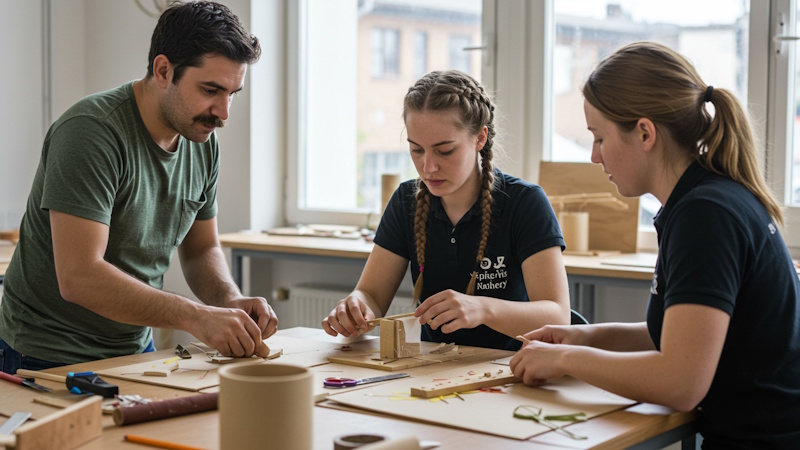
Combining the benefits and strengths of different educational approaches allows us to gain new insights, various sources of knowledge, and achieve a more comprehensive education.
Benefits of Lifelong Learning
Lifelong learning requires an open and receptive mindset toward new experiences and knowledge. It is not just about acquiring information, but about adapting, innovating, and seizing opportunities.
- Continuous learning:No matter what major or field of study you’ve chosen, staying up to date with trends in the job market and technology is crucial for adapting to the demands of today’s and tomorrow’s jobs.
- Greater employability:Those who continue to learn are more likely to adapt to changes in their profession or explore new areas that were previously off-limits or seemed impossible.
- Personal and social growth: Being open to continuing to learn fosters self-confidence and motivation by better preparing you to face new challenges.
- Cognitive stimulation: Active learning throughout life helps keep the mind sharp and prevents cognitive decline.
According to the article “Making Lifelong Learning a Reality: A Handbook” by UNESCO, lifelong learning helps reduce inequalities by facilitating access to educational opportunities for people of all ages and backgrounds.
Are you looking for continuing education courses for teachers in Uruguay?
Learn about ORT’s professional development courses
Motivation in Learning
Learning does not happen automatically. A proactive attitude and motivation are necessary to continue exploring and investigating throughout one’s life, even when there is no academic or professional obligation involved.
Continuing education not only benefits individuals and the workplace, but also helps build more just and inclusive societies.
There are two main types of motivation:
- Intrinsic: When learning is driven by pleasure, curiosity, or personal interest. For example, someone who studies art history because they enjoy understanding how cultures have evolved.
- Extrinsic: When learning is done to achieve an external goal, such as getting a promotion, increasing one's salary, or earning a certificate.
Both approaches are valid, and in many cases they complement each other. The key is to keep an open mind and take advantage of every opportunity to learn something new that contributes to your personal and professional growth.
Skill development
Today, technical knowledge alone is not enough. There is a demand for cross-functional skills and soft skills that enable individuals to adapt to rapidly changing environments.
- Critical thinking and problem-solving.
- Creativity and innovation.
- Effective communication and collaborative work.
- Digital and technological literacy.
- Ability to manage one's own professional development.
Lifelong learning requires the intentional development of these skills, combining formal, non-formal, and informal experiences.

Knowing which skills are important is not enough for effective lifelong learning. It is also essential to cultivate habits that facilitate their ongoing development.
- Read books, specialized articles, or the international press on a regular basis.
- Participate in learning communities, both in-person and online.
- Practice self-assessment to reflect on which skills need improvement.
- Set learning goals, such as learning a new language or earning a certification in a digital tool.
- Combine formal coursework with informal learning and practical experience.
Incorporating personal habits into your daily routine allows you to put what you’ve learned into practice, integrate new knowledge, and keep your mind active, making lifelong learning a natural part of your daily life.
Strategies for Lifelong Learning
Embracing lifelong learning requires not only motivation, but also a structured approach and clear strategies, combining personal habits, technological resources, and active participation.
Leveraging new technologies
Digitalization has opened up endless opportunities to access up-to-date information at any time. All you have to do is search on Google, and you’ll find plenty of articles, videos, online courses, podcasts, and educational channels.
Each of these tools allows you to learn at your own pace, from anywhere, and based on your personal interests.
Participate in learning communities
Self-directed learning is possible and sometimes necessary, but it isn't always the only option. Being part of communities, study groups, or specialized forums offers numerous benefits:
- It encourages collaboration and the exchange of ideas to gain new knowledge.
- They deepen our understanding of specific topics, helping others as well as ourselves.
- They improve communication skills.
- It promotes teamwork and leadership.
Setting learning goals
Setting clear, measurable goals helps you focus your efforts and track your progress. For example, learning a new language, earning a certification for a digital tool, or developing a new skill related to a hobby or sport.

Planning in line with personal goals transforms curiosity and motivation into tangible achievements that become part of one’s personal and professional journey.
Combining experiences
Attending courses, workshops, or seminars provides structure and depth, while exploring personal interests, engaging in hands-on activities, or learning from everyday experiences broadens understanding and fosters creativity.
Combining different ways of acquiring knowledge enhances learning and the ability to adapt to different environments.
It's a way to stay curious, flexible, and connected to the world around us.
Integrating formal, non-formal, and informal learning opens up new perspectives, enriches the educational experience, and fosters a more comprehensive education—one that is essential in today’s world.
Reflect and self-assess
Reflecting on oneself— taking into account one’s abilities, personal goals, and future plans—allows one to identify areas for improvement in one’s life plans.
Self-assessment helps refine strategies, strengthen skills, and identify new opportunities for growth.
- You might be interested in: 5 new educational trends that are transforming the way we learn
Lifelong learning is not just about accumulating knowledge or achieving professional goals.
Adopting this mindset prepares students and future workers to cope with unexpected changes, discover new passions they had never considered before, and build stronger relationships through the exchange of ideas and experiences.
More than just an educational strategy, it is a philosophy of life.
Are you looking for continuing education courses for teachers in Uruguay?
Learn about ORT’s professional development courses