Exhibition of student work from the "Regional Form" course in the Architecture program.
- Date: mar. 2 to mar. 27, 2026 Time: 8:00 AM to 10:00 PM Location: Lobby of the ORT-Bvar School of Architecture, España 2627
Historicist architecture in Montevideo plays a central role in the city’s urban history. Developed between the late 18th century and the early decades of the 20th century, it reflects a period of growth, institutional consolidation, and strong European influence. Neoclassicism and eclecticism succeeded one another as architectural styles that symbolized power—first imperial and later republican—and shaped Montevideo’s built environment for more than a century and a half.
These buildings draw on the styles they reference. Compositional symmetry, the hierarchical arrangement of tripartite facades, and the ornamental repertoire served as architectural arguments at a time when form was meant to convey stability and legitimacy. Architects and engineers trained in Europe imbued these works with distinctive features that set them apart from their models and largely define the character of Montevideo’s urban fabric. Many of these buildings have outlived their original uses.
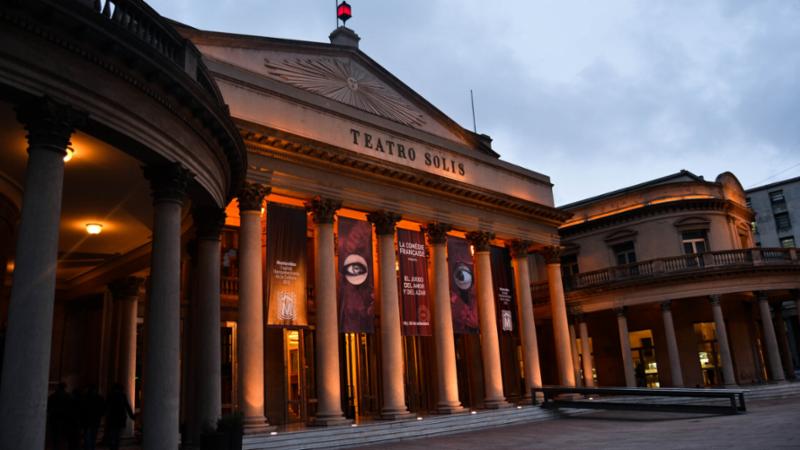
In the plans, renovation emerges as the predominant strategy: in all cases, the building’s architectural character is recognized as a value worth preserving, although the approaches vary. Some buildings retain their original function but are adapted to contemporary needs, others see their interiors transformed while the exterior envelope is preserved, and still others undergo a radical change of use. The Solís Theater, the Agricultural Market, and the Miguelete Prison, among others, illustrate this variety.
The display panel summarizes this analysis through photographs, modified floor plans, and a brief text that explores form, history, and context, with a focus on the enduring nature of these works and their place in today’s Montevideo.
Instructors:
- Ruben García Miranda, Architect
- Carla Nóbile, Architect
- María Eugenia Puppo, Architect
On Fridays, March 6, 13, 20, and 27, the exhibition will be open until 5:00 p.m.