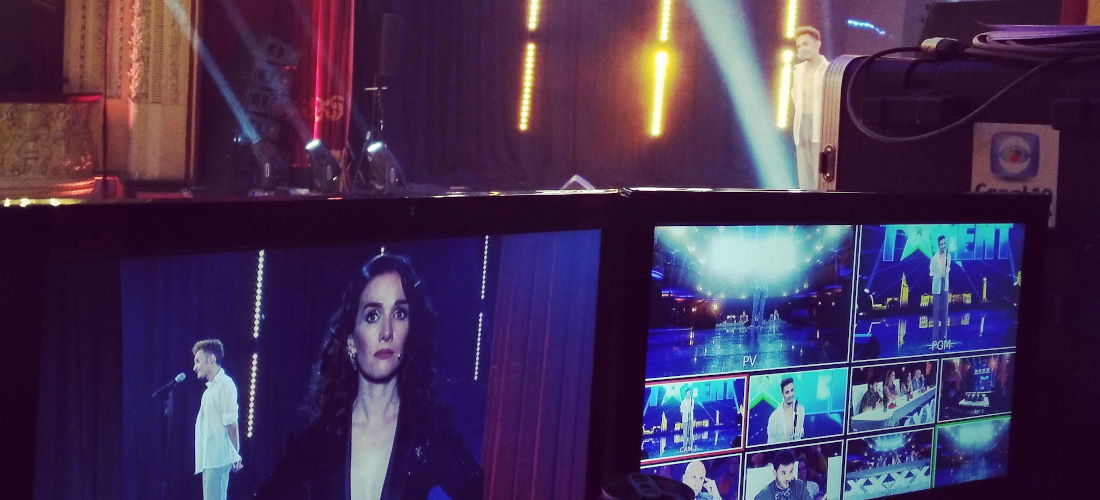
The first season premiered in June—with the second season already announced for 2021—and drew ratings of 18 points (about 220,000 viewers in Montevideo), but the work began long before that. Casting took place in late 2019 across all departments of the country; during that process, the contestants were selected, and they filmed over the summer in the presence of the judges and the audience.
We are already seeing the so-called “jury cut,” in which the 90 contestants who have received at least three positive votes so far will give a second performance. In the final rounds, the winner will be decided by popular vote and will take home a prize of one million pesos.
Behind the familiar faces, the spotlights, and the packed theaters, Got Talent has a production team that remains out of sight of the cameras.
María Viera Vignale, who holds a bachelor’s degree in Communication with a focus on Audiovisual Media, is one of the show’s editors. “We started working on it once almost everything had been filmed; I think only the Montevideo segment was left. As content editors, we work with the production team to create an ‘editing script’ tailored to each participant’s profile, with the goal of highlighting the best in each of them.”
For the editing process, the participants were divided into groups; a significant amount of time is devoted to editing each story, as everything from the testimony to the music used is carefully selected.
Each editor works with a producer on set, and then the footage goes to executive production and finishing. “All in all, there are about eight of us editors, plus the on-set producers, the finishing team, the sound post-production team, the music team, and the people who make the promos… It’s a huge team!”
I'm very passionate about my editing; I engage with the participants and try to stand my ground if I think something should or shouldn't be included in the final cut. I'm not afraid to speak my mind.
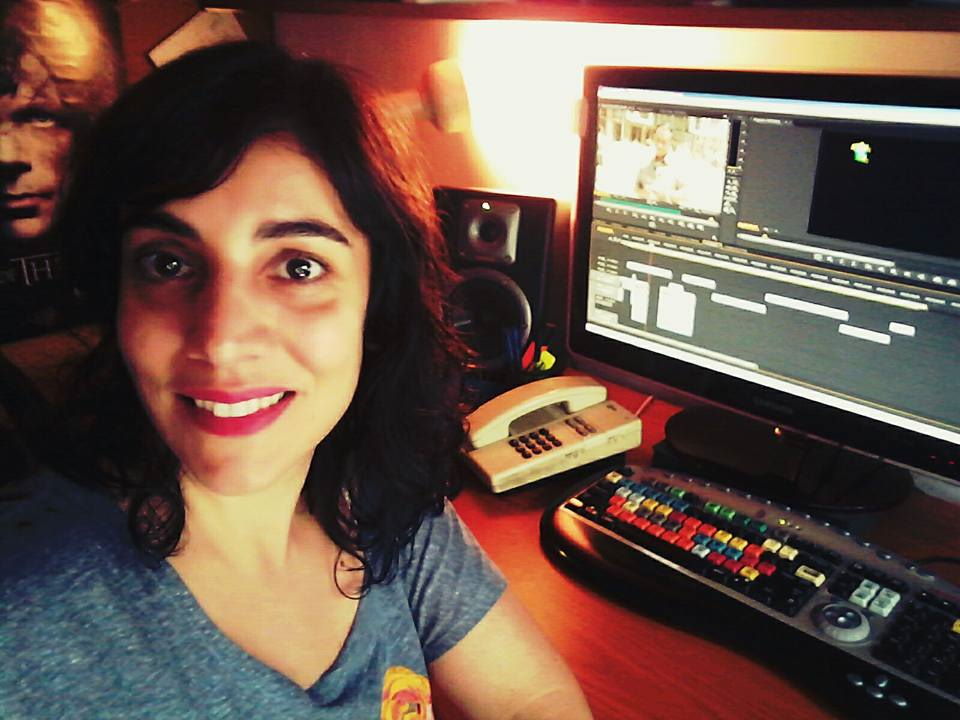
Viera says the work is very intense, as it involves a setup with “a large array of synchronized cameras and microphones, with quality standards set by external parties that must be met.”
Alan Goldman—who also holds a bachelor’s degree in Communication with a focus on Audiovisual Media—is one of the show’s writers. “The role of a writer on a reality show is very different from that in a fictional series. In fiction, nothing comes before the script; you’re the first link in the chain, and you spend most of your time writing. In a reality show, you always have a format to rely on, and there’s very little actual writing involved. More than a screenwriter, in this case I consider myself a ‘content manager,’” he said.
He went on to explain, “This role varies from one reality show to another, because the content requirements are different.” For example, in both *MasterChef* and *Got Talent*, the contestants’ stories play a central role (something common to almost all reality shows), but in *MasterChef*, this takes the form of a game. “So a large part of the screenwriter’s role there is to help devise the challenges and group dynamics. Got Talent doesn’t have that playful element—it’s about putting on shows—so here my role is more about planning the acts.”
Both Viera and Goldman were part of the MasterChef team, which also aired on Channel 10.
In short, the only strictly scripted parts are the opening and closing segments hosted by Natalia Oreiro. “For everything else, there’s a lot of planning with the content producers so that the participants’ stories can unfold naturally, but it’s not scripted per se,” Goldman explained.
The judges are kept out of the entire pre-production process, so they arrive at the tapings knowing nothing about the contestants. “They serve as the link between the contestants and the audience, as if they were the audience’s eyes. In a way, they guide the viewer.” The idea is that, based on each judge’s profile, they can contribute their own artistic and personal perspectives, so that there isn’t a single viewpoint on each participant.
Part of Goldman’s job is to advise the jury, a task he carried out prior to the auditions. “We talked a lot about how to give feedback, how to adapt to the format, how each person could find their place on the jury, and then, obviously, a lot of things fall into place as we go along.”
Each format has its own specific content requirements, and that’s what defines the screenwriter’s role. That’s why it’s so important to have a production guide that explains the procedures in detail and a format consultant who can help you anticipate potential challenges. In my experience with MasterChef, the first season is where the steepest learning curve lies: you have to go through the entire process to fully understand your role.
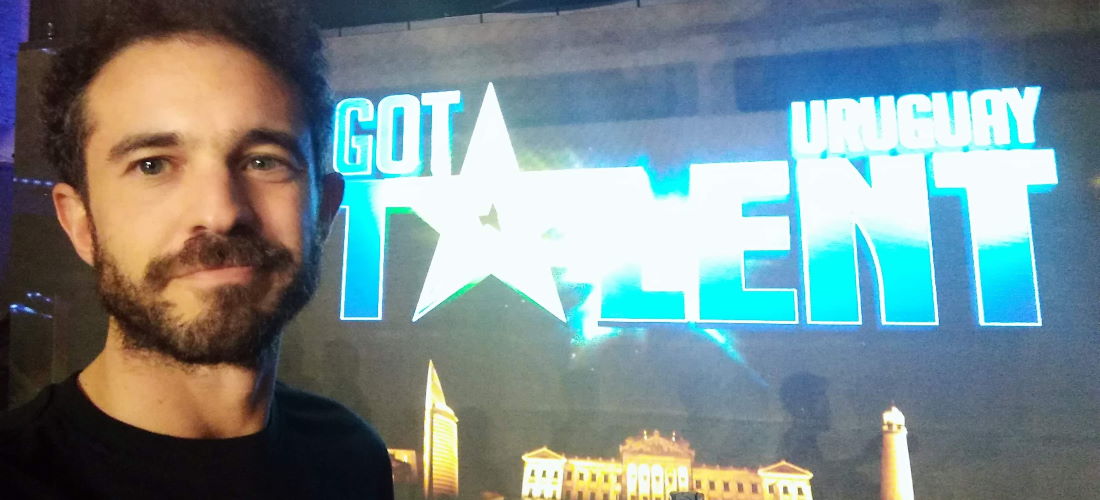
Producer Simon Cowell created the format in 2006 under the name *America’s Got Talent*. Today, it has more than 70 adaptations worldwide and has attracted over 500 million viewers.