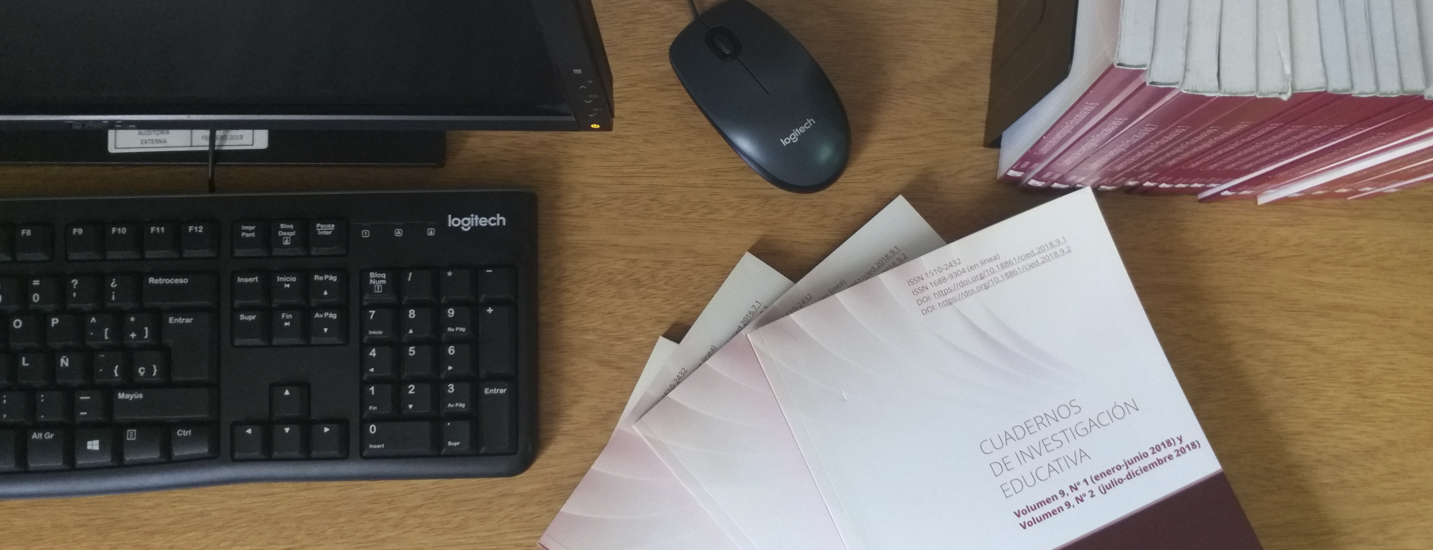
The challenges of technology, the role of educational leadership, student dropout rates, and collaboration among teachers. Teacher training, foreign language learning, science education, and educational policies.
These are some of the topics that Cuadernos de Investigación Educativa —the peer-reviewed, biannual academic journal of scientific research published by the Institute of Education at Universidad ORT Uruguayhas addressed over the course of its more than 20-year history and in its more than 100 published articles.
Its pages feature works by national, regional, and international authors—ranging from graduate students to renowned Ibero-American researchers—who have reflected on both local and global educational realities.
To mark the publication of the first 10 volumes of *Cuadernos de Investigación Educativa*, the following is a selection of 10 notable articles. These articles stand out for their approaches, contributions, authors, and the new perspectives they offered, which helped to deepen informed debate and foster reflection on educational issues and challenges.
1. What is object-oriented programming? A phenomenographic approach
Inés Friss de Kereki
Vol. 1, No. 3 (1998)
“What are students’ perspectives on object-oriented programming? What are their conceptions of it? What is the future value of learning this?” These were some of the questions the article explored—with the aim of helping to improve the early teaching of programming.
2. Technology-based activities
Edith Litwin
Vol. 1, No. 10 (2002)
This study examined how teachers incorporated technology into their classrooms and how they applied different criteria for its use. At the same time, it distinguished between the various technologies used and identified different situations in which these tools either enhanced or limited pedagogical approaches.
3. Networks for Development: Educational Institutions from a Community Perspective
Andrea Tejera
Vol. 1, No. 11 (2003)
The author set out to examine educational organization from a network-based perspective. This study proposes a different way of thinking about the internal organization of an institution, focusing in particular on the specific context in which it operates and interacts with various stakeholders.
4. Students' curiosity in biology classes
Susana Klimavicius
Vol. 2, No. 14 (2007)
The students’ questions—which reflect their curiosity—and the teaching strategies that encourage them were at the heart of the research. The methodological design combined classroom observations, in-depth interviews, and students’ accounts of how they perceived the work in their biology classes.
5. Music Education: Creativity and Metaphors
Graciela Nakasone
Vol. 3, No. 18 (2012)
This research sought to explore non-musical aspects, events, or phenomena related to the creative drive behind music and music education. At the same time, it documented a series of changes and innovations in various areas of music education within the Uruguayan educational system.
6. Integrating ICT for “Effective Teaching”: Teachers’ Opinions, Attitudes, and Beliefs at a Teacher Training Institute
Diego Rombys
Vol. 4, No. 19 (2013)
The article examined the opinions, attitudes, and beliefs of teachers at a teacher training college regarding the integration of ICT into education. In addition, it explored the factors that might facilitate or hinder the integration of ICT into teachers’ educational practices.
7. Cultural Heritage Through the Voices of Young People: A Starting Point for Heritage Education
Adriana Careaga
Vol. 6, No. 2 (2015)
The study examined the perceptions of cultural heritage held by students in the first years of secondary school, based on an educational approach centered on experiential learning. The results confirmed the importance of heritage education in fostering critical, active, and democratic citizenship.
8. Learning Approaches Among Chinese University Students Studying Spanish as a Foreign Language
María del Carmen Azpiroz
Vol. 8, No. 1 (2017)
This research focused on identifying and understanding the prevailing learning approaches among Chinese university students studying Spanish as a foreign language, within the framework of an exchange program. The case study also sought to understand the changes in these approaches resulting from the study of Spanish.
9. Collaboration and the use of ICT as factors in teacher professional development in the Uruguayan educational context. Analysis protocol for a multiple-case study
Mariela Questa-Torterolo, David Rodríguez-Gómez, and Julio Meneses
Vol. 9, No. 1 (2018)
The study examined how collaboration among teachers develops in schools and, in particular, the role that technology plays in this process. To this end—and given the scarcity of research on the subject in the country—the researchers conducted a case study in four elementary schools and four secondary schools in the department of Colonia, Uruguay.
10. Challenges for University Education in Contemporary Digital Environments: Insights from Research
Carina Lion and Mariana Maggio
Vol. 10, No. 1 (2019)
The authors presented a preview of an ongoing study conducted by the Faculty of Philosophy and Letters at the University of Buenos Aires on teaching practices in technologically advanced environments. The qualitative study offered insights of interest to those studying the challenges and trends that technology presents to higher education.