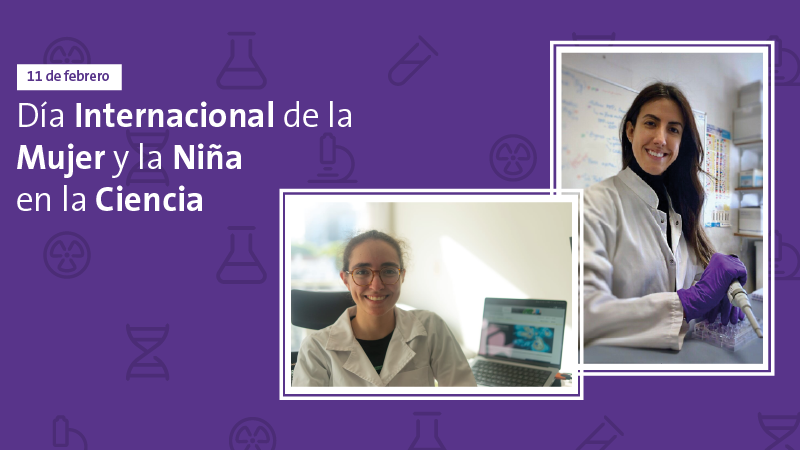
Established in 2015 by the United Nations Educational, Scientific and Cultural Organization (UNESCO), the International Day of Women and Girls in Science is celebrated every February 11. This initiative aims to highlight the work of women in STEM fields (science,technology, engineering,and mathematics) and to promote female role models who help encourage girls to pursue careers in these fields.
As with so many other initiatives, the 11F campaign aims to raise awareness of the challenges and factors that affect women in STEM fields and to promote gender equality in science.
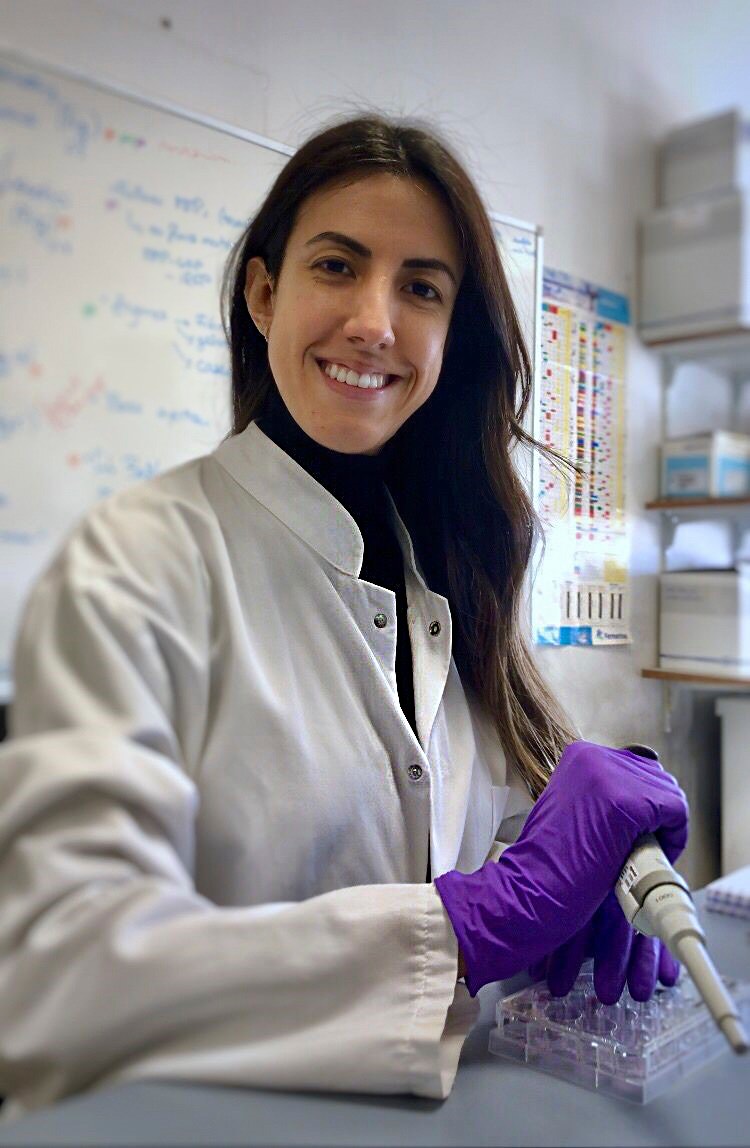 In this regard, Universidad ORT Uruguay joining the campaign through two representatives from the Biotechnology Engineering program: Lucía Campos, M.Eng. (a graduate of the university) and Ingrid Persitz (a senior student).
“Celebrating this day is incredibly important. It brings attention to the issue and opens up the conversation. A few years ago, we celebrated this day at my workplace, and it sparked a very fruitful discussion with colleagues who disagreed or didn’t fully understand the underlying issues. Events like this help highlight the existence of the gender gap in science as well,” says Lucía Campos.
Lucia has been involved in science her entire life. As a child, her favorite toy was a microscope, and she dreamed of becoming a marine biologist. Over time, her career aspirations shifted, and she considered studying physics, biology, medicine, and engineering, until she came across ORT’s Biotechnology program, which was just one year old at the time. “I chose it because it combined many different areas that interested me into a single discipline,” she says.
The ORT-trained engineer credits her family’s support as a “cornerstone” of her professional development: her father for his deep interest in the field, and her mother for her unstoppable spirit, which encouraged her to pursue whatever she set her mind to, regardless of gender barriers or any other obstacles she might face. However, she never had a female scientist to look up to as a role model—not because there weren’t any, but because “she didn’t know of any.”
“How many successful women scientists are there? Plenty! But how many of these women come to mind when we’re asked to name five world-renowned scientists? Today, I’m inspired by women who have fought—and continue to fight—for their right to pursue science, even though it remains a male-dominated field in many countries,” says Lucía.
“Historically, science has been a male-dominated field,” says Ingrid Persitz.
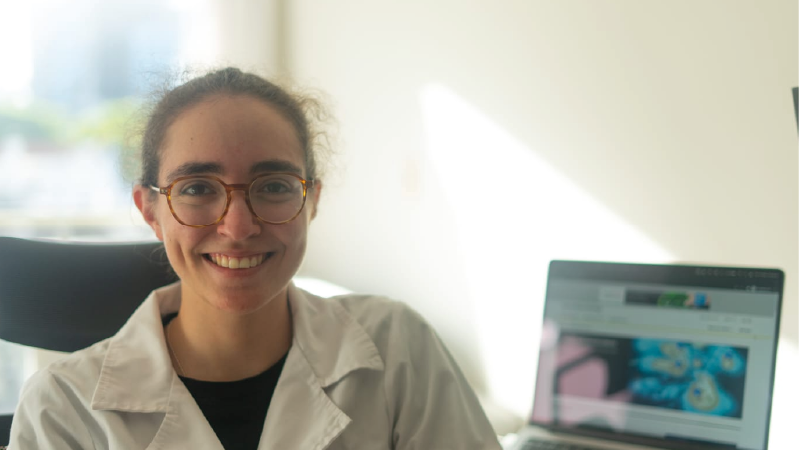 Ingrid says she has always been known for her analytical mind and curiosity, and that she believed in science as a powerful tool for answering questions—or, better yet, for asking them. She also saw biotechnology as “a world of possibilities,” where she could integrate environmental, health, and industrial issues, among many others.
“Being a woman in science, first and foremost, means learning to overcome the feeling that one has to prove to society that the work one does is just as valuable as anyone else's”, says the student, who looks to Marie Curie—the first woman to win a Nobel Prize, in addition to all her other contributions—as a historical role model and source of inspiration. “Today, my inspiration is more contemporary, and I find it in young female scientists, entrepreneurs, and innovators who demonstrate the value of women in science every day,” she says.
Obstacles and prejudices
“Prejudices exist, but they aren’t always obvious or easy to pinpoint. As women, we carry a burden that is often invisible, and we have to navigate a delicate balance. I think there’s a stereotype in science about how a female scientist ‘should look,’ and this makes us second-guess even how we dress so as not to be sexualized,” says Lucía.
Furthermore, according to the graduate, women face discrimination even when applying for jobs in their early 30s due to potential absences related to motherhood. “Science is no exception to the reality faced by women, regardless of their profession. Currently, although there are a large number of women scientists worldwide, the most prestigious positions and leadership roles continue to be held predominantly by men,” she adds.
Make a mark
As women in the scientific field who are committed to this cause, both want to contribute to the pursuit of gender equality. Through their work, “demonstrating that the quality of results does not depend on gender,” according to Lucía, and through education and “supporting young female scientists and students,” according to Ingrid.
“I believe that having role models—as I feel I have today—helps me not feel alone on this journey. I think that mentoring and serving as role models are two of the most important roles for women in science,” the student concludes.