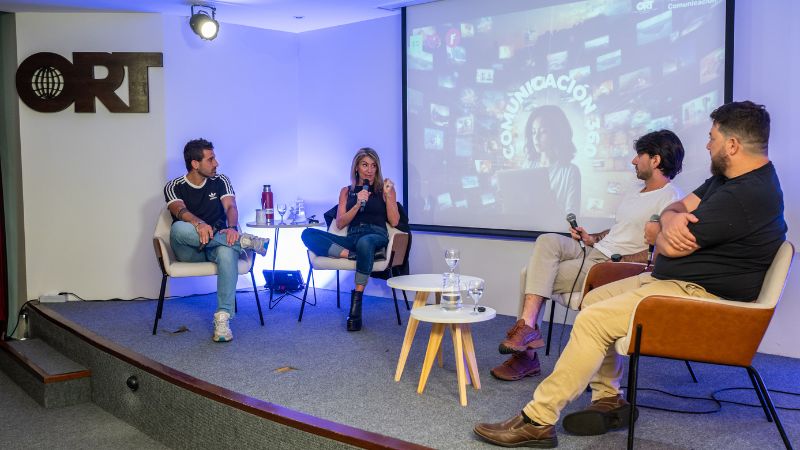
On March 20, the School of Communication organized "Communication 360," an event that brought together leading professionals to discuss how streaming, social media, and artificial intelligence are redefining the communications industry.
The event, moderated by Brian Majlin, was a unique opportunity for students, teachers, and experts interested in being part of this transformation.
The New Media Ecosystem: Between Traditional and Digital
Today, the distinction between traditional and digital media is becoming increasingly blurred.
Karen Jawetz, commercial manager at Magnolio Media Group, highlighted this integration: “For us, there isn’t really a clear divide between traditional and digital media, because we blend traditional and digital media together.”
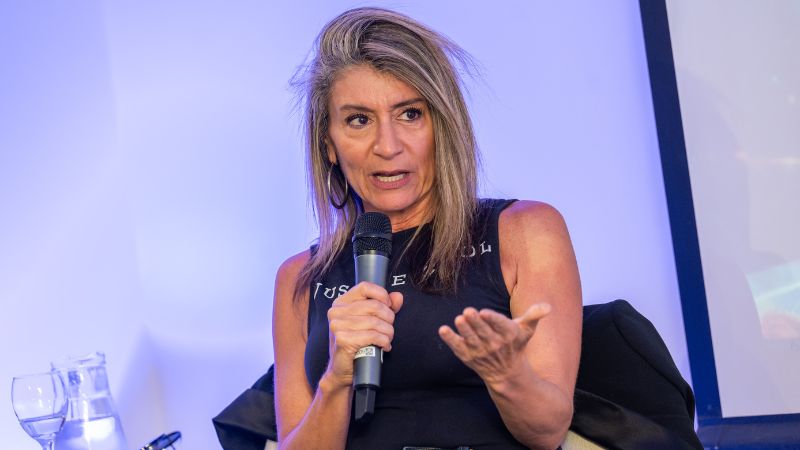
This convergence opens up new opportunities for content creation and more dynamic, adaptive communication strategies.
The streaming revolution and real-time interaction
Streaming has radically changed the way content is consumed.Mag. Shay Levert, a graduate of ORT’s Bachelor’s program in Communication and a director at Fipo, highlighted the impact of interaction on these platforms: “On streaming platforms, interaction is far more disruptive than it used to be; a comment from a follower can change the narrative of a program.”
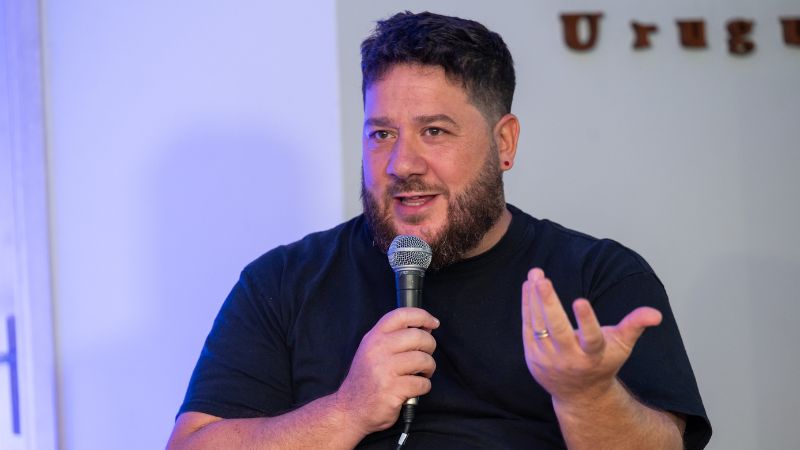
This level of immediacy and constant feedback presents both a challenge and an opportunity for content creators and the media.
Innovative Strategies in the Communications Industry
For Sebastián Hochbaum, CEO of El Observador, the key lies in developing journalistic products tailored specifically to each audience: “The way to approach communication and platforms is to start seeing ourselves as incubators of journalistic products, where each product must meet the needs of each audience.”
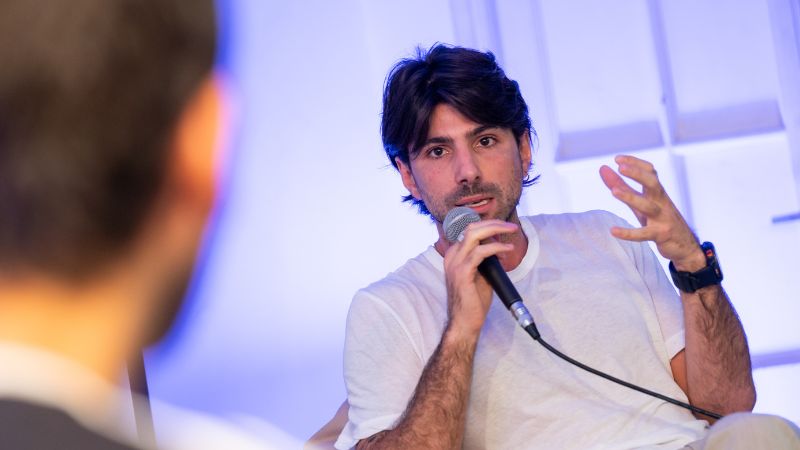
This represents a shift in how content strategies are planned and executed, with personalization and segmentation playing a key role.
The Value of Specialization and Teamwork
Today's media industry requires highly specialized professionals who can integrate into multidisciplinary teamswhere each member contributes expertise from their own field, while also being able to communicate and collaborate with other areas such as technology, sales, and journalism.
According to Sebastián Hochbaum,
Media organizations are looking to build multidisciplinary teams. Today, the key is to become subject matter experts—to know a lot about one thing, rather than a little about everything.
This approach underscores the importance of ongoing training and adapting to the industry’s evolving demands. “Companies tend to look for people who are specialists in certain areas but who also have the ability and skill to be part of multidisciplinary teams,” he added.
This approach underscores the importance of ongoing training and adapting to the industry’s evolving demands.
For her part, Karen Jawetz offered some advice to the students: she emphasized the importance of surrounding oneself with good people for long-term success and how teamwork with valuable people makes all the difference.
He also mentioned that having fun is key to any project: enjoying the process ensures better results and turns work into a pleasant experience.

The speakers emphasized the importance of curiosity, teamwork, and specialization for entering the workforce in media and communications.
In this regard, they recommended that students carefully select their sources of information, participate in conferences and forums, and explore different fields before deciding on a career path.
A must-attend event for communication enthusiasts
Communication 360 not only provided an in-depth look at the evolution of the media, but also offered a unique opportunity to network with industry leaders.
It was the perfect setting to discuss current strategies, past strategies, and the future of the industry.
The event made it clear that communication continues to evolve, and those who wish to stay ahead of the curve must adapt to the new dynamics of the market.
https://www.youtube.com/watch?v=HtlUQZMaP2I