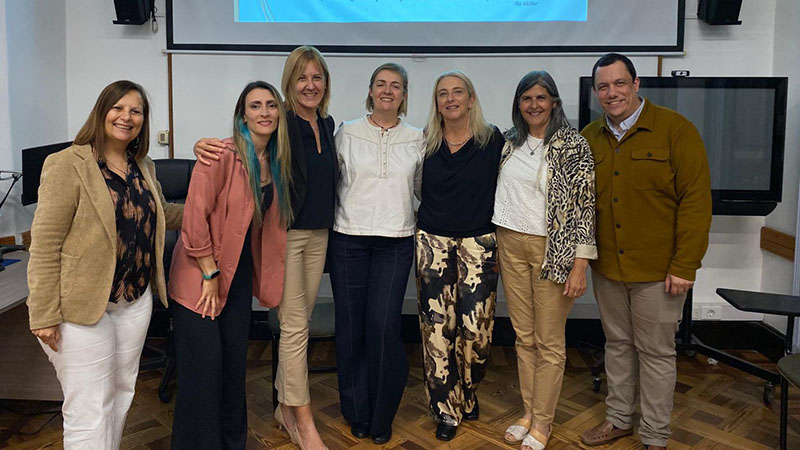
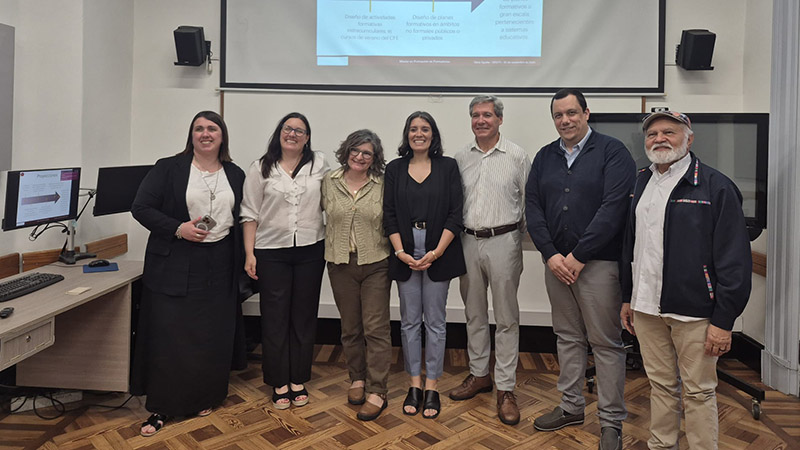
The defense of 42 theses in November 2025 marked a milestone for the Master’s Program in Trainer Development. It not only signaled the conclusion of an academic process but also served as a starting point for new reflections, questions, and discussions, all with a common goal: to strengthen the training of trainers.
From the integration of artificial intelligence, pedagogical innovation, and interdisciplinarity, through digital skills, formative assessment, active learning methodologies, educational internships, and reflective practice, the master’s theses covered a wide range of topics that reflect the priorities and challenges of contemporary education.
Drawing on research in early childhood and elementary education, secondary education, teacher training, and non-formal education, the studies yielded concrete proposals and evidence-based solutions for improving the Uruguayan education system.
 This academic milestone was made possible thanks to a academic cooperation agreement between Universidad ORT Uruguay the Central Governing Board (CODICEN) of the National Public Education Administration (ANEP), which launched a Special cohort of the Master's Program in Trainer Development.
More specifically, in February 2024, a special edition of the graduate program was launched, intended exclusively for teachers from the Council for Education Training (CFE).
Universidad ORT Uruguay each participant a scholarship covering 50% of the total cost of the master’s program, while ANEP covered the remaining 50% of the program’s cost.
The Master's Program in Trainer Development is designed for those who wish to design, plan, guide, evaluate, and lead high-quality training programs.
Following the graduation of 42 professionals, students, faculty members, members of the examining committee, and academic leaders from the graduate program shared their reflections on the experience.
A goal achieved
While waiting to present her final project for the Master’s in Trainer Education, Rossana Müller sat next to the very same staircase at the Institute of Education that she had climbed back in 2003. Full of enthusiasm, she had gone there to find out about a master’s program, but, having just graduated, her financial circumstances at the time did not allow her to pursue that dream.
Although it took her 22 years—during which she never gave up and took every course she could— the CFE’s special cohort for teachers allowed her to finally check that item off her to-do list; as she herself says, “it happens when the time is right.”
No matter how old you are, you should always keep growing, because knowledge takes up no space and there’s always something new to learn.
Rossana Müller
Upon completing his graduate studies, Müller—who serves as a laboratory instructor and professor of organic chemistry and physical chemistry at the Southwest Regional Teachers’ Center—said that it is “a key to opening other doors.”
The thing is, when she applied, she thought she was going to “give a formal title” to what she did every day in her work as a teacher trainer. However, she discovered that the program “goes far beyond that.” She learned to see everyday reality in a new light, acquired tools for managing and leading projects, and, finally, learned to conduct research… by doing research.
“The professional growth has been immense. I am very grateful to all the professors and classmates who helped make this possible, and especially to those who gave us the opportunity to study through this scholarship, ”Müller concluded.
A humanitarian practice
“The Master’s in Teacher Training taught me that, in educational practice, there is no such thing as a perfect, linear process; what matters is creating processes that are meaningful and sustainable, ”said Estefany Piña, who teaches sociology at UTU, education, society, and culture at the Teacher Training Colleges of Montevideo, and pedagogy at the Artigas Teacher Training Institute.
This journey left me with the conviction that being a trainer of trainers is, above all, a human endeavor: helping others recognize their own capabilities, competence, and worth in a world that changes every day.
Estefany Piña
The lessons he took away from the experience were “many and varied.” On the one hand, he discovered that applied research is not “neutral or technical, ” but rather “deeply human.” On the other hand, it taught him that training trainers “depends on consistency between what we say and what we do.”
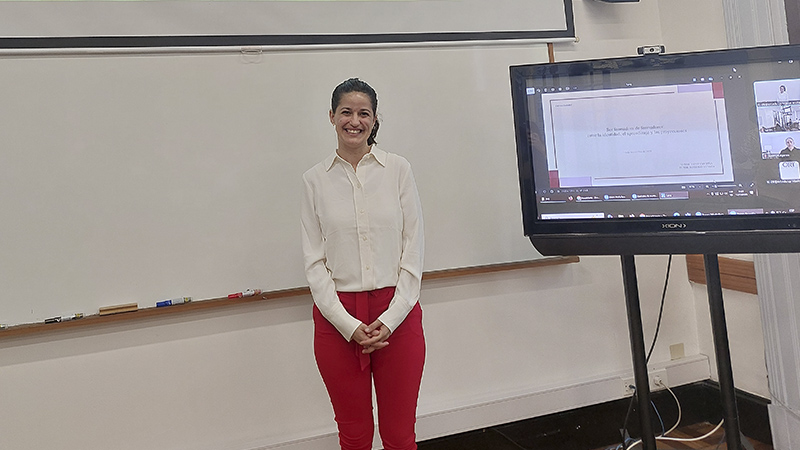
She described the process as “deeply liberating,” as it allowed her to “value the process more than the final product.” As she noted in the concluding reflection of her thesis, upon completing the program, Piña recognized herself as “different”: “More aware of my limits, more open to uncertainty, more convinced that educational change is not achieved through imposition, but through trust, listening, and shared construction.”
Training that enhances performance
“The graduate program aligned with my educational needs and academic interests, and was supported by Universidad ORT Uruguay, Universidad ORT Uruguaysaid Cristian Paleso. While working at the Artigas Teachers’ Institute and the Teacher Training Colleges of Montevideo, the combination of synchronous and asynchronous learning allowed him to continue his teaching duties while studying at his own pace.
In the graduate’s words, this is a master’s program that“enriches educationalpractice, perspective, and outlook.” It is also a program that“bridges the gap between research and practice”by providing conceptual and methodological tools to“understand educational phenomena within their context,” as well as to design training programs that “meet the needs of teaching communities and training institutions.”
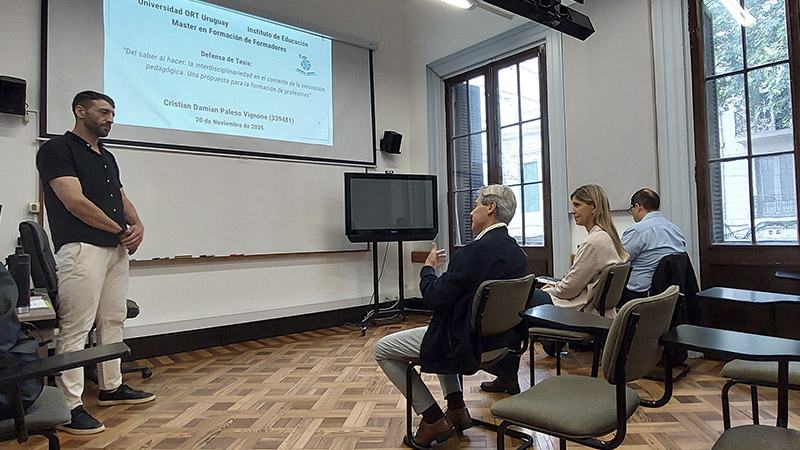
In addition, Paleso highlighted the role of the graduate program’s faculty, who provided “genuine and consistent guidance.” He also noted the support of Universidad ORT Uruguay, which was always “willing to listen” and attentive to the “students’ needs.” Finally, the collaborative work among classmates was “significant” in “generating rich discussions and diverse perspectives.”
It's a master's program with a solid academic foundation, but the staff is there to support you throughout the entire process.
Cristian Paleso
Expanding educational horizons
“Today I feel better prepared to lead transformation processes, support teaching practices through active listening and research, and contribute to professional development within the communities I am part of,” said Ana Hernández, an English teacher at School No. 65 “Juana Elizalde de Urán” and at the “Mtro. Julio Macedo” Teacher Training Institute in the city of Treinta y Tres.
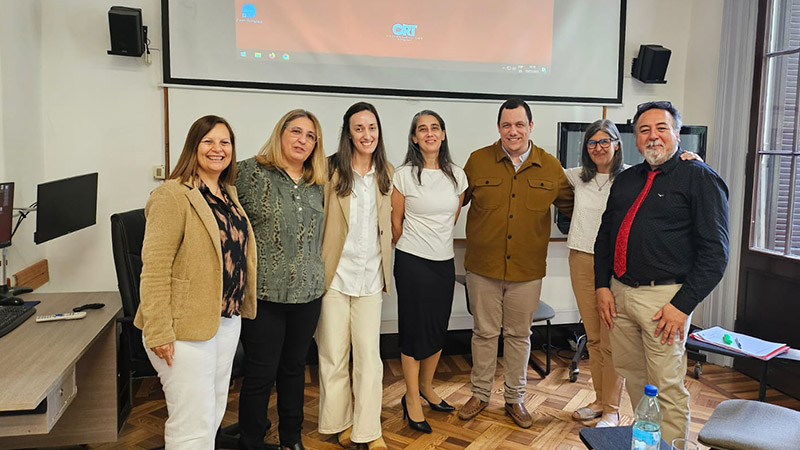
Completing the Master’s in Trainer Development not only provided her with concrete tools for designing training programs, the critical use of technology, evidence-based planning, and the development of rigorous assessments. It also presented an opportunity to“design programs aligned with the real needs” of teachers—ones that are more “accessible, inclusive, and contextually relevant.” But above all—as he explained—this nowtranslates into “more innovative and meaningful” initiatives for the students he works with.
I’ve gained a fresh perspective on my own role, as well as a more comprehensive, ethical, and thoughtful understanding of the impact that professional development has on the careers of other teachers.
Ana Hernández
For Hernández, one of the most rewarding aspects of the graduate program was the collaborative work. As he put it, he and his classmates built “a strong and supportive academic community where ideas, questions, readings, and genuine learning were freely shared.”
The exchange with teachers was also “very meaningful, ” as they played a “crucial role in broadening perspectives, fostering reflection, and building situated knowledge.” “This collective experience reaffirmed the importance of networking and distributed pedagogical leadership as cornerstones for transforming education,” he concluded.
The responsibility to continue learning
For Marcelo Correa, pursuing the Master’s Degree in Teacher Training was a decision rooted in professional responsibility. “The professionalization of teaching, especially at the tertiary level, is not just a personal goal: it is a responsibility toward the students we are training and the communities they will eventually serve, ”said the professor, who teaches in the Technical Teacher Training program at the Litoral Regional Teachers’ Center and leads workshops in vocational and technical education.
Applying to the graduate program was a way for me to acknowledge that teaching requires staying up to date, rethinking one’s approach, and being open to new ways of teaching and learning.
Marcelo Correa
Throughout the process, the recent graduate encountered a group of students and faculty who made a “huge” difference. He felt part of a community “that is passionate about education, ” with peers willing to listen and build together, and with faculty who supported him “with rigor, sensitivity, and admirable professionalism.”
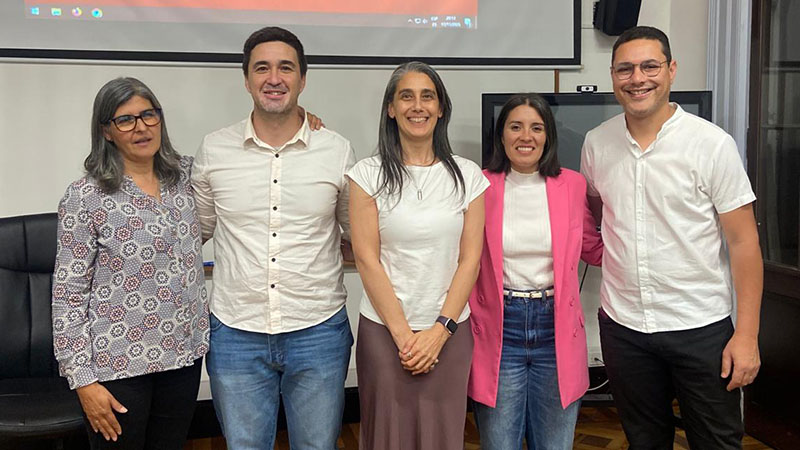
The lessons learned upon completing the graduate program go beyond the curriculum: new perspectives on teaching, a deeper understanding of education policy, tools for reflecting on one’s own practice, and enhanced skills for designing relevant and accessible educational programs, to name a few.
Finally, The experience reshaped his professional identity: “The master’s program helped me solidify the identity as a trainer of trainers that I want to build: a a commitment to lifelong learning, committed to continuous improvement and deeply rooted in the human spirit of teaching”.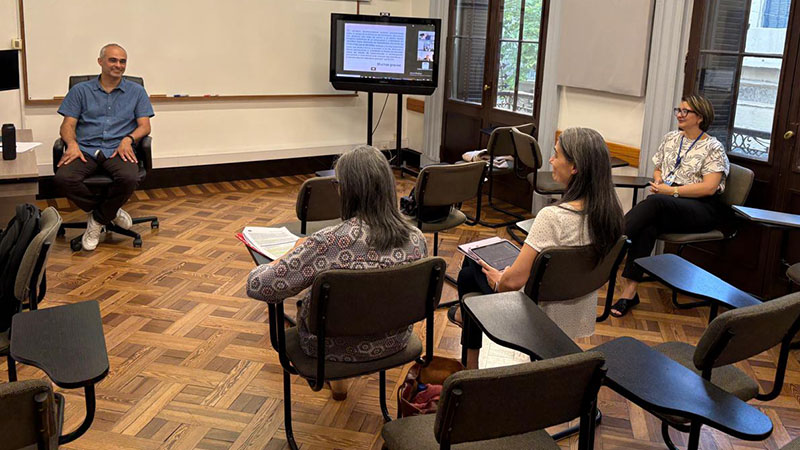
Contributions to the national context
The students' progress exceeded the expectations of Dr. Silvia Umpiérrez, who had a front-row seat to the progress of the participants in the Master’s Program in Trainer Development; in addition to mentoring some of them as an academic advisor, she also served as a member of the faculty panel for other thesis defenses.
Although, at first, he encountered people whose motivation “was rooted in obtaining a graduate degree,” over the course of several months, it evolved into a a genuine interest in identifying real needs, design appropriate actions, and properly plan their implementation and evaluation. “I was pleased to see how innovative ideas emerged, “innovative ways of designing learning environments, and sustainable ways of accessing training,” he said.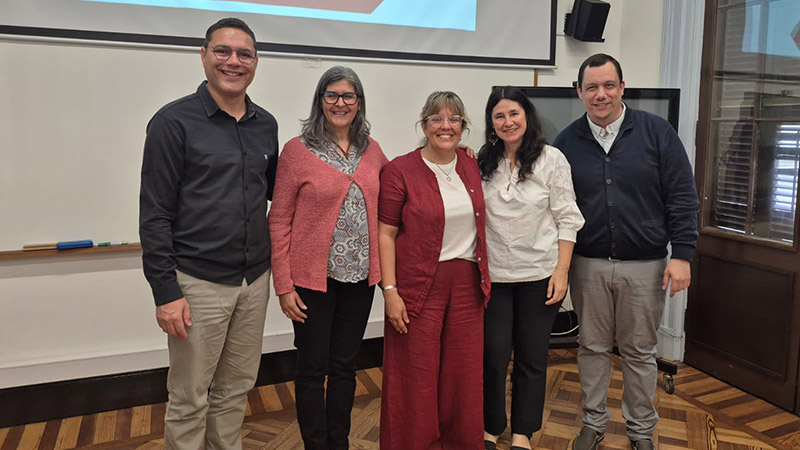
Given that this cohort consisted of teachers with heavy workloads and, in some cases, managerial responsibilities, this transformation process was particularly valuable.
I have gained some very interesting insights as a researcher and as a teacher. Through the students and their projects, we were able to gain insight into the realities of the communities described in the assessments presented, which are located throughout the country.
Silvia Umpiérrez
“The results of the assessments conducted represent preliminary but significant contributions to our understanding of the national situation, ”emphasized Umpiérrez, who added that this preliminary nature, rather than being a shortcoming, is “an opportunity to raise new questions, spark a desire to learn more , and continue researching.”
An Outside Perspective from Latin America
The participation —as external members of the panels— of five Brazilian researchers from the Federal University of Grande Dourados, the State University of Mato Grosso do Sul, and the Federal University of Ouro Preto provided a regional perspective that enriched the feedback during the defense presentations.
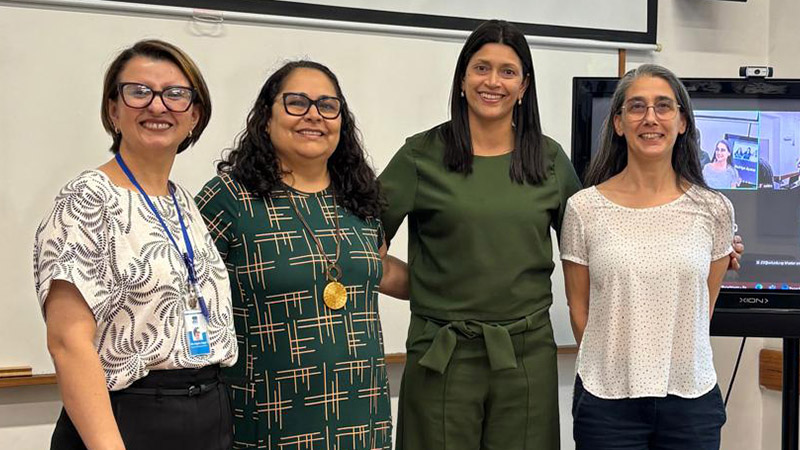
In particular, according to Dr. Elis Regina dos Santos Viega, a professor at the State University of Mato Grosso do Sul, the papers presented “met expectations” by addressing “current and pressing issues” on the research agenda.
“It’s interesting to see how master’s-level education is evolving in Latin America, so I was very pleased and learned a lot from this experience, ”she emphasized.
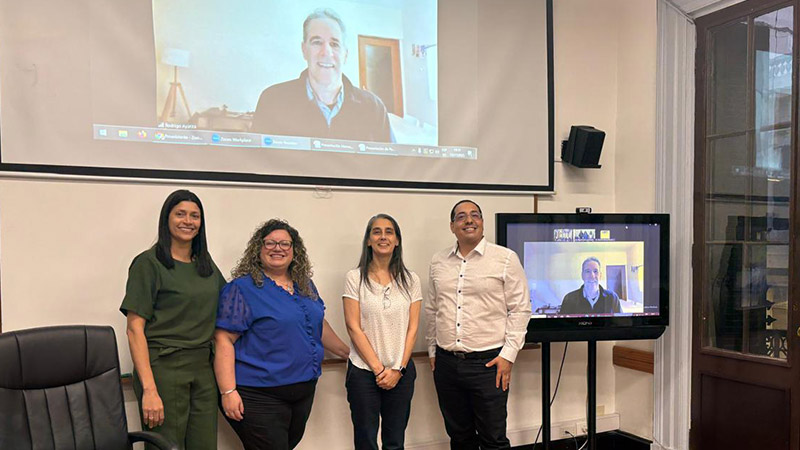
A network of trainer trainers
“The 42 dissertations defended not only mark the successful completion of a postgraduate program but also demonstrate a strategic and transformative approach to teacher education in Uruguay, ”said Dr. Andrea Tejera Techera.
The academic coordinator of the Master’s Program in Trainer Development explained that the final projects demonstrated “a significant grasp of conceptual, methodological, and ethical frameworks”that “go beyond the specific contexts of each institution and address systemic challenges.”
Among these, the following stood out: evidence-based planning, distributed pedagogical leadership, the critical integration of technology, formative assessment, and the development of sustainable, context-specific proposals.
That journey helped establish a shared approach to the training of trainers by combining academic rigor with a sense of realism.
Andrea Tejera Techera
In his view, one of the most valuable outcomes of this experience was the creation of an academic and professional community that fostered deep and sustained collaborative processes: “Throughout the master’s program, participants not only produced applied knowledge, but also learned to do so through networking, dialogue, comparing perspectives, and collectively establishing quality standards for education.”
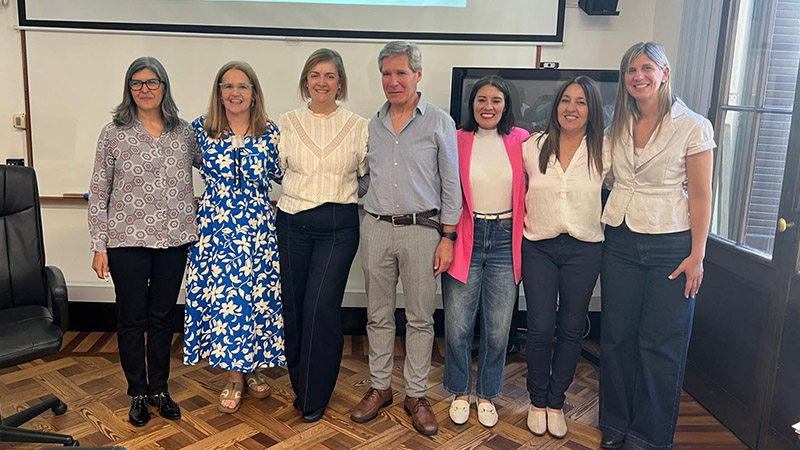 “Today, in addition to 42 graduates, The country has network of trainer trainers that shares a common language, a working methodology, and an ethical responsibility to improve the education system”, Tejera Techera declared, adding that that human and relational capital “is one of the most powerful contributions of the cohort to continue driving educational transformation through training.”
A critical mass of educational leaders
“The fact that 42 theses have reached this final stage is a sign of strong professional commitment and of the institutional relevance of this initiative,” said Dr. Mariela Questa-Torterolo, assistant coordinator of the Master’s Program in Trainer Development.
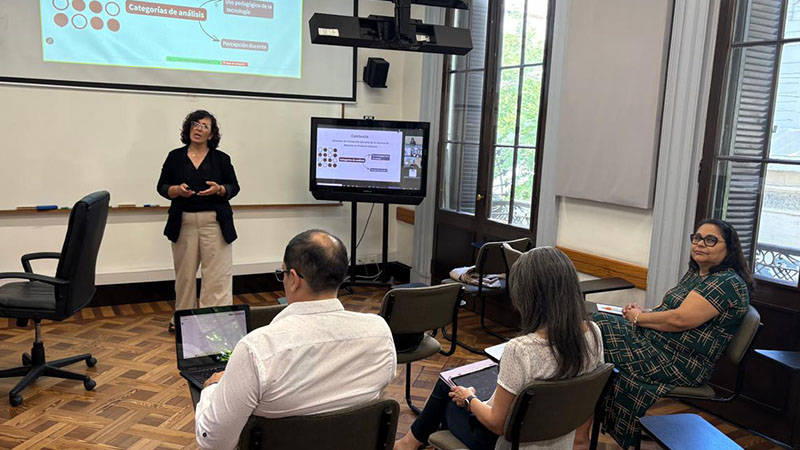
For her, the overall assessment of the training process for this special cohort was extremely positive. Above all, because this professional development opportunity helped “reinforce the idea that teacher training is the cornerstone of the education system”and the“space where changes and transformations take place”that subsequently impact the system.
“The successful completion of the cohort establishes a critical mass of educational leaders whose ideas have immediate potential for transfer and scalability within the educational ecosystem,” added Questa-Torterolo.
The participants have successfully transformed their professional identities by taking on the role of “agents of change,” which has enabled them to transition from teachers to trainers, researchers, and consultants.
Mariela Questa-Torterolo
The Importance of Investing in Training
“When teachers have real opportunities to conduct research, be creative, and work collaboratively,they not only strengthen their professional skills but also expand their capacity for leadership and influence within educational communities, ”said Dr. Denise Vaillant, dean of the Institute of Education.
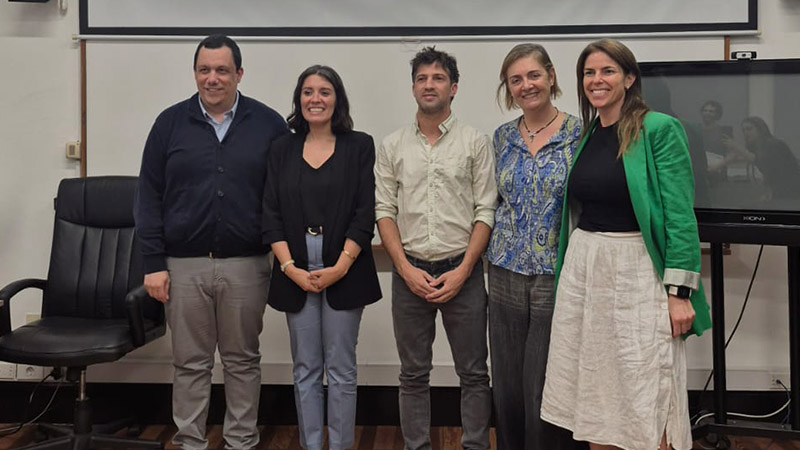
In his view, the achievements of the 42 graduates are a clear sign that advanced training can serve as a strategic driver of transformation. Vaillant also emphasized that the commitment shown by the participants, as well as the collaboration between ANEP and ORT, has resulted in a group of trainers who are better prepared to tackle today’s challenges.
“What this cohort shows us is that investing in the training of educators is investing in the future of education in Uruguay. Every thesis defended raises a question, opens a path, and creates a possibility. And that is precisely the spirit of an educational system that wants to keep learning, ”he concluded.