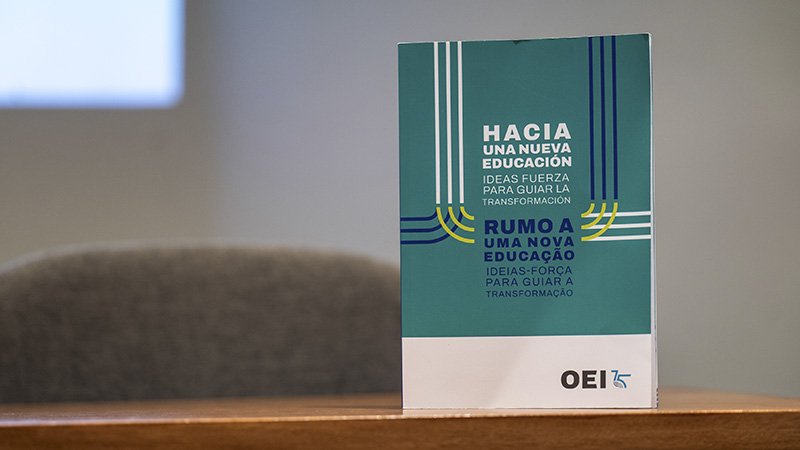
On Wednesday, July 23, the auditorium at Universidad ORT Uruguay Downtown Campus Universidad ORT Uruguay filled with voices and reflections on a topic that cuts across all societies: education.
That's where it was presented Toward a New Education: Key Ideas to Guide the Transformation, a book that brings together 20 contributions from 18 renowned Ibero-American specialists.
Published by the Advisory Council of the Organization of Ibero-American States (OEI), this publication proposes a rethinking of education systems from a transformative, inclusive, and sustainable perspective.
A provocative and revolutionary book
“The book aims to be both provocative and revolutionary,” said Renato Opertti, M.A., advisor on international projects at the Institute of Education at Universidad ORT Uruguay chair of the OEI Advisory Board.
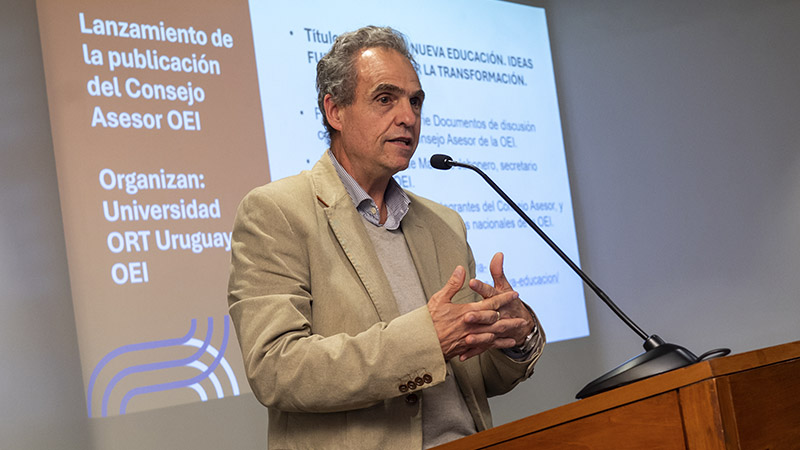
Opertti, who also coordinated the publication of *Toward a New Education: Key Ideas to Guide Transformation*, emphasized that the book posits the idea that education is at a “turning point.” And, as he explained, it is not simply a matter of reformulating a program or adjusting a curriculum, but rather of“rethinking a new way of life.”
In addition, it is based on a fundamental premise: the idea that everyone can learn throughout their entire lives. Based on this concept, it advocates for an education “without barriers or boundaries, ” aimed at “facilitating, expanding, and diversifying learning opportunities for everyone equally.”
During the book presentation, Opertti highlighted some of his other key concepts. For example, he emphasized the need to incorporate an intergenerational perspective, given that Latin America is dominated by a “highly adult-centered view of education,” with discussions that tend to be very “fragmented, insular, and self-referential.”
The publication also highlights the importance of building broad social consensus in the field of education, which—as it noted—involves bringing together a diverse range of stakeholders from the political, community, and social spheres, as well as civil society at large.
No one has a monopoly on the truth, but by discussing the variety of proposals and perspectives, countries make progress.
Renato Opertti, M.A.
For Opertti, the essence of the book is embodied in two core beliefs. On the one hand, there is the conviction that“education is the key to fostering free and thinking individuals”; on the other, there is the belief that“education must strengthen democracy.”
In this regard, he emphasized the importance of creating—especially in contexts such as Uruguay’s— spaces where ideas can be freely expressed, shared, and opened up for debate.
As he concluded, one of the book’s main aims is precisely this: “To explore ideas, discuss approaches, and share proposals that help us rethink education from a pluralistic and transformative perspective.”
Event Photo Gallery

The book is available online and can be downloaded for free
Key themes and key voices
Toward a New Education: Key Ideas to Guide the Transformation is divided into five chapters, which address:
- the purposes of education;
- the relationship between education, the government, and civil society;
- the key players and drivers of transformation;
- priorities at the various educational levels; and
- teaching, learning, and artificial intelligence.
https://www.youtube.com/watch?v=0WgCI8FiK9A
The book also presents 18 key ideas, as expressed by the authors themselves:
- Renato Opertti: The Importance of Multilateralism, Diversity, and Universal Education.
- Gemma Carbó Rebugent: A multidimensional perspective on sustainability, with a focus on art, the humanities, science, and technology.
- Hugo Díaz Díaz: Focus on fostering collaboration between education and society to bring about far-reaching change.
- Otto Granados Roldán: rethinking the approach to education, as well as establishing independent education councils that allow for collaboration with permanent, professional teams over the long term.
- Jaime Saavedra: A strategic government to implement policies that ensure equal opportunities and freedom.
- Tamara Díaz Fouz: democratic, inclusive, and transformative educational leadership at all levels of the system.
- José Pacheco: The curriculum as a political and pedagogical construct and as a catalyst for cultural change.
- Denise Vaillant: the thoughtful, critical, and proactive use of technology to foster deep learning.
- Ariel Fiszbein: Strengthening learning from ages 0 to 3, particularly with regard to cognitive skills.
- Maria Helena Guimarães: exploring contextualized pedagogical interpretations of learning assessments.
- Jorge Sainz and Ismael Sainz: The Effects of the Democratization of Compulsory Education, with a Focus on Secondary Education.
- Luis María Scasso: Vocational Education as an Opportunity for the World to Come.
- Jasone Cenoz: the revitalization of language to foster culture, as well as a means of strengthening local thought.
- Francesc Pedró: Strengthening the pedagogical and teaching roles in higher education.
- Gustavo Gándara: Moving toward an anthropocentric techno-humanism, with a focus on the individual and lifelong learning.
- Axel Rivas: Promoting balanced public policies on the purpose, scope, and implementation of artificial intelligence in education.
- Claudia Limón: Artificial Intelligence as a Tool for Enhancing Sustainability.
- Magaly Robalino Campos: The State’s Proactive Role in Addressing the Multidimensional Nature of Academic Underachievement.
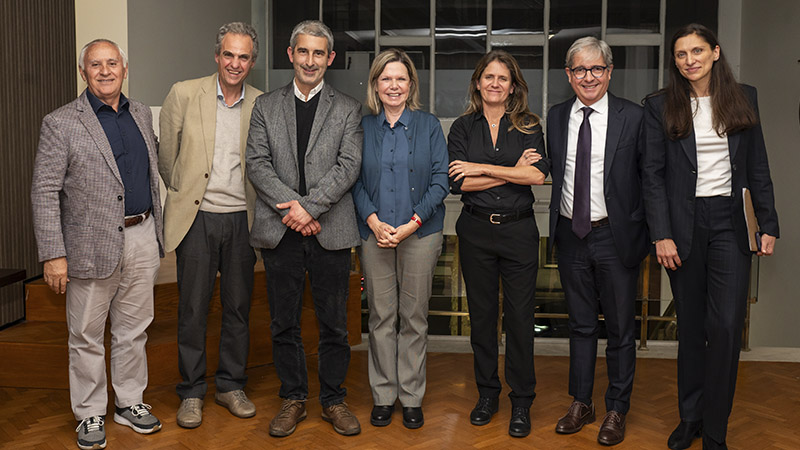
The book launch—organized by ORT in collaboration with the OEI—was attended by Pablo Caggiani, president of the Central Board of Directors (Codicen) of the National Public Education Administration (ANEP), as well as board member Elbia Pereira.
The Minister of Education and Culture, José Carlos Mahía, was unable to attend due to prior commitments. However, he sent a letter in which he offered his “sincere congratulations” and expressed his hope that the book launch “would have a positive impact on the field of education.”
A Call to Action
“What can be said about the book?” “What caught my attention?” “What adjectives would I use if I had to explain it to someone?” asked Dr. Joaquín Gairín, director of the Center for Research and Studies on Organizational Development at the Autonomous University of Barcelona (Spain).
*Toward a New Education: Key Ideas to Guide Transformation* is, first and foremost, a timely book. While there are many works addressing specific problems, he noted that few tackle structural issues. And, in his view, given the current upheaval, it is being released at just the right time.
It is focused because it addresses the core issues and the changes that need to be made. Furthermore, according to Gairín, it is bold in putting forward proposals, alternatives, and ideas for development within educational systems.
Above all, it offers a multifaceted and collective perspective by featuring various authors from different backgrounds with diverse approaches.
It is an important contribution to reflection and debate, both on an individual level and within our societies as a whole.
Dr. Joaquín Gairín
In short, in his words, it is an inspiring book that spurs people to action, as it “offers ideas that go beyond the predictable and beyond what is expected.” “It is an attempt to build bridges between formal and non-formal education, between education and the world of work, and between education and civil society,” Gairín concluded.
Putting education at the center
“It is often said that education is merely a rhetorical priority: no one in any educational forum would ever claim it doesn’t matter. However, when it comes to budgets, the reality is usually quite different,” stated Dr. Tamara Díaz Fouz, Director General of Education and Vocational Training at the Organization of Ibero-American States.
Therefore, the fact that the book focuses on education, encourages reflection, and brings together key stakeholders in the education system underscores, in her view, “its value” and makes it an occasion “to celebrate.”
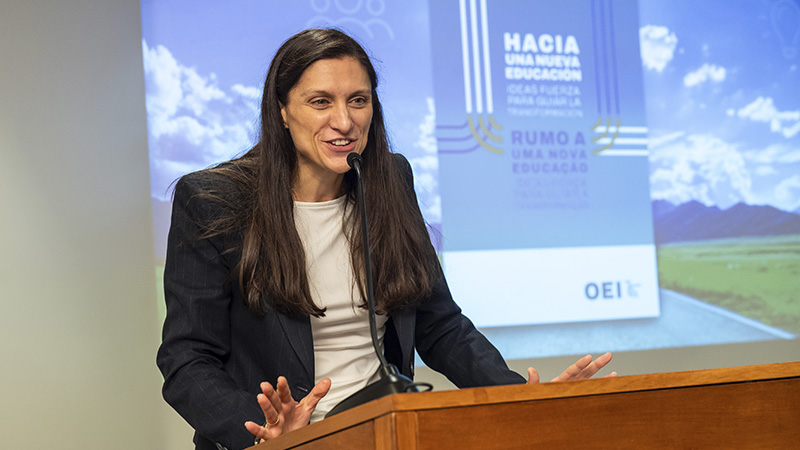
The people behind this publication possess a wealth of knowledge, as well as extensive experience, ensuring that the issues addressed truly resonate, promote, channel, and drive change.
Dr. Tamara Díaz Fouz
During his remarks, Díaz Fouz highlighted the publication’s role for the Organization of Ibero-American States. As he noted, having access to insights that inspire action and guidance on how to move forward is of “inestimable value.”
And this is possible, among other things, thanks to the background of the authors who contributed to the work and their“collective commitment to building”around a shared theme and region, namely Ibero-American education.
“It will only be possible to achieve this through shared responsibility, commitment, and the active participation of everyone, ”Díaz Fouz concluded.
A commitment to real education for everyone
“We welcome this boost to education,” said Macarena Llauradó, the resident representative of the OEI Office in Uruguay. In her view, the reason lies in the book’s significance as a contribution to the educational debate in Uruguay and the region.
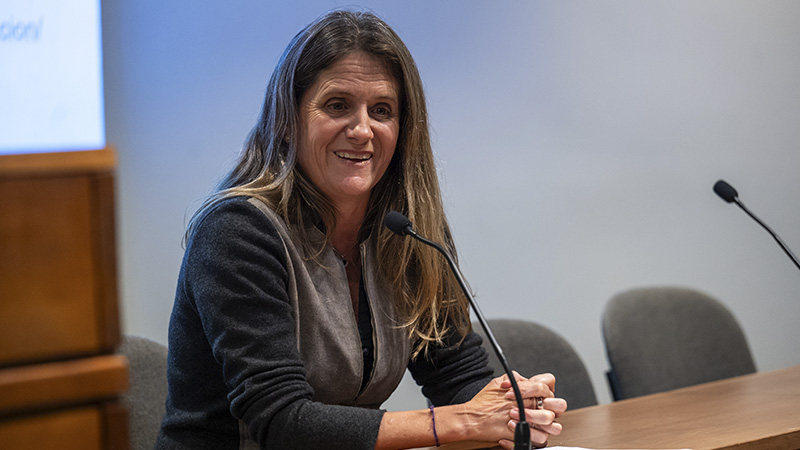
Llauradó pointed out that the OEI—an organization with 75 years of experience—has the motto “we make cooperation happen.” And that same dedication is reflected in its commitment to education. “For 75 years, we’ve been making quality education happen, ”he added.
From that perspective, he emphasized the need to promote a truly inclusive education system, aimed at ensuring equal opportunities and effective access for everyone.
In closing, he praised the launch of the publication and expressed his hope that it would promote a“real education” that “truly reaches everyone it is meant to reach.”
Reflection Grounded in Evidence for Action
“This book invites us to reflect on issues that are very close to our hearts and that are on the educational and research agenda,” explained Dr. Denise Vaillant.
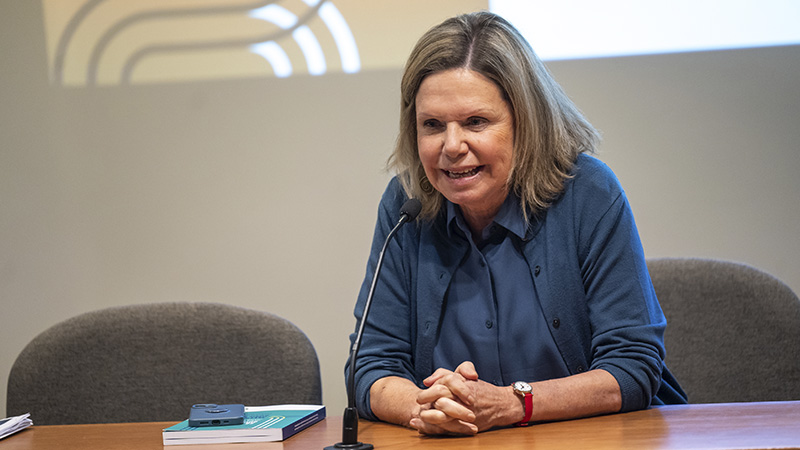
The dean of the Institute of Education at Universidad ORT Uruguay a member of the OEI Advisory Board noted that the publication addresses urgent and complex challenges. These include deep-seated social inequalities, the digital transformation, the need for solid teacher training, and, in particular, the pedagogical use of technology in the classroom, to name a few examples.
“These topics are covered in the book and will undoubtedly serve as a valuable resource for analysis, ”he said, adding that the book’s chapters are evidence-based, which allows for a rigorous debate with concrete implications for action.
Finally, Vaillant emphasized the ultimate purpose of the project: to help build an educational system that produces better citizens for tomorrow’s world. “Ultimately, what we want is to contribute ideas, practices, and initiatives so that the children of Latin America receive the education they deserve,” he concluded.