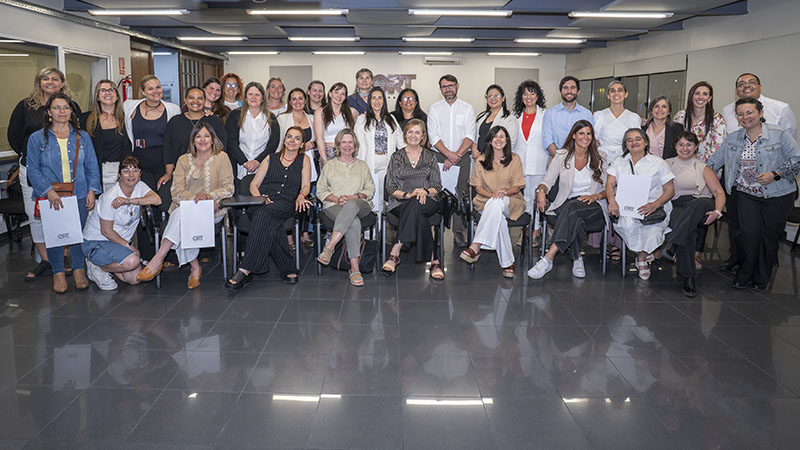
Closing one chapter does not always mean ending a process. Sometimes, it involves taking stock of the journey, acknowledging what has been learned, and asking new questions. That was the spirit of the closing ceremony for the Certificate in Educational Management with an emphasis on Transformative Leadership.
The training program —sponsored by the Institute of Education at Universidad ORT Uruguay the ReachingU Foundation—was designed to train specialists with the skills needed to manage projects and lead processes of change and improvement in various areas of education.
Convinced that strengthening leadership teams is key to transforming education, 40 teachers and educational leaders from across Uruguay participated in the first edition of the certificate program, which took place throughout 2025 and combined theoretical reflection, collaborative work, and the implementation of projects in real-world settings.
The closing event—held on Monday, December 8—brought participants together for a session of exchange, which included the presentation of certificates and a sharing of experiences and reflections that emerged throughout the training process. Through project presentations and insights on leadership, various teams of students shared the lessons they had learned, which are already making an impact on their educational communities.
Courtyards That Teach
Turning the schoolyard into a space for learning, social interaction, and well-being was the starting point for the “Patios que enseñan” project, implemented at School No. 8 in Salto, an institution that serves children from highly vulnerable backgrounds.
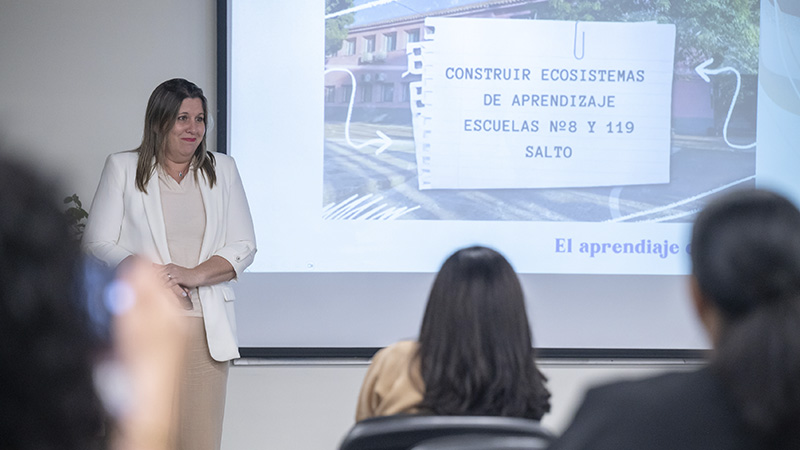
“The problem we had was that the playgrounds were being used very little, both for educational purposes and as recreational spaces,” explained Mary Rossi, the school’s principal. Based on a proposal developed as part of the Certificate in Educational Management with an emphasis on Transformative Leadership, the school’s students explored new ways of learning in a more engaging environment.
Although it was a “fairly ambitious project,” as Rossi noted, the initiative was awarded NODO funding, which will allow it to expand its reach next year.
“When we listen to our students and our community, the projects we’re able to carry out are truly valuable, ”the principal summarized.
Building leadership with others
School No. 9 in Montevideo served as the venue for the project led by Adriana Arbiza—principal of School No. 67 in Young (Río Negro)—, Lorena Bernedo—principal of School No. 9 in Montevideo—, and Ana Junco—principal of School No. 60 in Fray Bentos (Río Negro)—.
The initiative was based on the idea that “living together is also a learning process,” and one of the biggest challenges was getting families to participate. Despite setting up a physical suggestion box and a digital form to gather feedback on their needs, only nine households responded.
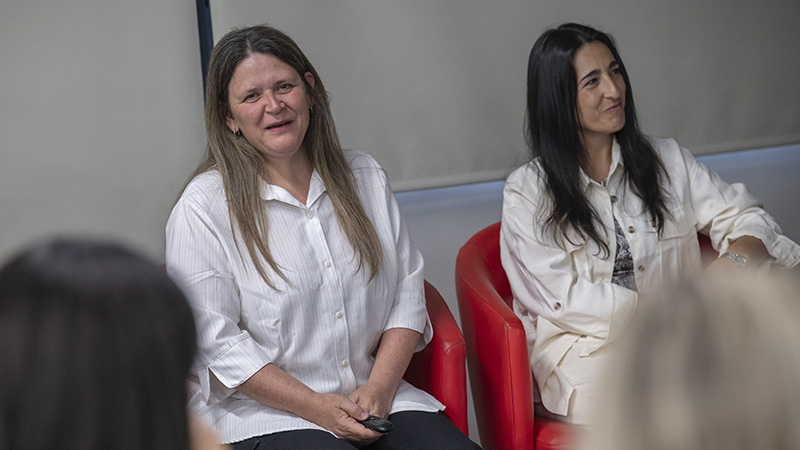
That experience led the team to reflect on the need to strengthen communication with the community and to explain more clearly the purpose and value of their participation.
In this context, open classes were organized, which allowed for renewed dialogue and reaffirmed that educational leadership is a practice that is developed through dialogue with others.
Collective and shared learning
The goal of the project led by Alejandro Pérez, the school’s principal, was to improve attendance and punctuality among 8th-grade students at Liceo Francisco in Paysandú.
To achieve this goal, Pérez explained that it was essential to make classes interactive and engaging, so that students would want to be part of the educational process.
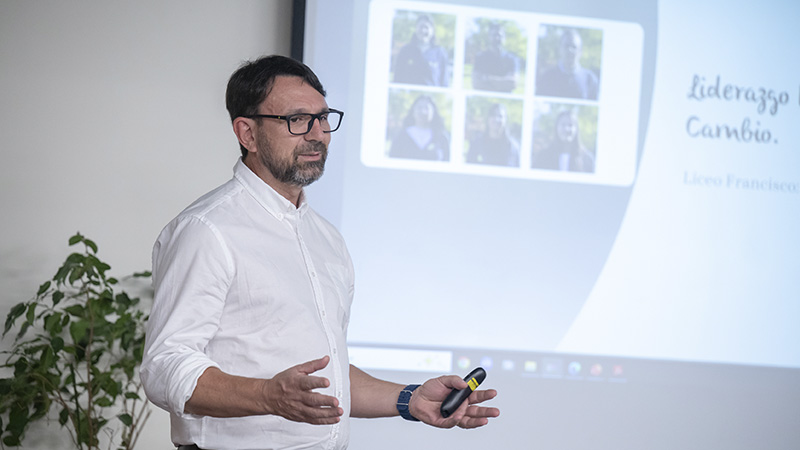
The project involved developing a plan for improvement, strengthening collaboration with the faculty, fostering a shared vision, and building a more cohesive team to distribute administrative responsibilities and advance the development of a professional learning community.
“We’ve learned that sharing that leadership with others is not only necessary, but also healthy, ”said Pérez, adding that “education is transformed when learning becomes a collective and shared responsibility.”
Turning obstacles into strengths
At School No. 119, the project led by Laura Grzeszczyk—district inspector for the Canelones Oeste Jurisdiction—, Andrea Romano—principal of School No. 119 in Montevideo—, and Ana Cecilia Gómez—principal of School No. 88 in Salto—focused on the challenge of strengthening communication and writing skills.
In particular, the initiative involved redefining roles by assigning a teacher to support the instructional processes of each classroom teacher, with the aim of promoting “formal management focused on the development of the entire team and the educational community.”
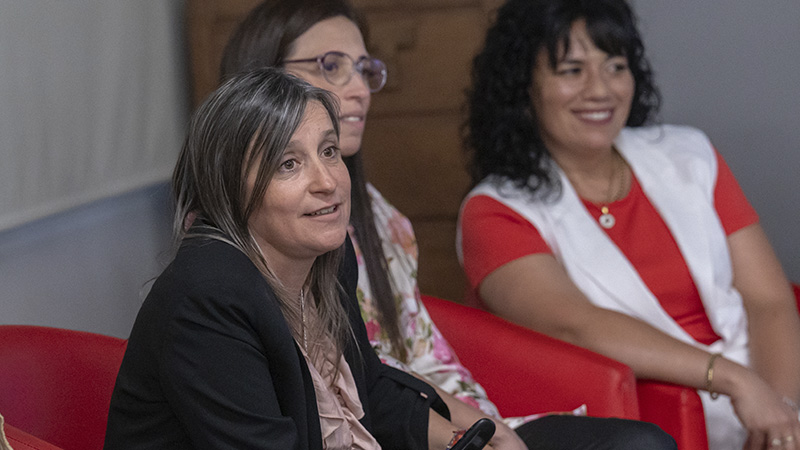
The experience taught us some clear lessons: the need to work as a team, reach agreements, maintain a flexible approach to projects, and listen to students and teachers, since they are the “main players” in schools.
“Everything can be an obstacle or a challenge, but the key to turning that into a strength lies in the development of a good leader,” said the graduates, who emphasized that leadership is only truly established when it is exercised alongside others.
Beyond the fabric
The “Beyond Weaving” project was launched in response to the disparity in access to culture at School No. 28 in Capilla del Sauce (Florida): an institution with 89 students, located in a town of 1,000 residents, whose motto is “Let’s make our school a great school.”
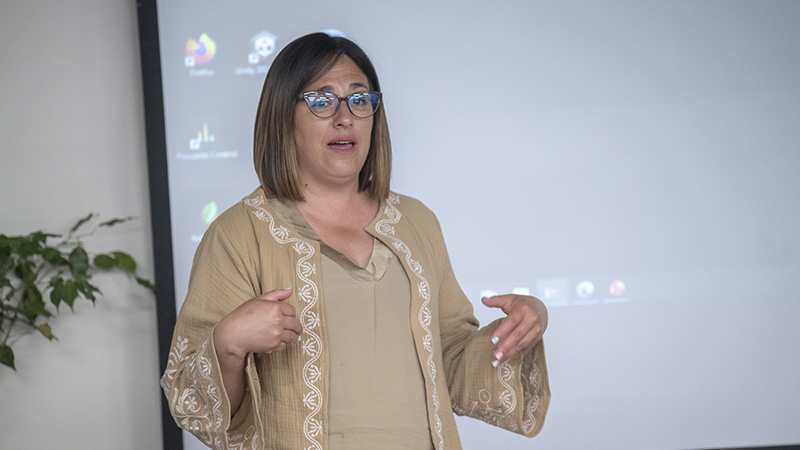
Ximena Amor, the school’s principal, noted that the initiative sought to actively involve families and the community in school life, so that children could see that “learning doesn’t always come from books,” as well as to recognize the cultural capital that these role models could bring to the classroom.
“The school became a place with open doors, ”he said, noting that a cultural center had been established and an intergenerational music band had been formed, among other inclusive initiatives promoting “participation and collaboration.”
“Improved learning is achieved because we build emotional connections, which then translate into effective actions in our daily lives,” Amor concluded.
When recess is also a learning experience
Transforming recess was the focus of the project implemented at School No. 3 in the city of Florida, developed by principals Elisa Micheltorena and Verónica Fort.
The initiative stemmed from the realization that recess periods had been reduced to moments devoid of educational purpose. “We realized that schools can indeed transform these everyday spaces if we approach them with leadership and purpose,” Micheltorena and Fort explained.
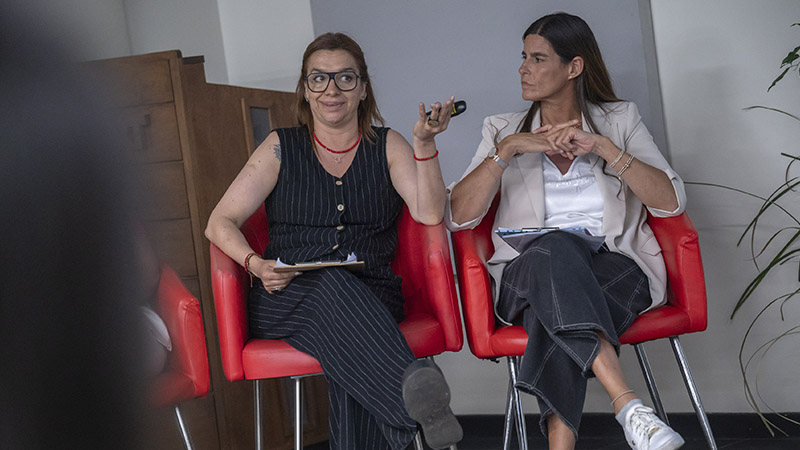
Ultimately, teachers and students worked together to make decisions, plan, and evaluate, which helped redefine recess as a space for learning and social interaction. Within a few weeks, the results were evident: new shared games, fewer conflicts, and a community more committed to change.
The project served as a catalyst for a broader reflection on the role of leadership, which, in the words of Micheltorena and Fort, “is not an innate ability,” but rather something that is learned and developed. From this perspective, leadership does not mean centralizing decision-making, but rather creating the conditions to “enable genuine participation.”
Education that leaves a lasting impact and shapes the future
“It is a great honor and a source of pride to have accompanied you through this process and to have you as part of our educational community,” said Dr. Andrea Tejera Techera, academic coordinator of the Certificate in Educational Management with an Emphasis on Transformative Leadership.
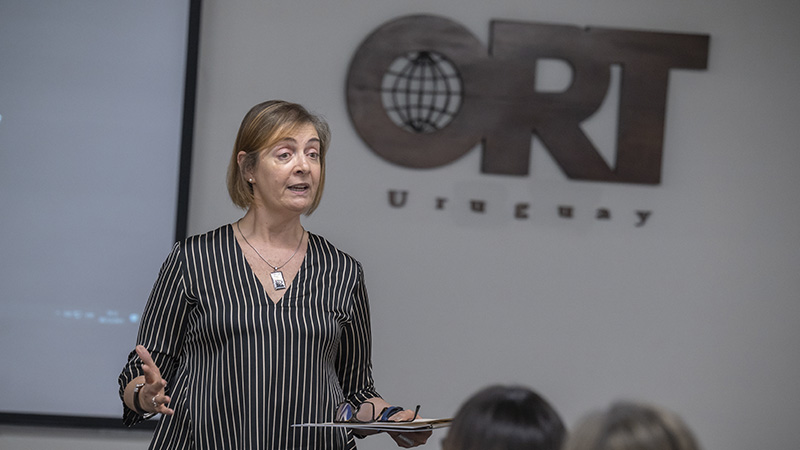
As he explained during the closing session, the initiative was launched with a clear goal: to influence educational practices. In reviewing the process, he highlighted the participants’ sustained commitment throughout each training session, as well as the collaborative networks that were built and the atmosphere of respect that allowed them to address real-world problems and explore possible solutions.
From their perspective, the initiatives promoted throughout the training program not only addressed specific challenges but also engaged with their prior experiences and interests, and looked ahead to the future paths of the participants and their educational communities.
This is truly a moment of great joy, because we believe the goals of the certification have been met.
Andrea Tejera Techera
“The effort wasdefinitely worth it, ”said Dr. Denise Vaillant. Looking ahead to the next stage, the dean of the Institute of Education encouraged the graduates to aim higher: “I hope you will continue to study and conduct research. And, above all, I hope that what you have learned will contribute to improving and transforming the contexts we know are very challenging—but which you are already making a difference in.”
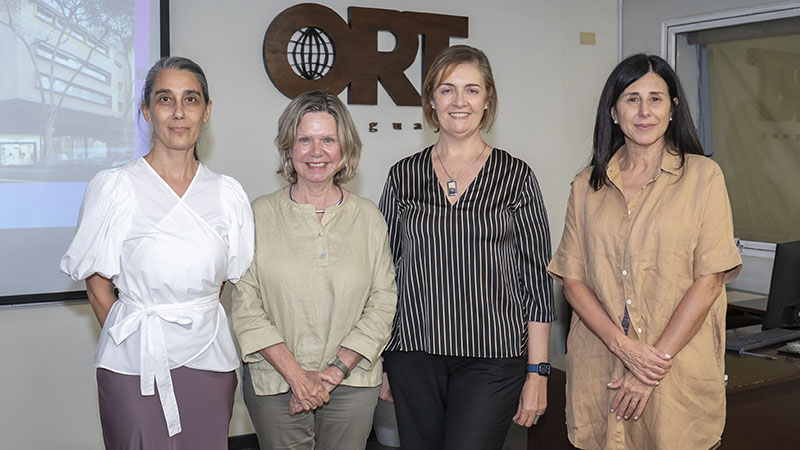
“Delivering quality training is something that makes a difference and brings about change in you—the people who will truly make a difference,” said Paula Frizzi, project coordinator at the ReachingU Foundation. In closing, she emphasized the value of the opportunities for exchange created throughout the certificate program and encouraged participants to maintain the network they had built, since principals—typically—tend to feel “very alone” when it comes to making decisions.
Image Gallery

- You may also be interested in: “Leading to Transform.”